Getty Museum
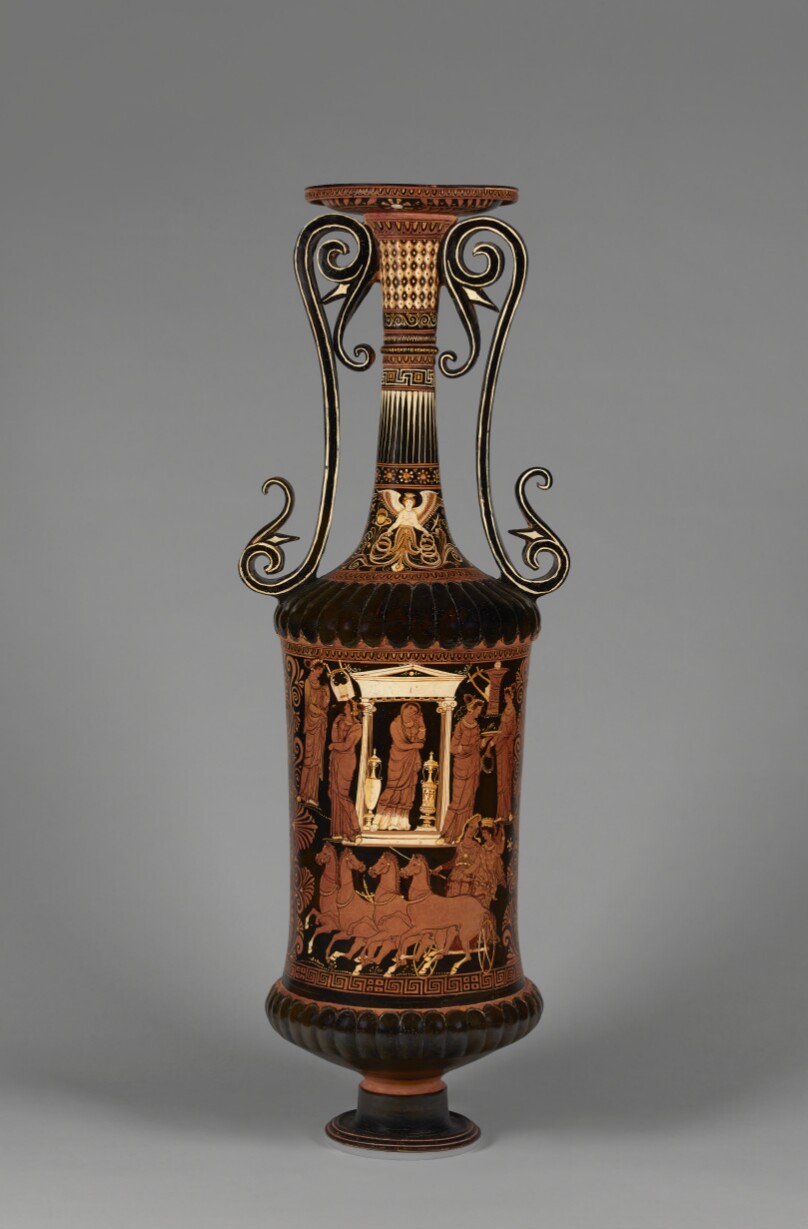
Apulian Red-Figure Loutrophoros
Creator
Painter of Louvre MNB 1148Painter
All works by this person →The Painter of Louvre MNB 1148 is the name of an artist who decorated pottery using the red-figure technique in Apulia in southern Italy. A follower of the Varrese Painter, the Painter of Louvre MNB 1148 worked in the period around 350 B.C. As with most vase-painters, his real name is unknown, and he is identified only by the stylistic traits of his work. He is named for one of his vases, now in t
More on Getty ULAN- Date
- about 330 B.C.
- Medium
- Terracotta
- Culture
- Greek (South Italian, Apulian)
- Department
- Vessels
- Institution
- Getty Museum
- Object ID
- 744b30ee-be84-4d51-abd4-49fdb0eb1a38
From the Getty Museum record
The excessive mourning of the mythological figure Niobe decorates this Apulian red-figure loutrophoros. Niobe's boasting led to the slaughter of her fourteen children by the gods Apollo and Artemis. For nine days and nights, she mourned, ignoring family members' attempts to comfort her. Ultimately, however Zeus took pity on her grief and turned her to stone. Niobe thus stands as a suitable focus for a vessel destined for a grave, In this case, she stands in a funerary naiskos with two funerary vessels, surrounded by four attendants holding grave offerings. Her brother Pelops drives up in his chariot with his bride Hippodameia to urge her to stop grieving. By painting the lower part of her dress white, the painter indicated Niobe slowly turning to stone from the feet up. The back of the vase also depicts a funerary naiskos flanked by attendants and containing a large funerary lekythos. Both the structure and the vessel are painted white to represent stone.
The authoritative record is held by Getty Museum. LinkedCulture surfaces this object and its connections; it does not alter institutional metadata.
Get printable QR codesHide QR codes
Open QR codes for this object page and the museum record. They stay collapsed until needed.
Related across collections
Semantically similar works from Getty Museum and other institutions.