Getty Museum
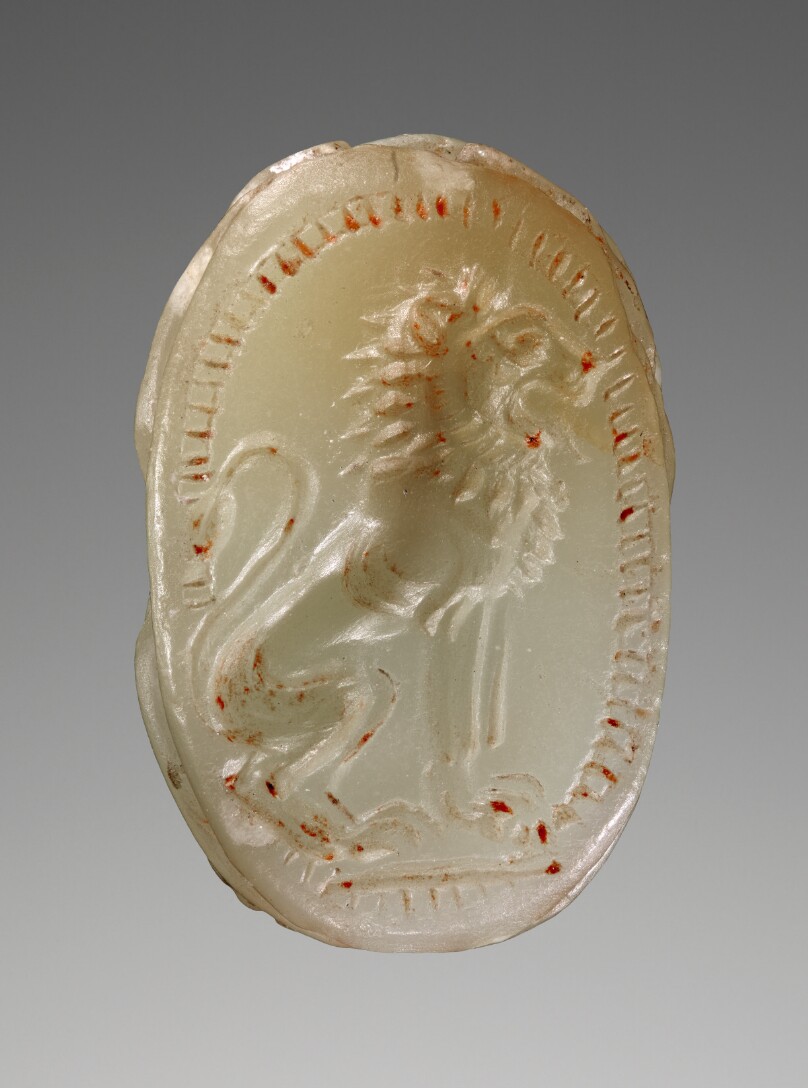
Engraved Scarab with Seated Lion
Creator
OnesimosGreek Artist
All works by this person →More on Getty ULAN- Date
- about 500 B.C.
- Medium
- Pale green serpentine
- Culture
- Greek
- Department
- Jewelry
- Institution
- Getty Museum
- Object ID
- 752000d5-5811-4222-a770-8e0592ffae14
From the Getty Museum record
This scarab gem is engraved with a lion seated left on a short ground line, its mouth open and tongue lolling. Its mane and chest are marked with thick zigzagging curls. Greek gem carving changed dramatically in form, materials, and technique in the-mid 500s B.C. One of these changes was the introduction of the scarab, with its back carved like a beetle and its flat surface an intaglio. They were usually pierced and worn either as a pendant or attached to a metal hoop and worn as a ring, with the beetle side facing out and the intaglio surface resting against the finger. When serving as a seal, the ring was removed, the scarab swiveled, and the intaglio design was pressed into soft clay or wax to identify and secure property. The scarab form originally derived from Egypt, where it had been used for seals and amulets for centuries. Certain features of Greek scarabs, however, such as the form of the beetle and the hatching around the intaglio motif, show the influence of Phoenician models, which the Greeks probably saw on Cyprus.
The authoritative record is held by Getty Museum. LinkedCulture surfaces this object and its connections; it does not alter institutional metadata.
Get printable QR codesHide QR codes
Open QR codes for this object page and the museum record. They stay collapsed until needed.
Related across collections
Semantically similar works from Getty Museum and other institutions.