Getty Museum
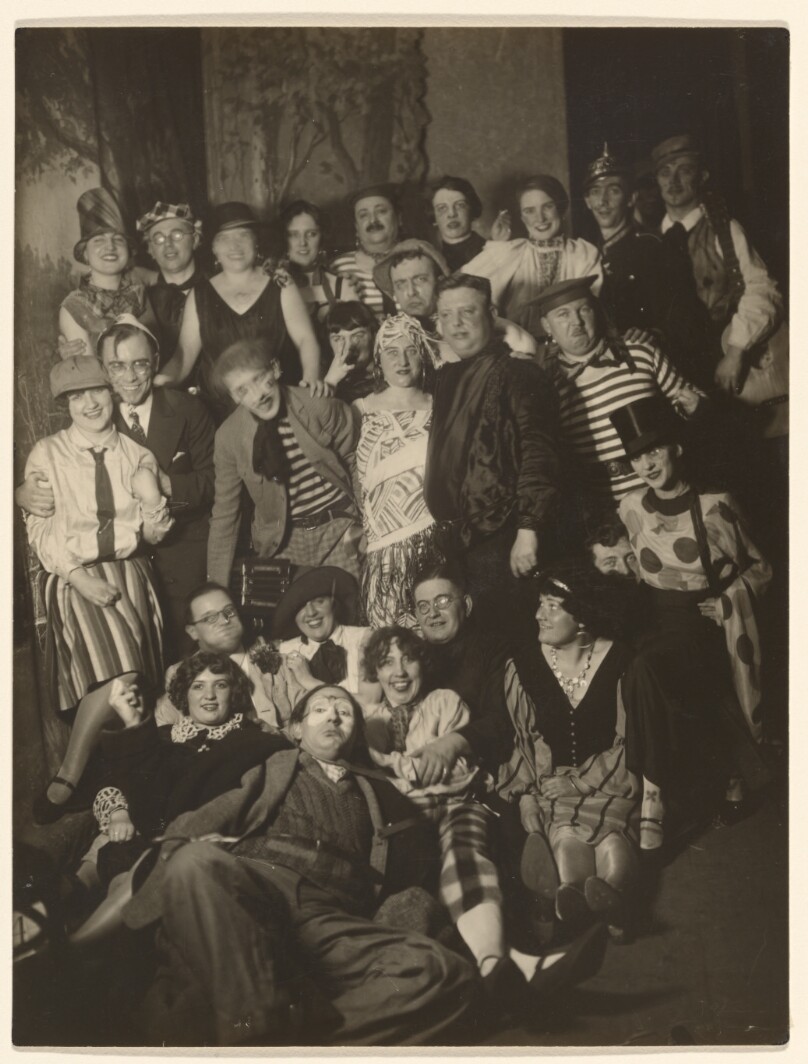
Artists' Carnival in Cologne (84.XM.152.101)
Creator
August SanderGerman Photographer · 1876–1964
All works by this person →During military service, August Sander was an assistant in a photographic studio in Trier; he then spent the following two years working in various studios elsewhere. By 1904 he had opened his own studio in Linz, Austria, where he met with success. He moved to a suburb of Cologne in 1909 and soon began to photograph the rural farmers nearby. Around three years later Sander abandoned his urban stud
More on Getty ULAN- Date
- about 1931
- Medium
- Gelatin silver print
- Culture
- German
- Department
- Photographs
- Institution
- Getty Museum
- Object ID
- 7ca0ab89-05c9-4fe8-959a-8f53866b6f83
From the Getty Museum record
> The Cologne Mardi Gras, a season of merrymaking and feasting just before Lent, is one of the most famous carnivals in Germany. During three days in February the city turns topsy-turvy with civic festivities, parades with floats and brass bands, and people in bawdy masquerade celebrating late into the night. In Cologne and throughout the Rhineland, the Feast of Fools was prime time for commercial photographers, who extracted significant amounts of money from their costumed clients. > > As August Sander's son Gunther remembered, the parties given by the progressive artists were considered highlights of the Cologne carnival season. Sander became legendary at these events, making hundreds of pictures of the intellectual and artistic elite in their getups. Throughout the night, a steady flow of patrons would approach the small stage where Sander had set up his camera. He retouched the glass-plate negatives later, numbering them carefully to avoid confusion. > > Sander added some of the prints from the Cologne events to “Citizens of the Twentieth Century” in a portfolio devoted to Festivities. Almost exclusively, it contained pictures of young artists in imaginative makeup and costumes. Their wild, funny performances push to the limit the idea of role-playing and social masquerade, pointing to gesture and movement as central ingredients of portrait photography (see [84.XM.152.158](https://www.getty.edu/art/collection/objects/35895/august-sander-heinrich-hoerle-at-a-carnival-heinrich-hoerle-auf-einem-lumpenball-german-about-1930/)). > > For more information on “Citizens of the Twentieth Century,” see [84.XM.126.282](https://www.getty.edu/art/collection/objects/34437/august-sander-shepherd-hirte-german-1913/) and [84.XM.126.83](https://www.getty.edu/art/collection/objects/34244/august-sander-portrait-of-two-men-german-negative-1912-print-1920s/). > > Originally published in *August Sander*, In Focus: Photographs from the J. Paul Getty Museum by Claudia Bohn-Spector (Los Angeles: J. Paul Getty Museum, 2000), 80. ©2000, J. Paul Getty Trust.
The authoritative record is held by Getty Museum. LinkedCulture surfaces this object and its connections; it does not alter institutional metadata.
Get printable QR codesHide QR codes
Open QR codes for this object page and the museum record. They stay collapsed until needed.
Related across collections
Semantically similar works from Getty Museum and other institutions.