Getty Museum
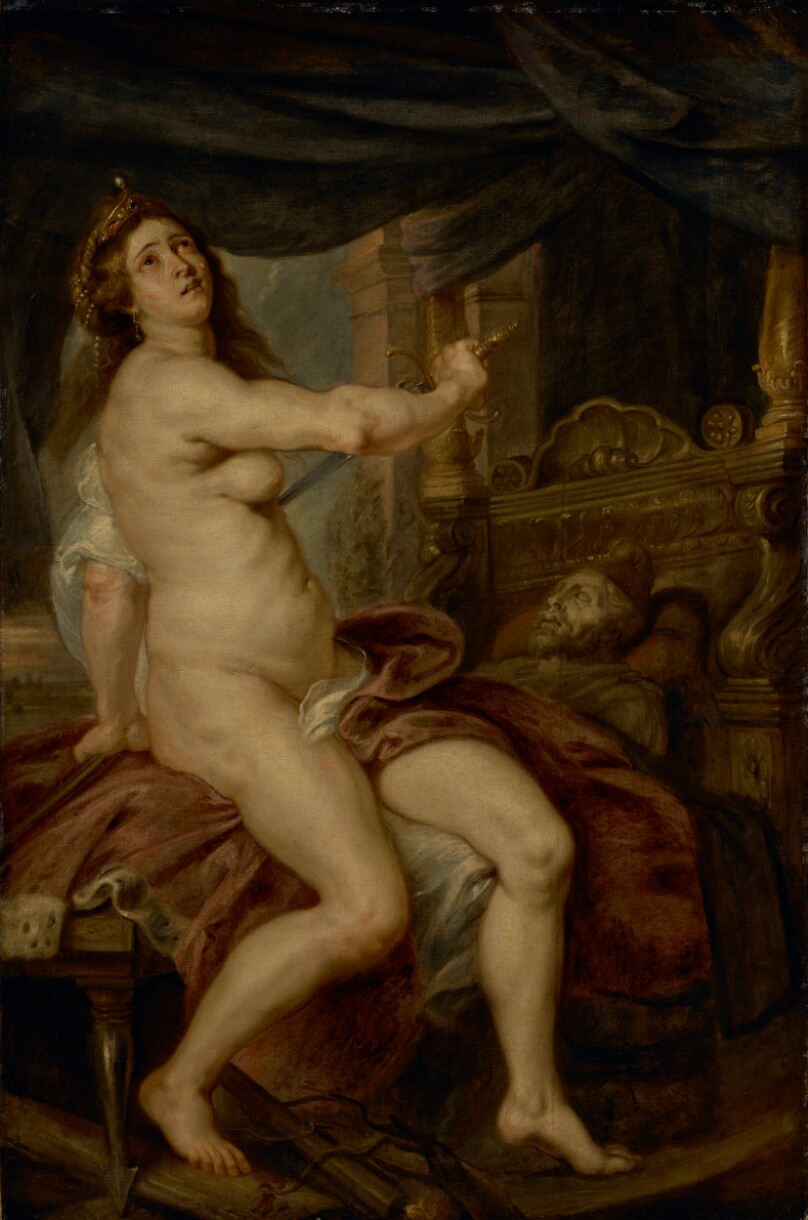
The Death of Dido
Creator
Peter Paul RubensFlemish Artist · 1577–1640
All works by this person →International diplomat, savvy businessman, devout Catholic, fluent in six languages, an intellectual who counted Europe's finest scholars among his friends, Peter Paul Rubens was always first a painter. Few artists have been capable of transforming such a vast variety of influences into a style utterly new and original. After study with local Antwerp painters, Rubens began finding his style in Ita
More on Getty ULAN- Date
- about 1640
- Medium
- Oil on canvas
- Culture
- Flemish
- Department
- Paintings
- Institution
- Getty Museum
- Object ID
- 81070f7f-31c5-423a-b9cb-90b4d372885a
From the Getty Museum record
After piling a wooden effigy of her deceased husband in their matrimonial bed atop her own funeral pyre, Dido, the queen of Carthage, stabs herself with her lover Aeneas's sword. Virgil tells the story of her grief-stricken reaction to her abandonment by Aeneas, the hero of the Trojan war and future founder of Rome. The artist emphasized Dido's ferocious passion through the curvaceous twist of her body; he accentuated the scene's gloom through use of somber colors. The burning torch at the upper right provides the only reference to the funeral pyre. Peter Paul Rubens's prolific workshop produced over two thousand works of art. Rubens typically employed accomplished artists to paint in his style from sketches he supplied. The posthumous inventory of his goods lists a painting called the *Death of Queen Dido,* but scholars are uncertain whether it refers to this particular canvas.
The authoritative record is held by Getty Museum. LinkedCulture surfaces this object and its connections; it does not alter institutional metadata.
Get printable QR codesHide QR codes
Open QR codes for this object page and the museum record. They stay collapsed until needed.
Related across collections
Semantically similar works from Getty Museum and other institutions.