Getty Museum
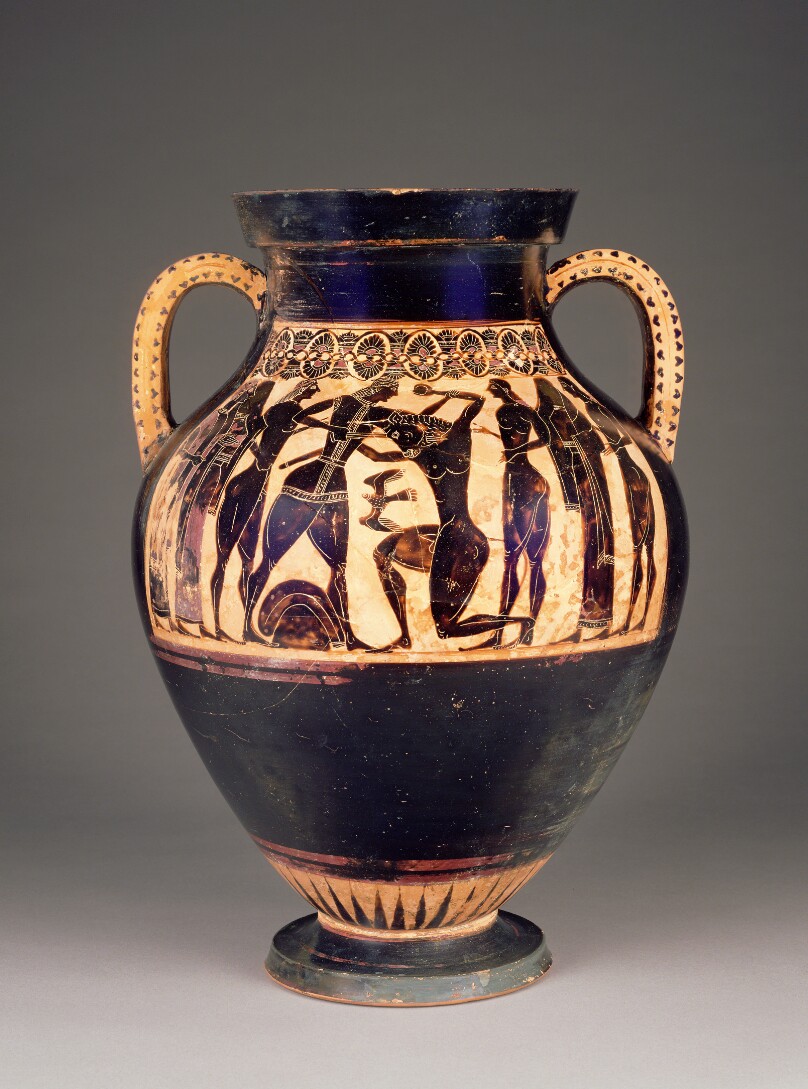
Attic Black-Figure Amphora
Creator
LydosArtist
All works by this person →Lydos worked as a potter and vase-painter in Athens in the period from about 565 to 535 B.C., heading a large workshop that decorated pottery in the black-figure technique. Only two of his signed vases survive, but scholars have attributed more than 130 to him. These vases include a wide range of shapes produced over a long career and spanning a stylistic transition in Athenian vase-painting. His
More on Getty ULAN- Date
- 550–540 B.C.
- Medium
- Terracotta
- Culture
- Greek (Attic)
- Department
- Vessels
- Institution
- Getty Museum
- Object ID
- 812519d5-ffd2-4af8-8119-af9de8add1c6
From the Getty Museum record
The Minotaur, a monster with a bull's head and a human body, was the child of the Cretan queen and a bull for which she had developed an irresistible passion. The Minotaur lived in a labyrinth on Crete and devoured human sacrifices of youths and maidens sent as tribute from Athens. When the Greek hero Theseus finally killed the monster, he freed Athens from this horrible burden. The myth of Theseus and the Minotaur was very popular on Athenian vases in the late 500s B.C. In this rendition, Theseus plunges his sword through the monster's neck, while the freed youths and maidens watch. The Minotaur's uncivilized nature is apparent even in its choice of weapon - a rock, seen clutched in its raised hand. The back of the vase shows two youths mounted on horses, greeted by family members as they return home. Scenes of returning youths and warriors were frequent in Athenian vase-painting. The youths may be mythological figures such as the Dioskouroi, or they may simply be mortals.
The authoritative record is held by Getty Museum. LinkedCulture surfaces this object and its connections; it does not alter institutional metadata.
Get printable QR codesHide QR codes
Open QR codes for this object page and the museum record. They stay collapsed until needed.
Related across collections
Semantically similar works from Getty Museum and other institutions.