Getty Museum
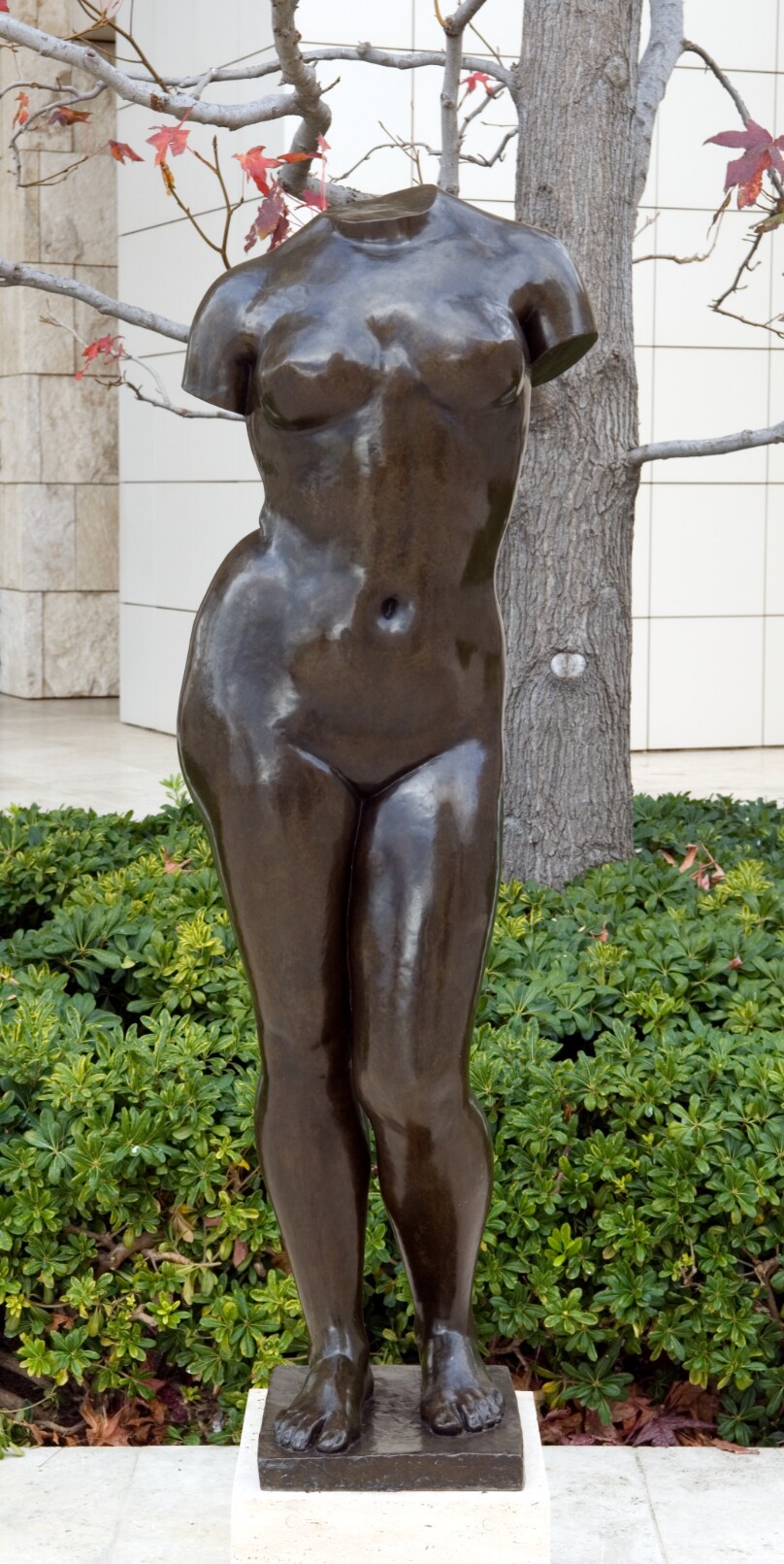
Torse de l'Ete
Creator
Aristide MaillolFrench Artist · 1861–1944
All works by this person →> For Plato, idea and form were identical, and that is how I too understand it. > > --Aristide Maillol > > Aristide Maillol focused almost exclusively on a single subject--the female nude. Depicting a handful of models again and again, Maillol used the female form as a means to explore the way mass, volume, line, and contour occupy space. Influenced by classical art, his work evokes its serenity a
More on Getty ULAN- Date
- 1911
- Medium
- Bronze, brown patina
- Culture
- French
- Department
- Sculpture
- Institution
- Getty Museum
- Object ID
- 84975933-a687-4e37-93c7-9874c1ef779b
From the Getty Museum record
From her ankles and knees to her broad waist and substantial shoulders, this life-size nude conveys weight and volume. Completely unadorned and without drapery, she stands in an exaggerated contrapposto pose, with her weight shifted to her left leg. A twist of the hips animates the torso with an undulating movement from top to bottom. The line of the figure's waist and hips are made more apparent by the absence of arms and head. Aristide Maillol greatly admired classical torsos that had lost their arms. He once explained this preference, "Greek statues often are much more beautiful without arms because these always hide part of the body--either the bust or the stomach, or the waistline--which is absolutely marvelous and which we admire today since the arms have disappeared." The sculptor often cut up and reconfigured his older plaster models to create new figures. It is possible that he began this work with a plaster cast that had a head and arms. *Torso of Summer* was part of a series of sculptures by Maillol representing the four seasons. Bronzes from *The Seasons* were installed in the music room of Maillol's most important patron, Ivan Morozov, the Russian collector. The room's walls were decorated with paintings depicting Cupid and Psyche by the French artist Maurice Denis.
The authoritative record is held by Getty Museum. LinkedCulture surfaces this object and its connections; it does not alter institutional metadata.
Get printable QR codesHide QR codes
Open QR codes for this object page and the museum record. They stay collapsed until needed.
Related across collections
Semantically similar works from Getty Museum and other institutions.