Getty Museum
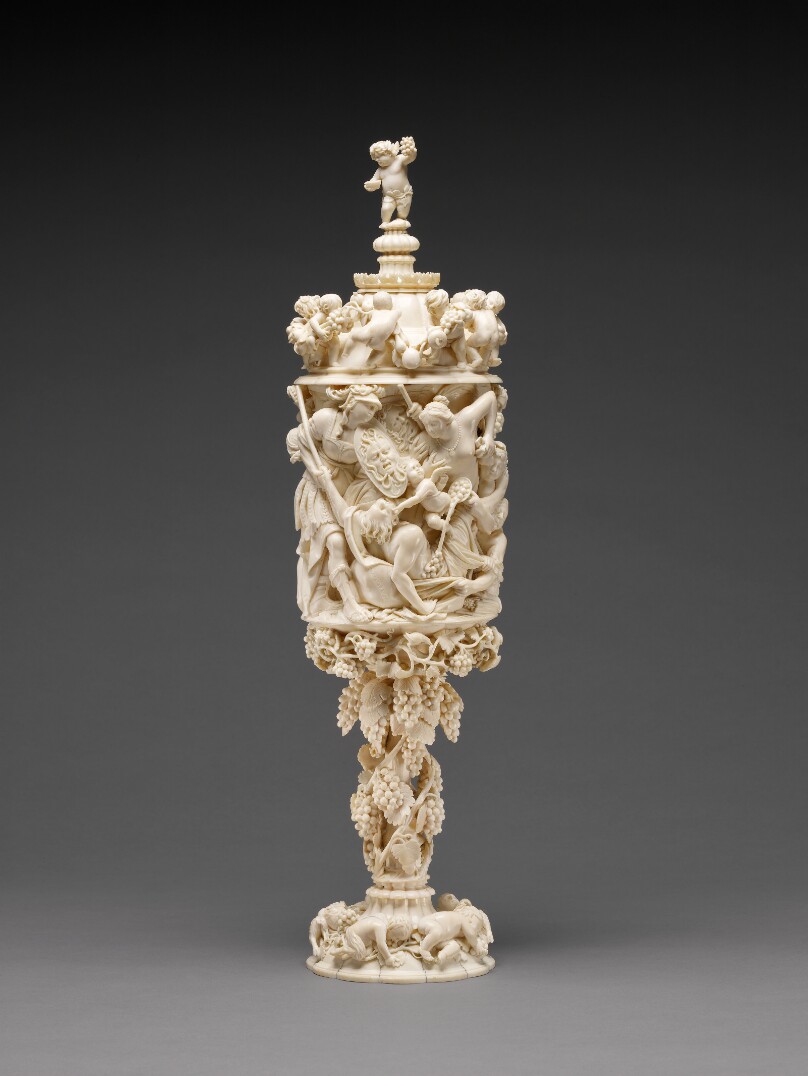
Ivory Goblet
Creator
Balthasar GriessmannGerman Artist · 1620–1706
All works by this person →Renowned for his intricate creations, Balthasar Griessmann was a celebrated ivory carver in the 1600s. But despite his reputation, for many years Griessmann was known simply as Monogrammist BG--from the initials he used to sign some of his pieces. Only in the 1990s, thanks to a fortuitous discovery in the archives of Salzburg, Austria, were Griessmann's full name and biography established. Born in
More on Getty ULAN- Date
- about 1680
- Medium
- Ivory
- Culture
- German
- Department
- Decorative Arts
- Institution
- Getty Museum
- Object ID
- 8859194c-23f9-4583-a8b0-f1100fc4c5c2
From the Getty Museum record
Seemingly unaware of the activity all around him, a youth supine is the focus of gods; some tease and tempt him with pleasurable offerings, while others guide him toward prudence. Minerva, the goddess of wisdom, grasps his left hand urging him toward virtuous restraint. The god of wine, Bacchus, pours wine onto the young man to arouse his desires. Cupid, the tiny child-god of love, directs the youth's face toward his mother Venus who presses her right breast, emblematic of sybaritic pleasures. The entire surface of the vessel is carved and showcases the technical virtuosity of its maker, Balthasar Griessmann. This ivory specialist skillfully moved between different degrees of relief: from figures fully sculpted in three-dimensions to extremely shallow passages. Floral Bacchic motifs cover the lid, base, and stem of the vessel. Putti bearing fruit-laden garlands cavort around the lid, which is surmounted at the pinnacle with a single putto brandishing a cup in one hand and a bunch of grapes in the other. At the base lie recumbent drunken putti and satyrs. Griessmann faithfully derived the goblet's composition from a work by Otto van Veen, *Allegory of the Temptations of Youth*, known to the carver from a print by Antwerp artist Pieter Perret. Griessmann cunningly puts the allegory in the hands of the imbiber, who--like the youth--should consider the balance of indulgence with moderation. The virtuosity of the piece is such that it was most likely displayed at courtly banquets--a showpiece, to be viewed and admired, rather than utilized.
The authoritative record is held by Getty Museum. LinkedCulture surfaces this object and its connections; it does not alter institutional metadata.
Get printable QR codesHide QR codes
Open QR codes for this object page and the museum record. They stay collapsed until needed.
Related across collections
Semantically similar works from Getty Museum and other institutions.