Getty Museum
Ovid, Excerpts from Heroides; Octavien de Saint-Gelais, Letters
Creator
Master of the Chronique scandaleuseFrench Illuminator · 1493–1510
All works by this person →More on Getty ULAN- Date
- about 1493
- Medium
- Tempera colors, gold, and ink
- Culture
- French
- Department
- Manuscripts
- Institution
- Getty Museum
- Object ID
- 8aeb0766-b582-4856-a965-d33d8a6fd5f7
From the Getty Museum record
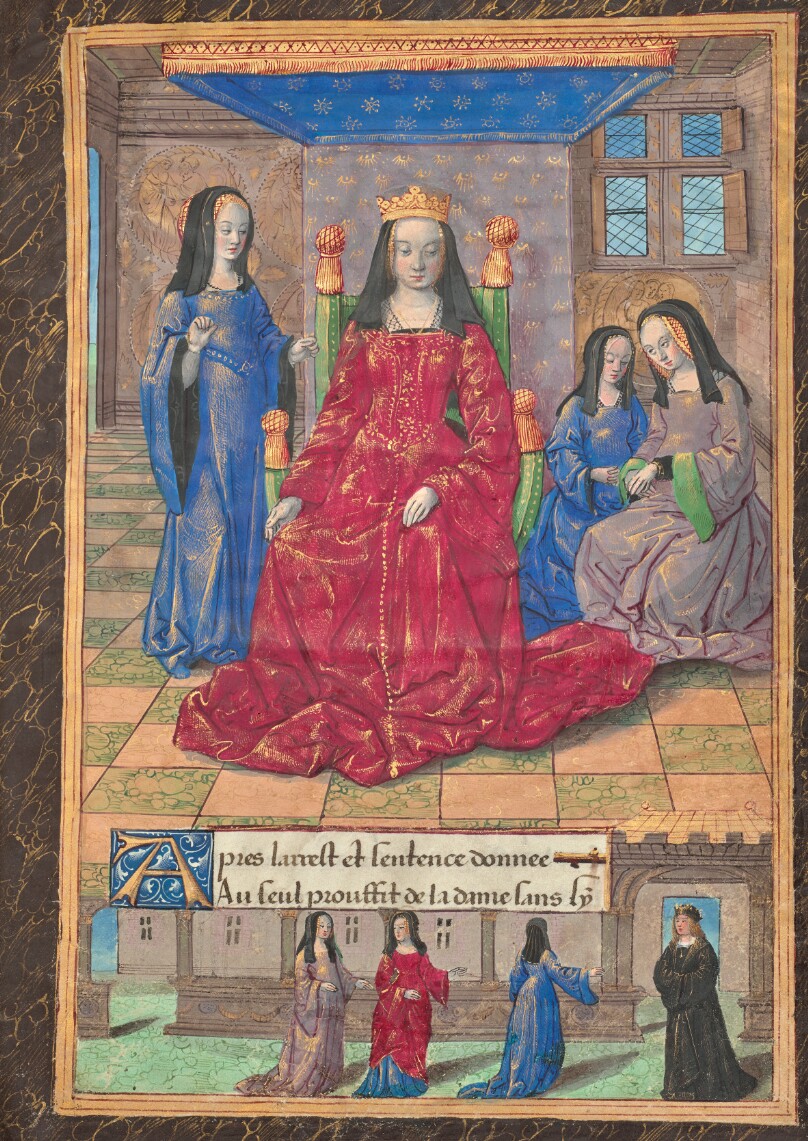
Executed for Anne of Brittany, queen of France (1477-1514), this luxurious manuscript contains a series of eight full-page images that accompany a French translation of Ovid’s letters that were supposedly authored by mourning heroines and addressed to their unfaithful husbands or lovers. The illumination program culminates with an image of Queen Anne, showing her seated frontally under a cloth of honor with her ladies-in-waiting. Like all the illuminations in the manuscript, it was painted by an anonymous artist called the Master of the *Chronique scandaleuse* (active from around 1490 to 1510). Hallmarks of the master’s style include figures that are characterized by prominent foreheads, downcast hooded eyes, rosebud lips, and pale skin tones, as well as the use of bold colors and liquid gold in the draperies. According to the accompanying text, the queen and her companions debate the right of men to judge the female ideal and cast aspersions on the general ability of male authors to tell the truth. Together, the images in the manuscript provide examples of female empowerment through taking control of their own narratives. The foregrounding of female self-expression in this manuscript could be seen as a model for the young queen as she navigated court politics. Throughout the Middle Ages, female patronage of book illumination was formative in the creation and dissemination of new styles and iconography. Anne of Brittany was among an elite group of women around 1500 (including Margaret of Austria, Anne of France, and Louise of Savoy) who wielded significant political and cultural influence at major courts in Europe. These women utilized their privileged positions to shape trends in art and literature through their active patronage.
The authoritative record is held by Getty Museum. LinkedCulture surfaces this object and its connections; it does not alter institutional metadata.
Get printable QR codesHide QR codes
Open QR codes for this object page and the museum record. They stay collapsed until needed.
Related across collections
Semantically similar works from Getty Museum and other institutions.