Getty Museum
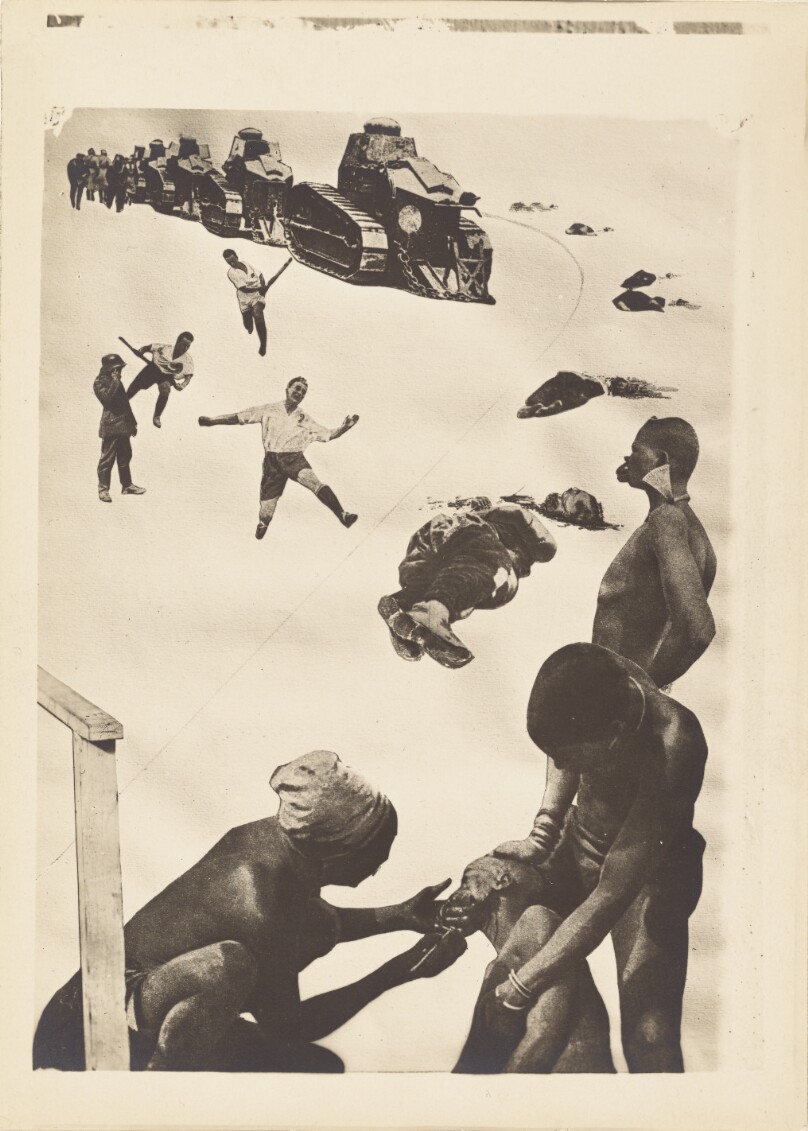
Militarismus (Propagandaplakat)
Creator
László Moholy-NagyAmerican Photographer · 1895–1946
All works by this person →> The reality of our century is technology: the invention, construction and maintenance of machines. To be a user of machines is to be of the spirit of this century. Machines have replaced the transcendental spiritualism of past eras. > > --László Moholy-Nagy > > Perhaps more than any other artist in the Getty Museum collection, László Moholy-Nagy would have delighted in the presentation of his im
More on Getty ULAN- Date
- 1924
- Medium
- Gelatin silver print
- Culture
- American
- Department
- Photographs
- Institution
- Getty Museum
- Object ID
- 8fded649-99ca-4696-9681-139468f5d385
From the Getty Museum record
> The period after World War I in Germany was one of social and political upheaval. In January 1923 a vote by the Allied Reparations Commission determined that Germany had not fulfilled the conditions of the Treaty of Versailles, and French troops occupied the Ruhr region. Miners and railroad workers went on strike, causing an economic crash. A state of emergency was declared by President Friedrich Ebert in September, but a loss in confidence in the government resulted in a chaotic situation in which extremist political groups sought to gain control of the country. The violent vision of László Moholy-Nagy’s *Militarism* may reflect this milieu, showing unevenly armed forces facing off against each other. At the end of 1923 stringent financial reforms were instituted to halt inflation. By 1924 the economy had stabilized. > > Katherine Ware, *László Moholy-Nagy*, In Focus: Photographs from the J. Paul Getty Museum (Los Angeles: J. Paul Getty Museum, 1995), 21. © 1995 The J. Paul Getty Museum.
The authoritative record is held by Getty Museum. LinkedCulture surfaces this object and its connections; it does not alter institutional metadata.
Get printable QR codesHide QR codes
Open QR codes for this object page and the museum record. They stay collapsed until needed.
Related across collections
Semantically similar works from Getty Museum and other institutions.