Getty Museum
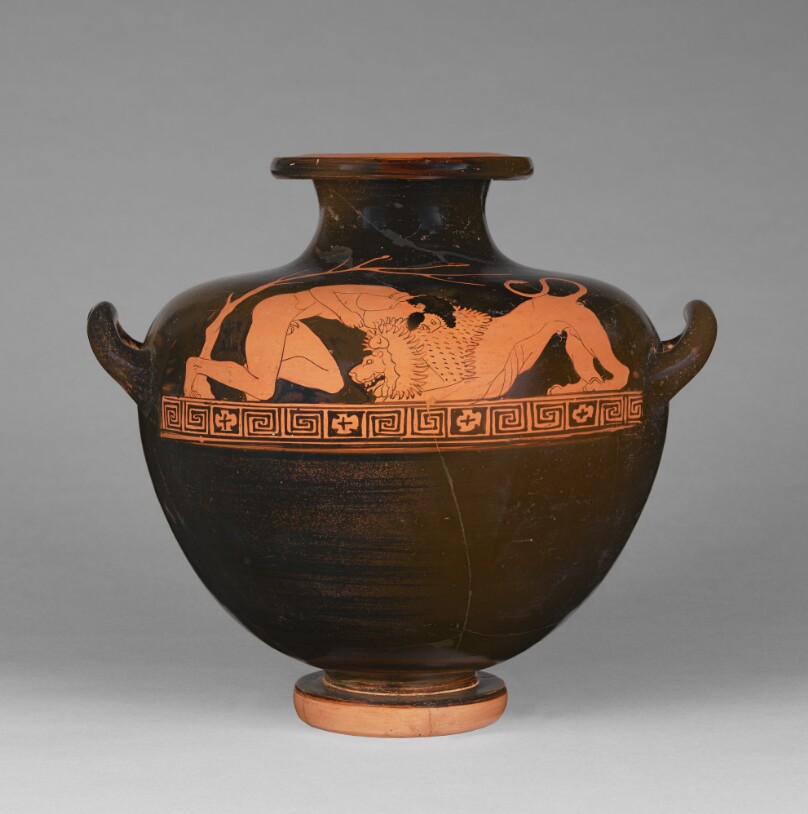
Attic Red-Figure Kalpis
Creator
Aegisthus PainterPainter
All works by this person →Working in Athens in the period from about 480 to 460 B.C., the Aegisthus Painter decorated vases in the red-figure technique. His surviving vases suggest that he specialized in the decoration of large vessels. His work marks the transition from the Archaic to the Classical style in Greek vase-painting. The Aegisthus Painter's fondness for crowded, multi-figured scenes carried over from the Archai
More on Getty ULAN- Date
- about 470 B.C.
- Medium
- Terracotta
- Culture
- Greek (Attic)
- Department
- Vessels
- Institution
- Getty Museum
- Object ID
- 910073b8-dd21-47e4-8369-b790fe4aa6bd
From the Getty Museum record
As the first of his twelve Labors, the Greek hero Herakles had to slay the Nemean Lion, a monstrous beast that was ravaging the countryside around the city of Nemea. Since weapons were of no use against the creature’s impenetrable hide, Herakles' only option was to strangle it. Herakles battling the Nemean Lion was the most frequently depicted mythological scene in Greek art. In early depictions, Herakles stands facing the lion, but by the late 500s B.C., the combatants were often depicted wrestling on the ground. On this Athenian red-figure kalpis, a tree bends over Herakles and the lion, indicating that the action takes place outdoors. The kalpis is the rounded form of a hydria, or water vessel, favored by red-figure artists in this period. The three handles of the shape facilitated pouring and lifting.
The authoritative record is held by Getty Museum. LinkedCulture surfaces this object and its connections; it does not alter institutional metadata.
Get printable QR codesHide QR codes
Open QR codes for this object page and the museum record. They stay collapsed until needed.
Related across collections
Semantically similar works from Getty Museum and other institutions.