Getty Museum
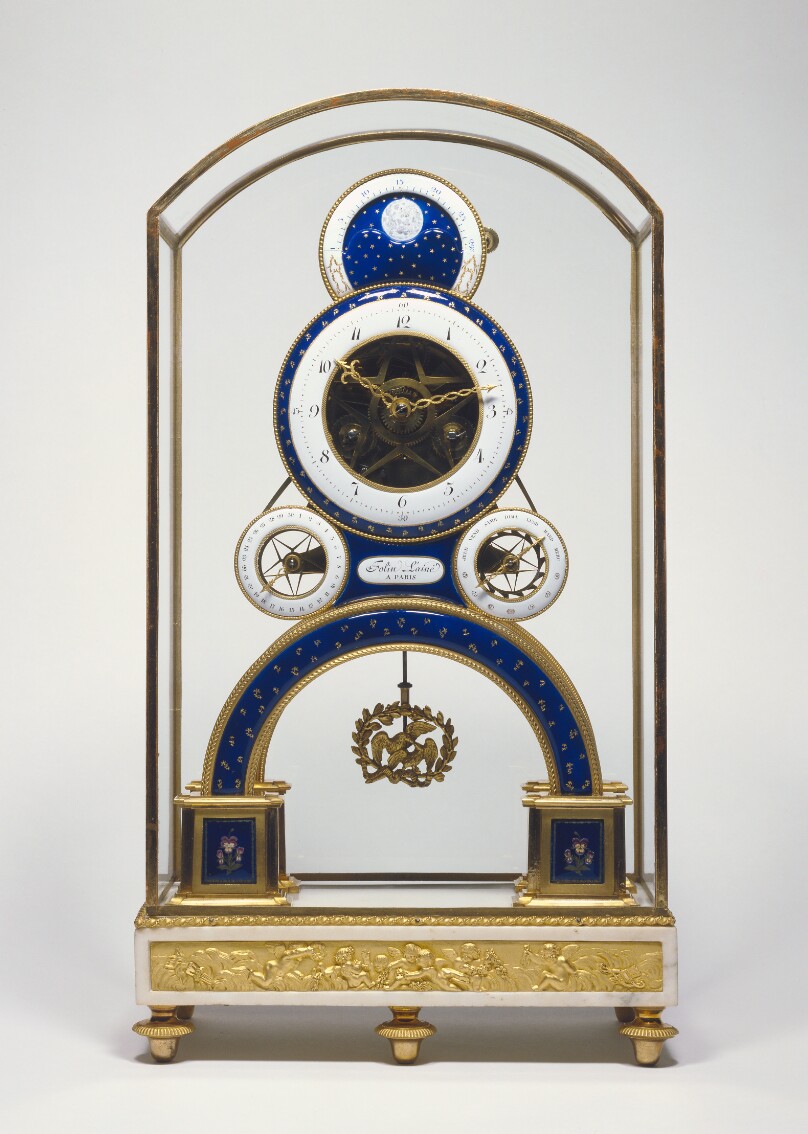
Mantel Clock
- Date
- about 1790–1800
- Medium
- Gilt bronze; enameled metal; white marble base; glass and gilt-metal case
- Culture
- French
- Department
- Decorative Arts
- Institution
- Getty Museum
- Object ID
- 935b3bdd-7352-439a-a2d1-6706573000f7
From the Getty Museum record
Known as a "skeleton clock" because of its exposed movement (inner workings), this type of timepiece became fashionable at the end of the 1700s. While other styles of cases hide the clockworks from view, skeleton clocks celebrate the beauty of the mechanical pieces and the ingenuity of the craftsperson. This style draws attention to the process of making the clock, highlighting both the art and craft of this piece. People who owned these clocks appreciated the beauty of the movement as much as the attractiveness of the case. The clock’s four enameled dials each display different information. While the large dial tells the time, one lower dial indicates the day of the week and the other shows the day of the month. Above, a fourth dial records the current phase of the moon. Perhaps people who appreciated looking at the exposed clock movement also valued the additional scientific information on the other dials.
The authoritative record is held by Getty Museum. LinkedCulture surfaces this object and its connections; it does not alter institutional metadata.
Get printable QR codesHide QR codes
Open QR codes for this object page and the museum record. They stay collapsed until needed.
Part of a LinkedCulture topic
 Decorative Timekeeping Across Cultures
These objects are all ornate clocks from various time periods and regions, showcasing how timekeeping devices served as both functional instruments and decorative art objects across different cultures from the 16th to 19
48 objects from 5 institutions
Related across collections
Semantically similar works from Getty Museum and other institutions.