Getty Museum
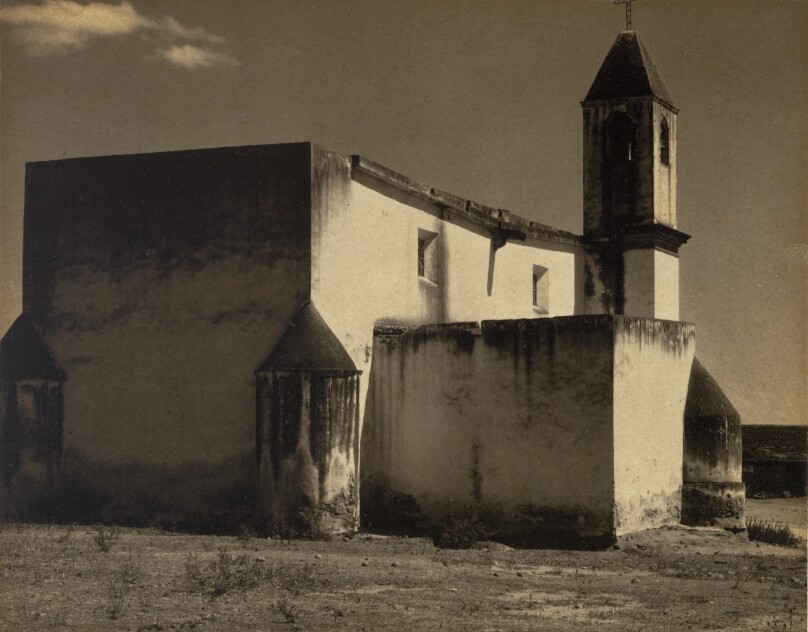
Church, Mexico
Creator
Paul StrandAmerican Photographer · 1890–1976
All works by this person →Paul Strand began photographing in New York in the 1910s. During the early 1920s he received recognition for both his painting and his photography. He visited New Mexico in 1926 and, beginning in 1930, returned for three consecutive summers, making portraits of artist friends and acquaintances. It was there, amidst a community of visual artists and writers, that Strand began to develop his belief
More on Getty ULAN- Date
- 1932–1933
- Medium
- Platinum print
- Culture
- American
- Department
- Photographs
- Institution
- Getty Museum
- Object ID
- 9364e2a8-1fea-40c7-a490-f8ad5cc244b8
From the Getty Museum record
During his year-and-a-half-long stay in Mexico in the early 1930s, Paul Strand was intrigued with the various religious icons that adorned many churches he visited. Although born a Jew, he found himself drawn to symbols of Christianity. These wooden sculptures depicting Christ and the various saints were known as _bultos _and possessed an amazing degree of human likeness. Strand felt that the figures were imbued with a vitality that was in part due to the intensity of people's devotion to them. Strand's socialist views were continuing to coalesce during his time in Mexico, as he recognized the need for his art to reach a broad audience. In February 1933 he was given a solo show at the Sala de Arte of the Secretariat of Education in Mexico City. The exhibition featured fifty-four platinum prints of New Mexico, Colorado, and Maine and proved to be popular with the general public, whom, Strand noted, were truly diverse in their social backgrounds. Two months later Carlos Chávez (1899-1978), composer, conductor, and head of the Department of Fine Arts for the Mexican Secretariat of Education, appointed Strand the head of photography and cinema at the Department of Fine Arts. Shortly thereafter Strand began planning a series of films intended to document life in Mexico as experienced by different kinds of laborers. Fishermen became the subject of the first production, _Redes_, which was set in the small village of Alvarado in Veracruz. Work began on the movie in February 1934 and continued until December, at which point the newly elected government dismissed Strand from his position, and he returned to New York. The images Strand produced during his time in Mexico were later compiled into a portfolio of hand-pulled gravures, which he produced in 1940 with the help of his second wife, Virginia Stevens (1912? – death date unknown), whom he had married in April 1936. _Photographs of Mexico_ was released in an edition of 250 copies, each containing twenty prints. It marked the beginning of Strand's desire to group his images together into publications, which had the potential to reach a larger audience than any single print could. See also [84.XP.208.52](https://www.getty.edu/art/collection/object/1043EC), [86.XM.683.68](https://www.getty.edu/art/collection/object/106NSN), [86.XM.683.105](https://www.getty.edu/art/collection/object/106NTG), [87.XM.149](https://www.getty.edu/art/collection/object/1040Z0). Originally published in _Paul Strand_, In Focus: Photographs from the J. Paul Getty Museum by Anne M. Lyden (Los Angeles: J. Paul Getty Museum, 2005), 54. ©2005, J. Paul Getty Trust.
The authoritative record is held by Getty Museum. LinkedCulture surfaces this object and its connections; it does not alter institutional metadata.
Get printable QR codesHide QR codes
Open QR codes for this object page and the museum record. They stay collapsed until needed.
Related across collections
Semantically similar works from Getty Museum and other institutions.