Getty Museum
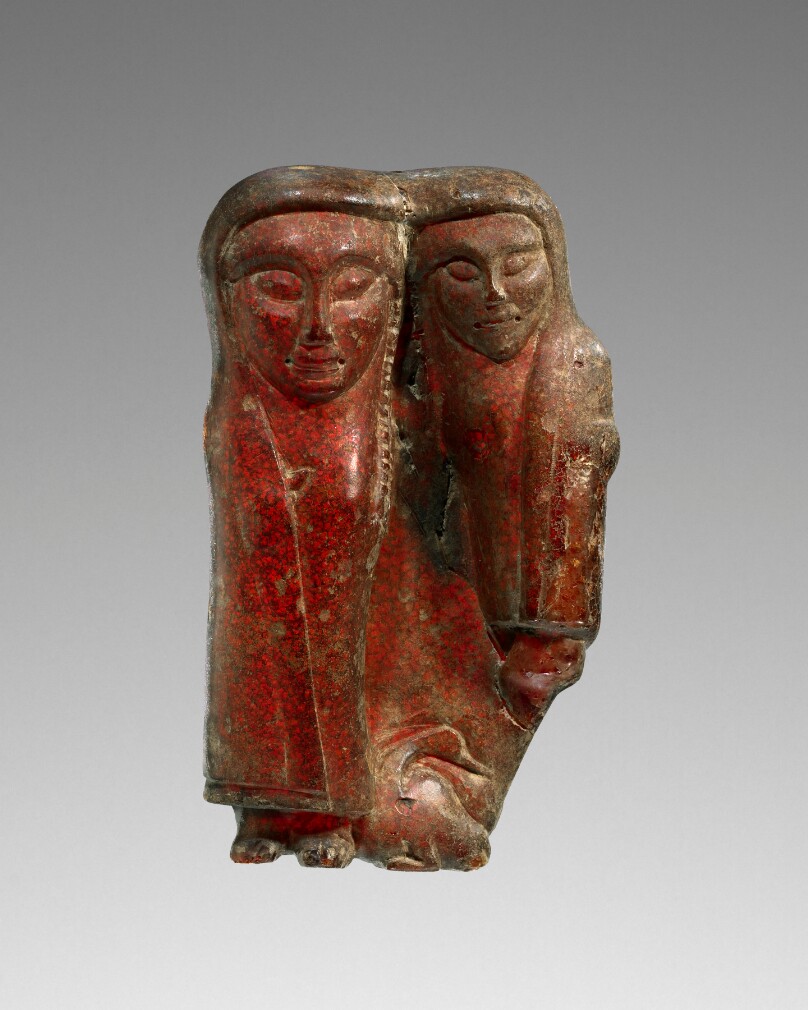
Pendant: Female Holding a Child (Kourotrophos) with Bird
Creator
UnknownAll works by this person →More on Getty ULAN- Date
- 600–550 B.C.
- Medium
- Amber
- Culture
- Etruscan or Italic
- Department
- Jewelry
- Institution
- Getty Museum
- Object ID
- 93b53b3c-98fd-46d0-9ef1-5b7c1afafcb7
From the Getty Museum record
The pendant, which is carved in the round, consists of two frontal figures standing side-by-side. On the left is a woman with her right hand at her breast, who embraces the smaller figure of a child with her left arm and hand. She represents a kourotróphos, a female typology of child-rearers who are shown carrying infants or children. The child is positioned above a long-necked water bird, possibly a goose, which looks back to the right. Placed on the same plane as the woman, the bird is represented only on the obverse of the pendant and appears to stand within the shelter of her cloak. Both figures wear a similar undergarment with a long skirt, close-fitting veils over their heads, and share the single heavy outer cloak. The shared cloak is an ancient fertility symbol related to marriage and procreation. In early Etruscan art, waterfowl feature prominently on the bronze objects from Iron Age Italy. Ducks, geese, and swans are among the most numerous subjects of figured ambers found at sites in Greece and central Italy. Female divinities holding waterfowl, in the motif of the mistress of the beasts (*Potnia Theron*), are depicted on ceramic vessels, bronzes, and personal ornaments beginning in the eighth century B.C.
The authoritative record is held by Getty Museum. LinkedCulture surfaces this object and its connections; it does not alter institutional metadata.
Get printable QR codesHide QR codes
Open QR codes for this object page and the museum record. They stay collapsed until needed.
Related across collections
Semantically similar works from Getty Museum and other institutions.