Getty Museum
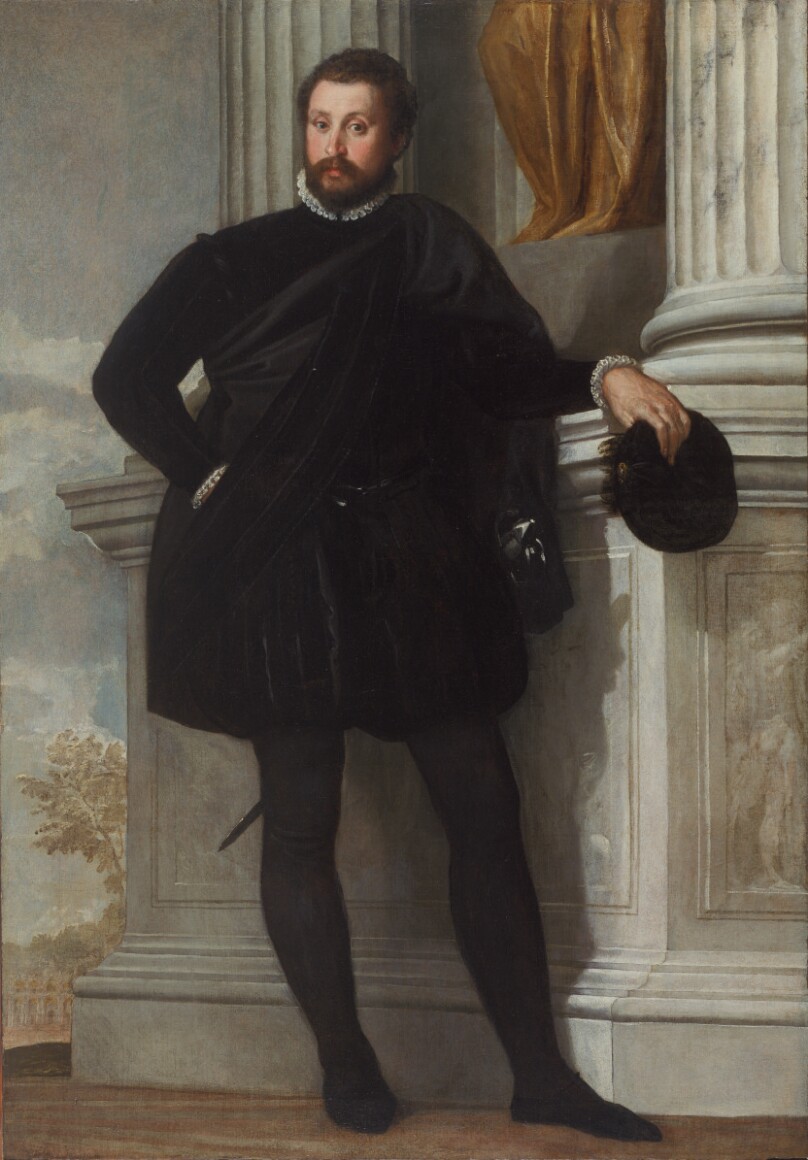
Portrait of a Man
Creator
Paolo Veronese (Paolo Caliari)Italian Artist · 1528–1588
All works by this person →Paolo Veronese belonged to a circle of influential and important painters in sixteenth-century Venice. Born Paolo Caliari, he became known as Veronese after his birthplace, Verona. At the age of fourteen, Veronese was apprenticed to an established Venetian painter, but he was more influenced by the monumental works of Raphael and Michelangelo. He arrived in Venice in at the age of twenty-five and
More on Getty ULAN- Date
- about 1576–1578
- Medium
- Oil on canvas
- Culture
- Italian
- Department
- Paintings
- Institution
- Getty Museum
- Object ID
- 95032cd1-6b6e-4350-9494-fce97e3bf469
From the Getty Museum record
The identity of this man is a mystery. At one point, scholars believed the painting may to be a self-portrait, but such speculation remains unconfirmed, since the sitter’s facial features differ somewhat from Veronese’s early self-portrait at the Hermitage Museum, St. Petersburg. Though his talents in the genre are largely unrecognized by modern audiences, Veronese was once regarded as Venice’s greatest portraitist. Sixteenth-century biographer Giorgio Vasari, despite his bias toward Florentine artists, voiced his admiration of Veronese’s portraits, which he said were all “beautiful and truly representing the court of the pope and of the emperor and a Venetian Senate, with many noblemen and senators of that Republic portrayed from life.” The man leans on the base of a structure with fluted columns. In a niche between the columns is a marble sculpture of a draped female figure, of which only the lower portion is visible. These clues may refer to the subject's profession, perhaps that of a sculptor or architect. Carved reliefs, barely discernible, adorn the sides of the architectural base. The one at the right perhaps illustrates a classical hero or a warrior in armor. His formal black attire and sword may also imply high military rank or membership in an order of knighthood. In the background at the lower left is the Venetian Basilica of San Marco, placed in an imaginary pastoral setting. The inclusion of the basilica likely alludes to the sitter's association with the church or the Venetian state.
The authoritative record is held by Getty Museum. LinkedCulture surfaces this object and its connections; it does not alter institutional metadata.
Get printable QR codesHide QR codes
Open QR codes for this object page and the museum record. They stay collapsed until needed.
Related across collections
Semantically similar works from Getty Museum and other institutions.