Getty Museum
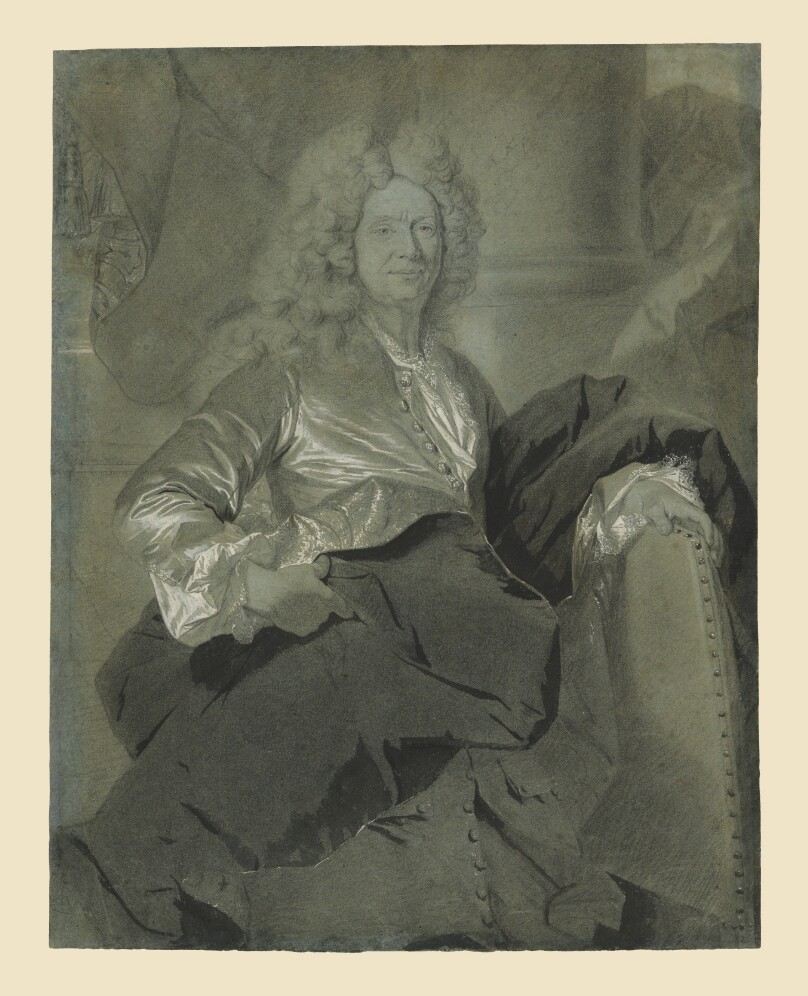
Portrait of a Man
Creator
Hyacinthe RigaudFrench Artist · 1659–1743
All works by this person →Hyacinthe Rigaud and his friendly rival Nicolas de Largillière were their era's leading portraitists, but Rigaud painted aristocrats while Largillière concentrated on the wealthy bourgeoisie. Their differing approaches reflect their clients' status. Rigaud's sitters are shown in elegant stances of natural superiority; they are members of society whose costumes and gestures describe their function
More on Getty ULAN- Date
- about 1712
- Medium
- Black chalk, brush with gray wash, heightened with white and gray gouache,, on blue-gray paper
- Culture
- French
- Department
- Drawings
- Institution
- Getty Museum
- Object ID
- a0271b95-5e64-403a-8709-ef47baf23f20
From the Getty Museum record
His subjects' rank and social position interested Hyacinthe Rigaud more than each individual's character. In this drawing of a wealthy nobleman, Rigaud concentrated on the luxurious sheen of his satin coat, the delicate lace frothing around his throat and cuffs, and the damask lining of his cloak, which surrounds him like a cloud. Subtle highlights even pick up the gleam of the brass studs decorating the chair underneath his left hand. Rigaud achieved these effects by applying a layer of white gouache on top of the black chalk and gray wash, creating a gleaming, three-dimensional effect. In contrast, the man's face and luxuriant flowing wig appear flat and static. Textiles, used for either home furnishings or dress, were important indicators of an individual's social rank in the 1700s. In an age when only the wealthiest members of society could afford such expensive and fragile fabrics as silk, satin, and damask, both quality and quantity mattered. Only wealthy individuals could wear lace in the early 1700s, and fashion strictly controlled the style and the amount that was shown. The abundance of fabulous cloth in this drawing is therefore a silent indicator of this man's wealth and importance.
The authoritative record is held by Getty Museum. LinkedCulture surfaces this object and its connections; it does not alter institutional metadata.
Get printable QR codesHide QR codes
Open QR codes for this object page and the museum record. They stay collapsed until needed.
Related across collections
Semantically similar works from Getty Museum and other institutions.