Getty Museum
Pygmalion and Galatea
Creator
Francisco José de Goya y Lucientes (Francisco de Goya)Spanish Artist · 1746–1828
All works by this person →Francisco José de Goya y Lucientes welcomed and received official honors and worldly success with enthusiasm. At the same time he left a ruthlessly penetrating record of his patrons and private expressions of introspection, moral objectivity, and caustic commentary on his times. By the 1780s Goya was Spain's leading painter, specializing in religious pictures and portraits. He acknowledged three m
More on Getty ULAN- Date
- possibly about 1812–1820
- Medium
- Brush and brown wash
- Culture
- Spanish
- Department
- Drawings
- Institution
- Getty Museum
- Object ID
- a20509c3-bd47-4495-88fc-8b7bd40a8564
From LinkedCulture
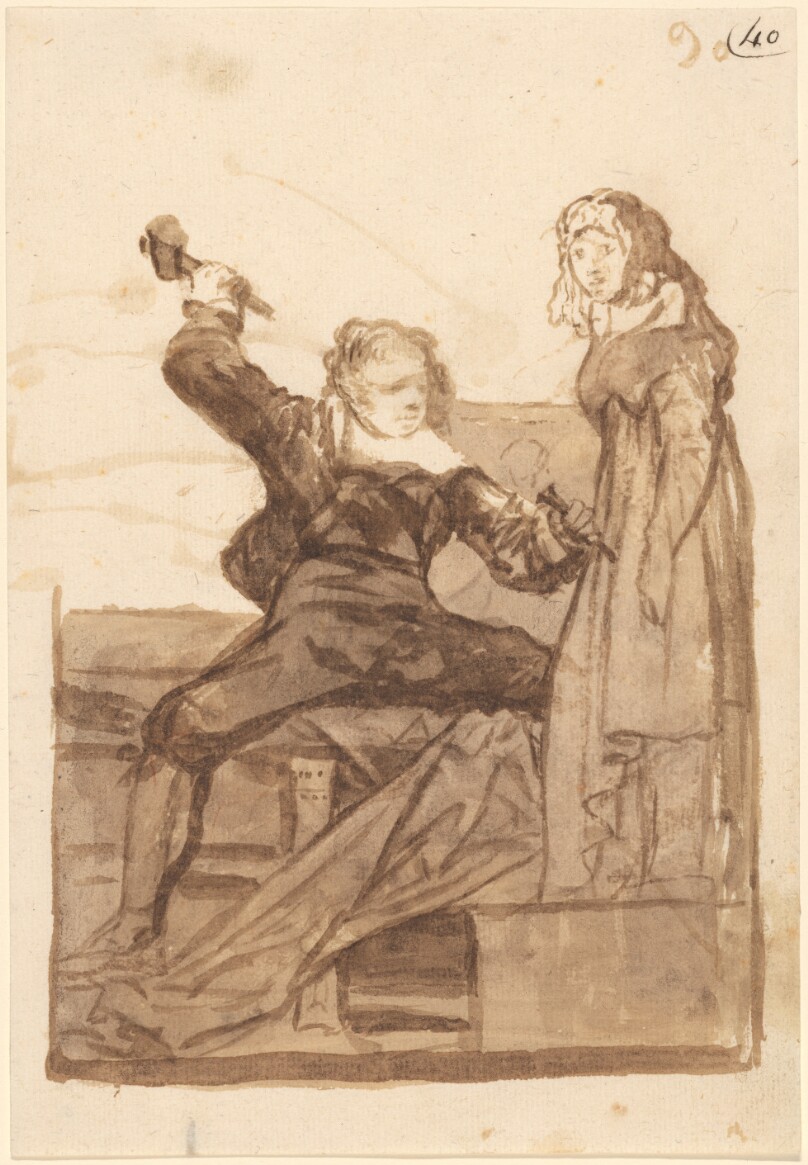
Goya takes the myth of Pygmalion and turns it into something deeply unsettling. In this brush and brown wash drawing, possibly made between 1812 and 1820, a wild-limbed figure rears back with a hammer while a fearful Galatea leans slightly forward, wide-eyed. The freely applied sepia washes show Goya's total command of tone with minimal means. What makes it matter is how completely he subverts Ovid, replacing tender creation with something far more disturbing.
Written by LinkedCulture for its video on this object. Machine-generated (claude-sonnet-4-6), not yet reviewed by a person. It is not part of the museum’s record.
From the Getty Museum record
A sculptor chisels away at his statue of an ideal woman. Francisco José Goya y Lucientes here referred to the mythological story of Pygmalion, the legendary king of Cyprus who fell in love with a statue. According to Ovid, Pygmalion carved the statue from ivory with wonderful artistry. Every night he prayed to Venus that he might have a wife as beautiful as the image he had created. Finally, the goddess caused the statue to come to life. As Pygmalion's wife, she came to be called Galatea. In a possible self-portrait, Goya depicted Pygmalion with his legs spread wide, readying himself to take a mighty swing at the chisel, which is aimed at Galatea's crotch. Leaning slightly forward, she looks out with a fearful expression. Goya's animated interpretation of the well-known myth is highly original and even mocking. Free application of sepia wash shows Goya's complete command of the range of tones available in this medium.
The authoritative record is held by Getty Museum. LinkedCulture surfaces this object and its connections; it does not alter institutional metadata.
Get printable QR codesHide QR codes
Open QR codes for this object page and the museum record. They stay collapsed until needed.
Related across collections
Semantically similar works from Getty Museum and other institutions.