Getty Museum
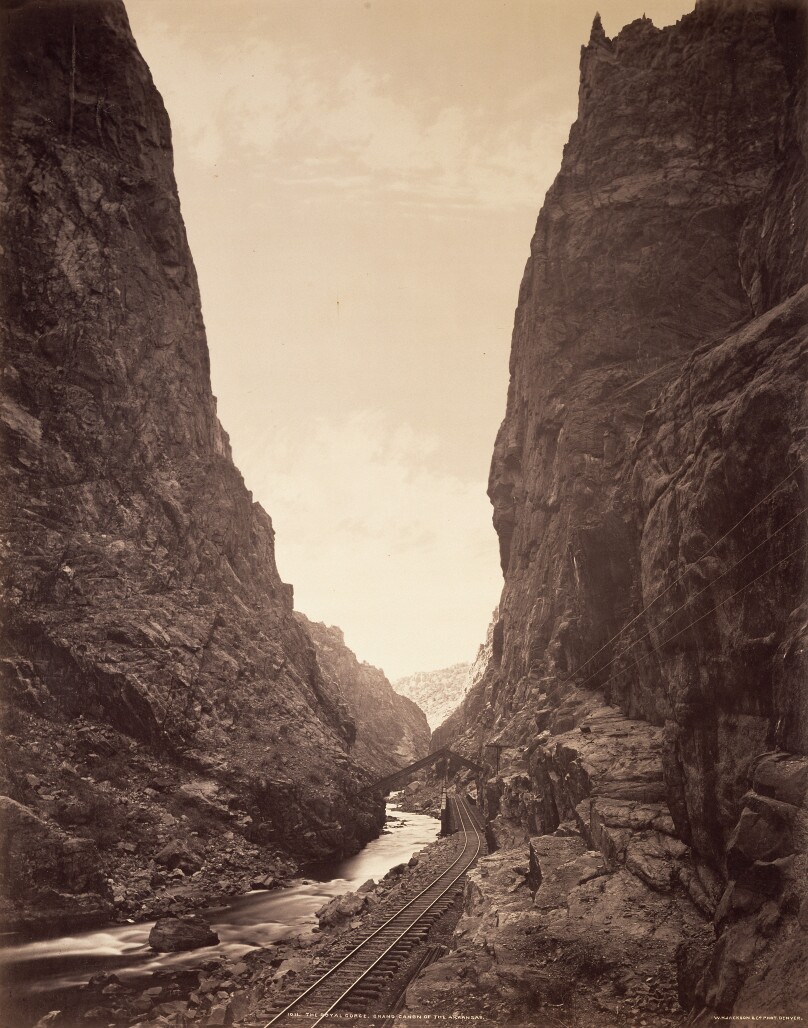
The Royal Gorge, Grand Cañon of the Arkansas
Creator
William Henry JacksonAmerican Photographer · 1843–1942
All works by this person →From age twelve until age ninety-nine, William Henry Jackson was involved on some level with photography. After a tour of duty in the Civil War, he headed West and eventually settled in Omaha, Nebraska, where he opened a portrait photography studio with his brother Edward. As Jackson explained, however, "Portrait photography never had any charms for me, so I sought my subjects from the house-tops,
More on Getty ULAN- Date
- about 1880
- Medium
- Albumen silver print
- Culture
- American
- Department
- Photographs
- Institution
- Getty Museum
- Object ID
- a2aa3bb7-5401-49d4-aae6-9f03f7f6e69a
From the Getty Museum record
Telegraph lines and neatly laid wood ties and iron rails contrast with the irregular pattern of a canyon's craggy rock face, signaling that the introduction of the railroad into remote areas forever altered the landscape. The arrival of trains along the Arkansas River, which flows through Colorado and Kansas, also marked a shift in the region's economy. Barges and steamboats had previously controlled the movement of goods and passengers along the river, but the railroad's lower fares soon led to a new monopoly on transportation in the area. This photograph specifically illustrates a narrow section of the river that would have been difficult for large water vessels to navigate. Though laying tracks in this area was challenging, engineers devised structures, such as the short bridge in the distance, that overcame all obstacles.
The authoritative record is held by Getty Museum. LinkedCulture surfaces this object and its connections; it does not alter institutional metadata.
Get printable QR codesHide QR codes
Open QR codes for this object page and the museum record. They stay collapsed until needed.
Related across collections
Semantically similar works from Getty Museum and other institutions.