Getty Museum
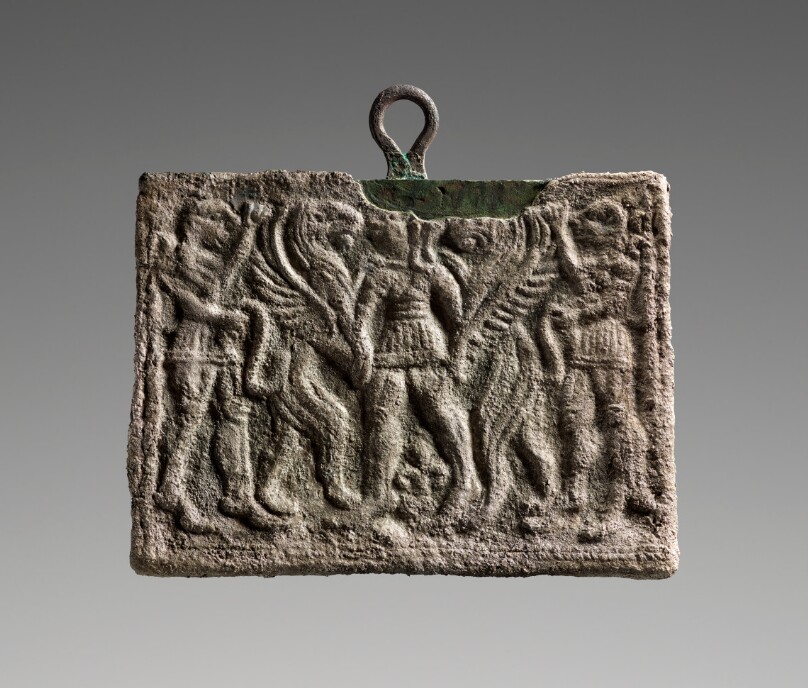
Belt Plaque
Creator
UnknownAll works by this person →More on Getty ULAN- Date
- 700–600 B.C.
- Medium
- Silver and bronze
- Culture
- Etruscan
- Department
- Jewelry
- Institution
- Getty Museum
- Object ID
- a39bb4cb-5292-42c8-97ac-a51efd02fc55
From the Getty Museum record
A rectangular plaque forming half of a belt clasp, the relief consists of a silver sheet, the edges of which are folded and crimped over a bronze core. The repoussé decoration features a despotes theron (“Master of the Animals”) between youths and rampant winged felines. The despotes wears a chitoniskos and stands with his torso frontal and head and legs in profile to the left. Between his legs is a “tree of life.” He holds the felines’ front paw, while the youths grasp their wing and curling tail. This archetypal motif has a long history in Near Eastern, Egyptian, and Aegean Bronze Age art. Much rarer than the female divinity subduing animals, the image of a male dominating birds, horses, or hybrid creatures was adopted in Etruria by the eighth century B.C. The artisan, likely from a workshop in Cerveteri, incorporated mythical imagery that was introduced in Etruria through imported Phoenician bowls, which are embossed with bands of eastern-inspired scenes. The flanking heroes are usually identified as the Dioskouroi, Castor and Pollux, known in Etruria as Tinas Cliniar, the sons of Tinia.
The authoritative record is held by Getty Museum. LinkedCulture surfaces this object and its connections; it does not alter institutional metadata.
Get printable QR codesHide QR codes
Open QR codes for this object page and the museum record. They stay collapsed until needed.
Related across collections
Semantically similar works from Getty Museum and other institutions.