Getty Museum
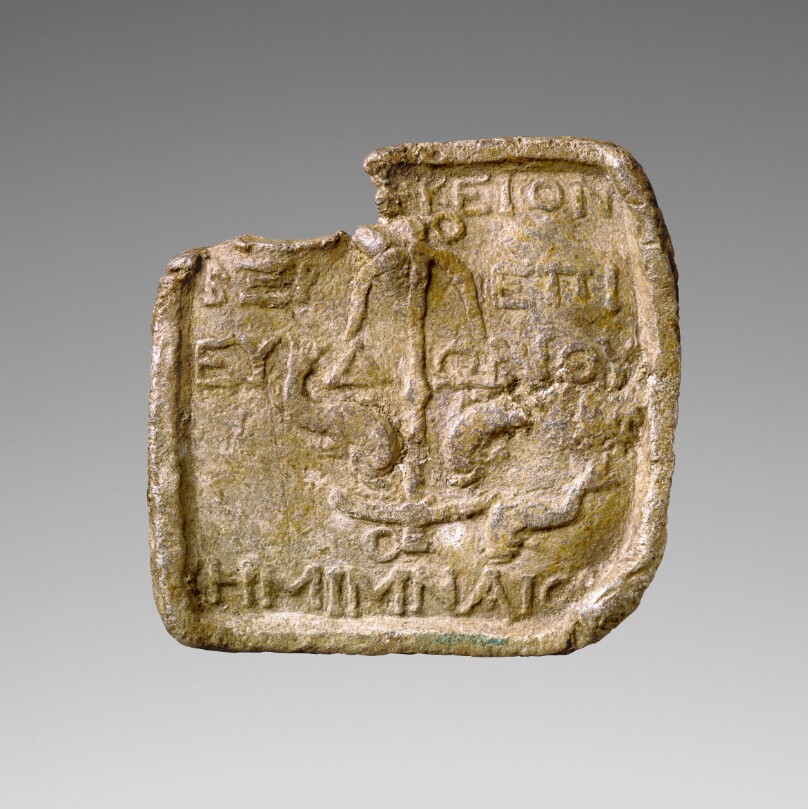
Weight with Anchor and Dolphins
Creator
UnknownAll works by this person →More on Getty ULAN- Date
- 151–150 B.C.
- Medium
- Lead
- Culture
- Greek (Seleucid)
- Department
- Implements
- Institution
- Getty Museum
- Object ID
- a984344b-96e3-4767-b44b-75ed1d1e00d3
From the Getty Museum record
Two dolphins flank an inverted anchor, while a third swims at the right on this Seleucid lead weight. The anchor and dolphins are common Seleucid symbols, referring to legends of the divine origins of Seleukos I, the dynasty's founder. According to these stories, the god Apollo supposedly fathered Seleukos and gave his mother a ring decorated with an anchor. The dolphin was Apollo's sacred animal. The inscription that surrounds the anchor reads: "Of the Seleucids / 162 / under / Eudoros / half-mina." The 162 in the inscription refers to the 162nd year of Seleucid rule or 151/150 B.C. A mina was the basic unit of weight used in the Seleucid Empire at this time. Although earlier made of bronze, by this time Seleucid official weights were being made from lead. The name Eudoros refers to the current *agoranomos,* the official responsible for overseeing the market. His duties included maintaining the quality and correct weight of goods.
The authoritative record is held by Getty Museum. LinkedCulture surfaces this object and its connections; it does not alter institutional metadata.
Get printable QR codesHide QR codes
Open QR codes for this object page and the museum record. They stay collapsed until needed.
Related across collections
Semantically similar works from Getty Museum and other institutions.