Getty Museum
Divinae Institutiones; De Ira Dei; De Opificio; De Ave Phoenice
- Date
- about 1456
- Medium
- Tempera colors, gold leaf, and ink
- Culture
- Italian
- Department
- Manuscripts
- Institution
- Getty Museum
- Object ID
- b269e655-fba2-487e-b0dd-1f032a829263
From the Getty Museum record
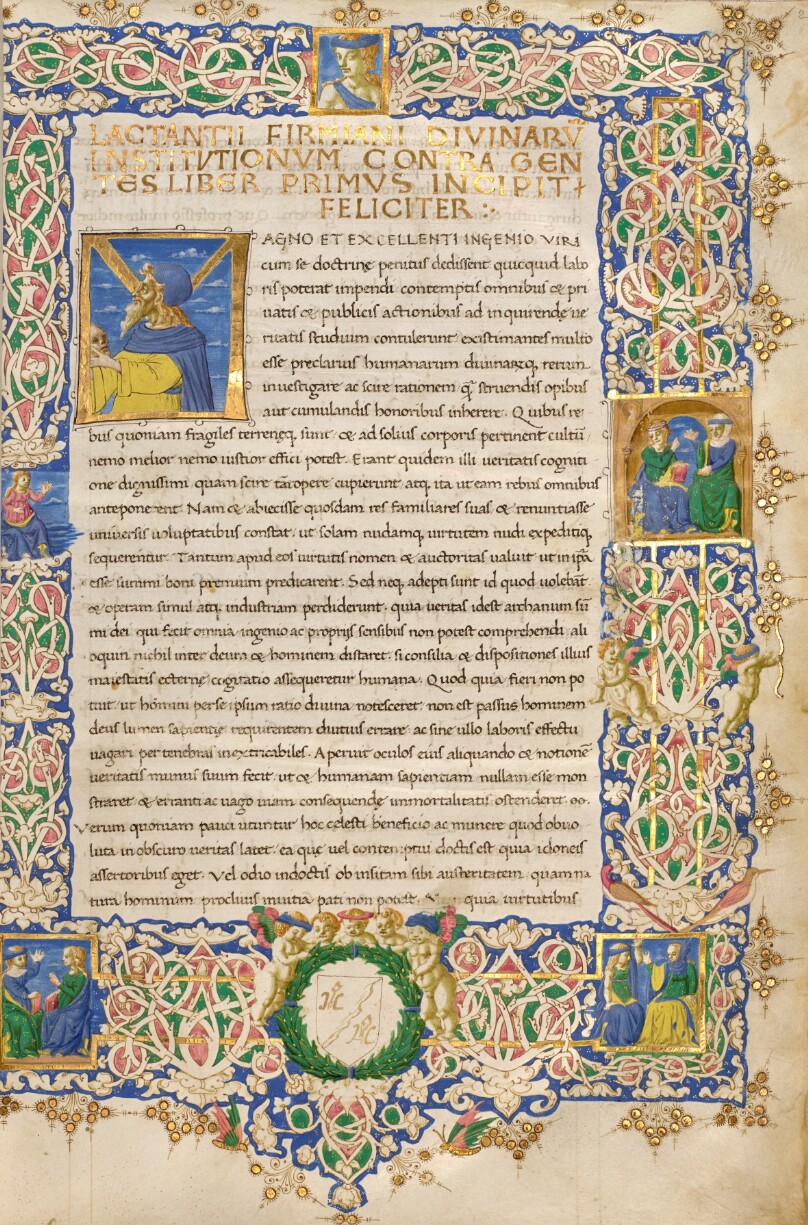
This manuscript comprises four thematically related texts by the Roman Christian author Lucius Caecilius Firmianus Lactantius (c. 240–ca. 320 CE). The first, which takes up the largest portion of the volume, is *The Divine Institutes*. It is followed by Lactantius’s treatises *On the Wrath of God* and *The Works of God* as well as his poem *The Phoenix*. Lactantius’s texts belong to a type known as *apologia*, or defenses, of the Christian faith. A pristine example of Florentine book art during the Renaissance, the manuscript attests to elite patrons’ interests not only in ancient sources and the writings of the early Church, but also in the aesthetics of the Classical world. The manuscript was copied by the Florence-based scribe and notary Leonardo di Giovanni Tolosani da Colle in a legible script known as humanist miniscule. The script models those found in Carolingian (mid-eighth and ninth centuries) manuscripts, and it was valued for its evocation of the type of script used in Classical Antiquity. Decorations were added by the illuminator and priest Ser Ricciardo di Nanni to three of the pages and consist of ornamental frames, portrait busts, and elaborate initials. The color palette is mostly green, yellow, blue, and white, with touches of pink. However, what at first appears to be white pigment is actually areas of the parchment page that have been left blank—a technique known as *bianchi girari* (white vine-stem) in Italian. The white vines imitate the decoration of Italian manuscripts of the twelfth century, which Renaissance collectors misunderstood to be much older. Gold is also used throughout, for both letters and frames. A portrait of Lactantius inside the letter *M* appears at the start of the manuscript and shows the author wearing a philosopher’s cap and holding a skull. The skull is an example of *memento mori*, or a reminder of death and a warning against vanity. Surrounding the author portrait are images of the ancient Greek god Apollo and the seven sybils, ancient prophetesses believed to have foretold the coming of Christ. Ricciardo likely took inspiration for these Classical motifs from the antique incised gems and cameos kept in the collections of his patrons.
The authoritative record is held by Getty Museum. LinkedCulture surfaces this object and its connections; it does not alter institutional metadata.
Get printable QR codesHide QR codes
Open QR codes for this object page and the museum record. They stay collapsed until needed.
Related across collections
Semantically similar works from Getty Museum and other institutions.