Getty Museum
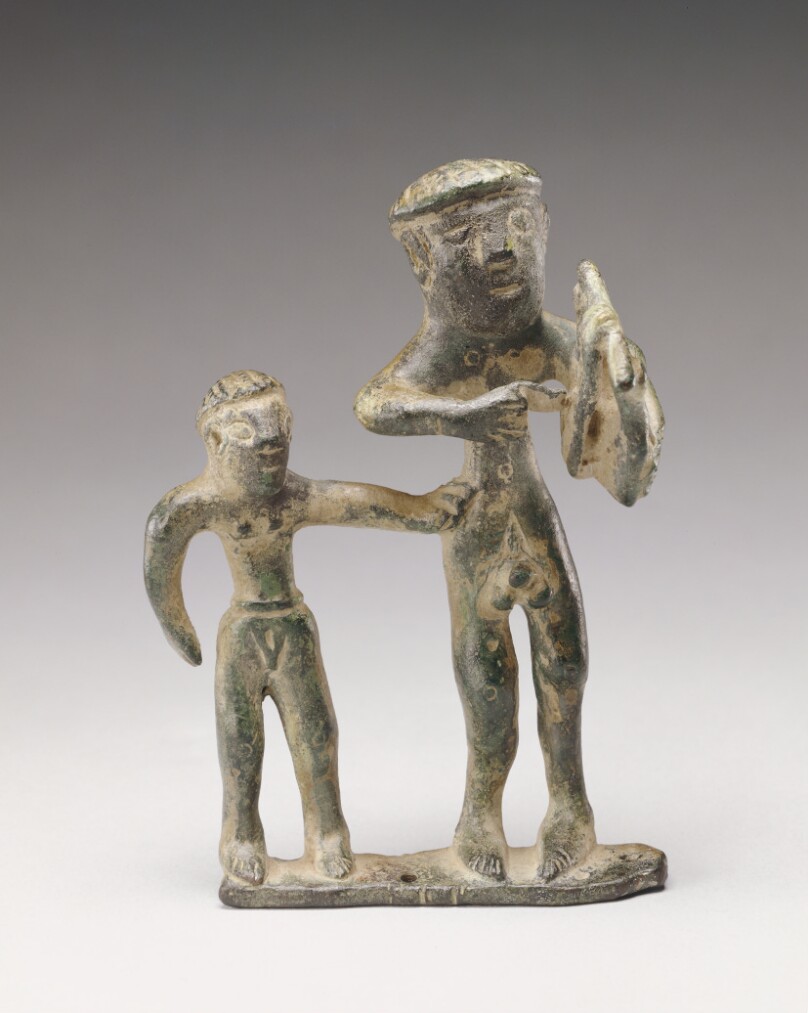
Statuette of a Lyre Player with a Companion
Creator
UnknownAll works by this person →More on Getty ULAN- Date
- 690–670 B.C.
- Medium
- Bronze
- Culture
- Greek
- Department
- Sculpture
- Institution
- Getty Museum
- Object ID
- b2e1eeca-ca6f-40f1-a131-c0b086d2cb0b
From the Getty Museum record
Cast in solid bronze, this statuette of a standing lyre player and a smaller companion dates to the early 600s B.C. The statuette was probably dedicated to the gods and was originally attached to another object, as indicated by the holes in the base. The figures' style and proportions indicate an origin on the island of Crete. The statuette's composition and subject matter are unusual. Groups of figures are not common in Greek small bronzes, nor are lyre players, although they are often found in other media. The unusual subject of the Getty Museum's bronze has led some scholars to speculate about the statuette's meaning. By the early 600s B.C., Homer's poems were spreading throughout Greece and influencing the visual arts. The lyre player may represent a poet such as those who traveled throughout Greece reciting the epic poems of gods and heroes.
The authoritative record is held by Getty Museum. LinkedCulture surfaces this object and its connections; it does not alter institutional metadata.
Get printable QR codesHide QR codes
Open QR codes for this object page and the museum record. They stay collapsed until needed.
Related across collections
Semantically similar works from Getty Museum and other institutions.