Getty Museum
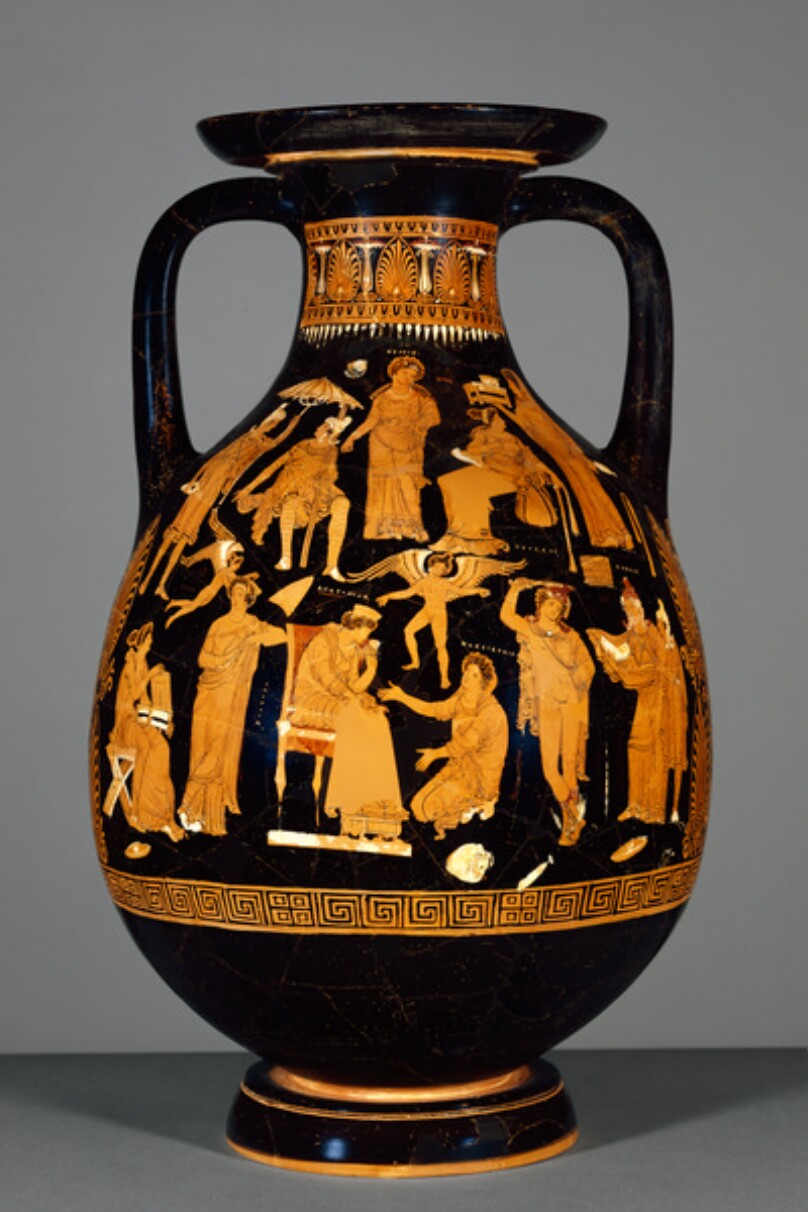
Apulian Red-Figure Pelike
Creator
Darius PainterPainter
All works by this person →The Darius Painter is the name of an artist who decorated pottery using the red-figure technique in Apulia in southern Italy in the late 300s B.C. As with most vase-painters, the real name of the Darius Painter is unknown, and he is identified only by the stylistic traits of his work. He is named for a vase in Naples that depicts Darius, a Persian king. The Darius Painter was one of the first to d
More on Getty ULAN- Date
- about 340–330 B.C.
- Medium
- Terracotta
- Culture
- Greek (South Italian, Apulian)
- Department
- Vessels
- Institution
- Getty Museum
- Object ID
- b570c335-b210-4256-ad73-b5322cc4c9bd
From the Getty Museum record
Depicted on Side A of this red-figure pelike is a scene after Perseus's rescue of Andromeda from a sea monster. In the center of the lower register, Andromeda sits on a throne while Kassiopeia kneels before her entreating her pardon. A small figure of Eros hovers above. At the right stand Perseus, King Kepheus and a male attendant. Leaning on the throne is a Homonioa (a personification of concord). On the far left is a seated woman. At the top center, watching the scene below, is Aphrodite. The central figures are identified by inscription. Other unidentified attendants complete the scene. The scene on side B is of the type associated with the daily life of women. Four women, a youth, and a flying Eros are depicted.
The authoritative record is held by Getty Museum. LinkedCulture surfaces this object and its connections; it does not alter institutional metadata.
Get printable QR codesHide QR codes
Open QR codes for this object page and the museum record. They stay collapsed until needed.
Related across collections
Semantically similar works from Getty Museum and other institutions.