Getty Museum
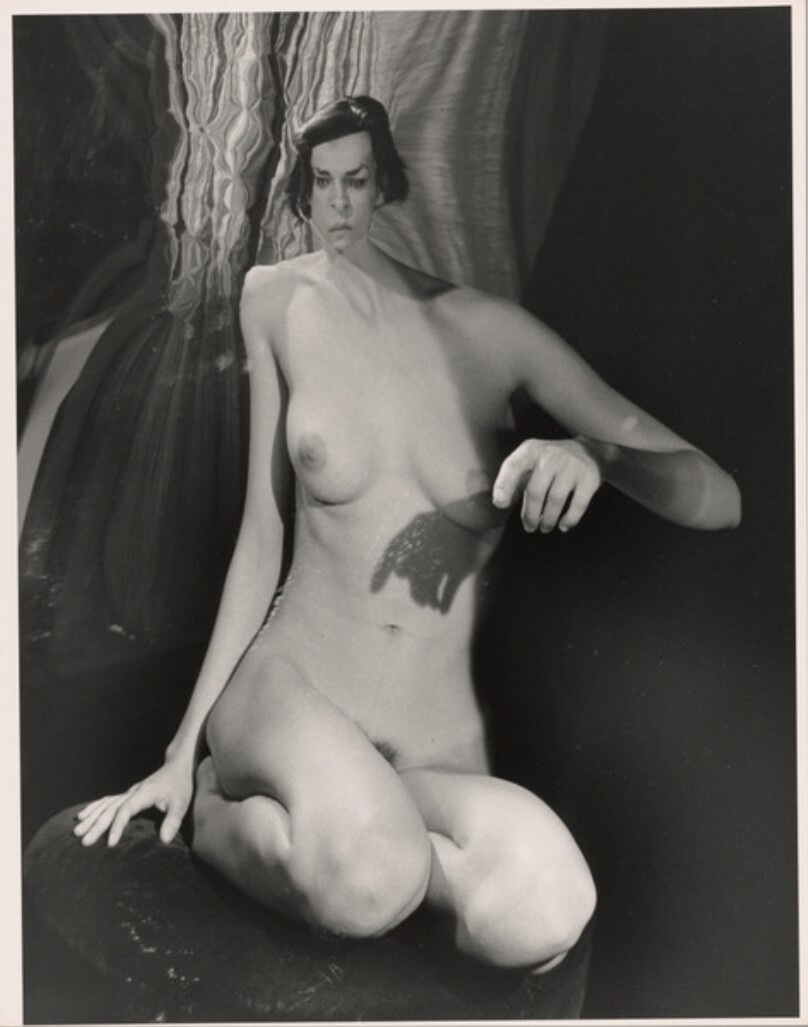
Distortion, Paris
Creator
André KertészAmerican Photographer · 1894–1985
All works by this person →> [T]he moment always dictates in my work....Everybody can look, but they don't necessarily see...I see a situation and I know that it's right. > > --André Kertész André Kertész bought his first camera and made his first photograph while working as a clerk at the Budapest stock exchange in 1912. After years of amateur snapshot photography in his native Hungary, he moved to Paris in 1925 and began
More on Getty ULAN- Date
- negative March 1984; print later
- Medium
- Gelatin silver print
- Culture
- American
- Department
- Photographs
- Institution
- Getty Museum
- Object ID
- b84fb725-8500-4e61-a7e3-99cc252f4d2e
From the Getty Museum record
> The nature of womanhood began to preoccupy André Kertész in 1933 in a very different way than in his female portraits of 1927 ([85.XM.371.1](https://www.getty.edu/art/collection/objects/55846/andre-kertesz-magda-forstner-paris-american-1926/), [86.XM.706.14](https://www.getty.edu/art/collection/objects/55865/andre-kertesz-anna-marie-merkel-mme-repsz-paris-american-1926-1927/), [84.XM.193.56](https://www.getty.edu/art/collection/objects/55789/andre-kertesz-mrs-hubbell-paris-american-1931/)): the early series presents perfectly costumed and coiffured women, while the 1933 series shows women in vulnerable and distorted states of undress. See also [84.XM.193.16](https://www.getty.edu/art/collection/objects/55749/andre-kertesz-distortion-american-negative-1933-print-later/), [84.XM.193.18](https://www.getty.edu/art/collection/objects/55751/andre-kertesz-distortion-number-40-paris-american-1933/), [85.XM.176.5](https://www.getty.edu/art/collection/objects/55823/andre-kertesz-distortion-48-american-1933/), [85.XM..176.6](https://www.getty.edu/art/collection/objects/55824/andre-kertesz-distortion-49-american-1933/), and [85.XM.176.7](https://www.getty.edu/art/collection/objects/55825/andre-kertesz-distortion-number-150-paris-american-1933/). > > Kertész was hired in 1933 by the men's magazine *Le Sourire* to create a series of nude studies using parabolic mirrors to exaggerate and condense different parts of the picture. The images show a direct connection to Surrealist painting and literature. Picasso also created distorted transformations of the idealized female form during this period. > > Two other photographs in the Getty collection ([86.XM.706.33](https://www.getty.edu/art/collection/objects/55884/andre-kertesz-nude-paris-american-about-1933/) and [2018.52.7](https://www.getty.edu/art/collection/objects/329553/andre-kertesz-distortion-20-american-negative-1933-print-later/)) make up part of a small group of surviving undistorted studies of Kertész's model for the series of approximately two hundred Distortions. > > Adapted from *André Kertész*, In Focus: Photographs from the J. Paul Getty Museum by Weston Naef (Los Angeles: J. Paul Getty Museum, 1994), 74. ©1994, J. Paul Getty Museum.
The authoritative record is held by Getty Museum. LinkedCulture surfaces this object and its connections; it does not alter institutional metadata.
Get printable QR codesHide QR codes
Open QR codes for this object page and the museum record. They stay collapsed until needed.
Related across collections
Semantically similar works from Getty Museum and other institutions.