Getty Museum
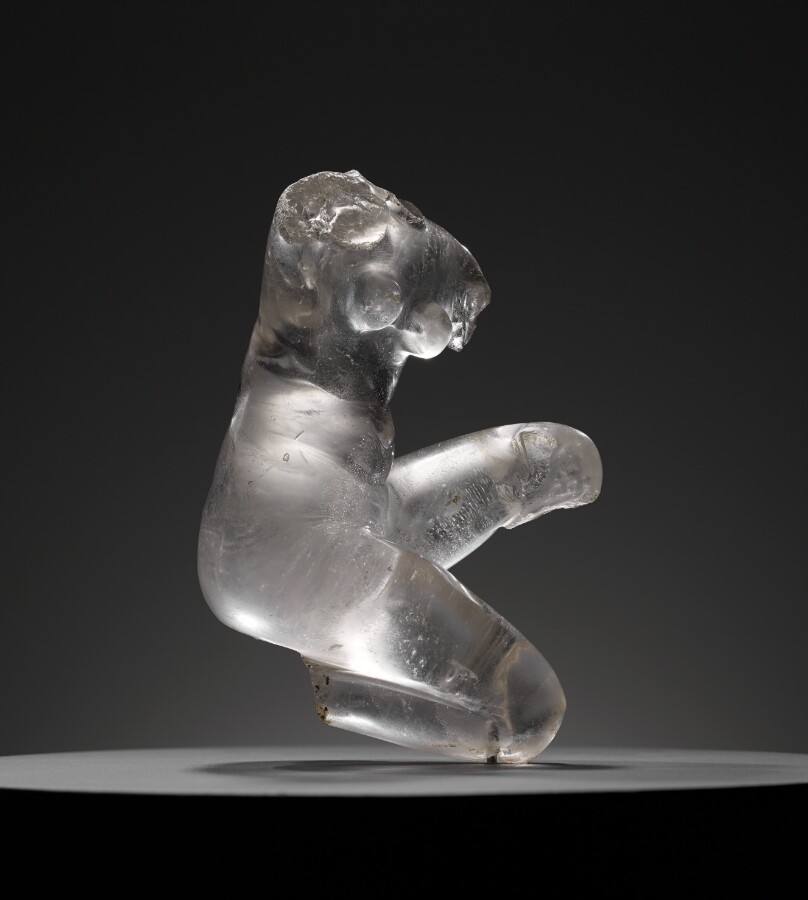
Statuette of Venus
Creator
UnknownAll works by this person →More on Getty ULAN- Date
- 1st century B.C.
- Medium
- Rock crystal
- Culture
- Roman
- Department
- Sculpture
- Institution
- Getty Museum
- Object ID
- b9e0b8c8-5ae1-47f0-b9f8-ed2d94d74c4c
From the Getty Museum record
Venus, the goddess of love, crouches low as she washes herself. With her right knee on the ground and her left sharply flexed, she turns her upper body and appears to raise her right arm. The dynamic movement not only reveals the goddess’s voluptuous sensuality, but also encourages the viewer to rotate the figurine in order to appreciate it fully. Held in the hand, it would have taken on the appearance of human flesh. The statuette is a miniature variant of an original sculpture that is most commonly dated to the mid-to-late third century BC. Copies and replicas were especially popular in the Roman period, with artists reproducing the original in large numbers in a variety of media and sizes and with slight variations of pose (compare [55.AA.10](http://www.getty.edu/art/collection/objects/6482/unknown-maker-statue-of-a-crouching-venus-roman-100-150-ad/?dz=#56cafc9a5a2efaaf35da0975e7ee944f971806c6). Roman patrons often commissioned miniature copies of large-scale Greek public art for their private use, decorating their homes with the statuettes. The use of the valuable medium of rock crystal marks this particular piece as a prestigious luxury item for a rich patron.
The authoritative record is held by Getty Museum. LinkedCulture surfaces this object and its connections; it does not alter institutional metadata.
Get printable QR codesHide QR codes
Open QR codes for this object page and the museum record. They stay collapsed until needed.
Related across collections
Semantically similar works from Getty Museum and other institutions.