Getty Museum
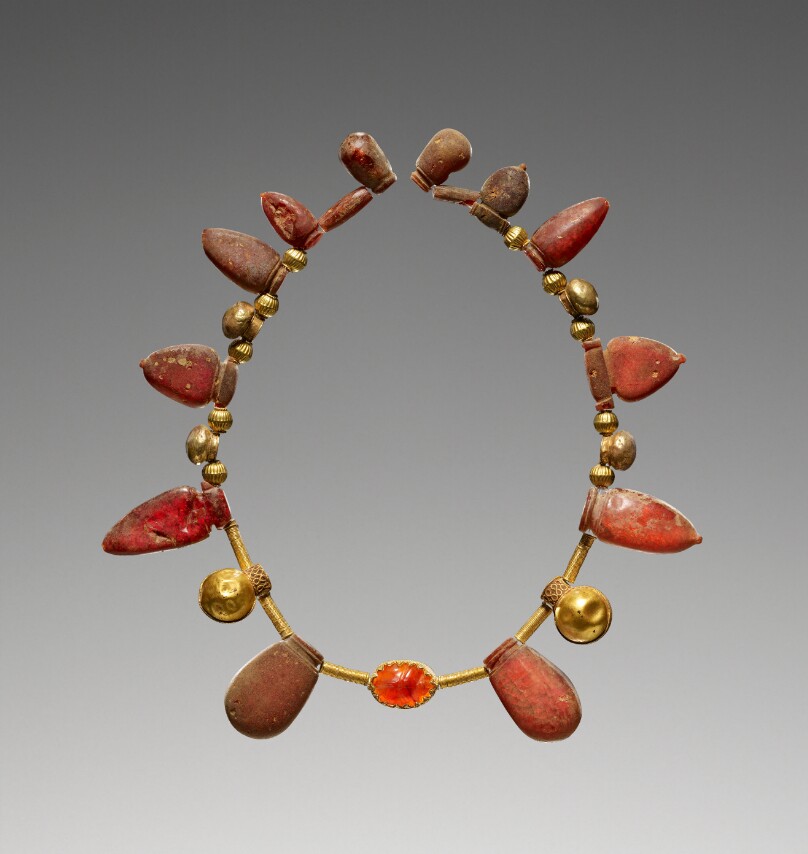
Pendant Necklace with an Engraved Gem
Creator
UnknownAll works by this person →More on Getty ULAN- Date
- 550–450 B.C.
- Medium
- Scarab: cornelian; mount: gold; beads: amber and gold
- Culture
- Etrusco-Italic
- Department
- Jewelry
- Institution
- Getty Museum
- Object ID
- bdf95579-8e4f-4c51-b1ac-44cab6dc9d48
From the Getty Museum record
A necklace is composed of small biconical ribbed gold beads, small gold pendants, two large spherical gold beads with a filigree figure of eight pattern on the collar, and drop-shaped amber pendants. At the center is a Greek carnelian gem engraved with an image of a lion attacking a bull, which is set into an Etruscan gold mount with granulation. It is likely that the necklace has been recomposed in the modern era. Cultures across the Mediterranean imported raw amber mined from large deposits on the shores of the North and Baltic Seas. Traders carried the prized commodity south, eventually establishing the port city of Aquileia as a leading center of commerce and craftsmanship. The material’s gemstone-like hardness made it suitable for carving into amulets, beads, small vessels, and furniture inlays. Necklaces and pendants were produced by craftsmen in Etruscan workshops as well as itinerant artisans active in Campania and Apulia. Many amber artifacts have been found in graves throughout central and southern Italy. Necklaces of amber and gold beads are mentioned in Homer’s *Odyssey* as seductive baubles brought by suitors and Phoenician traders.
The authoritative record is held by Getty Museum. LinkedCulture surfaces this object and its connections; it does not alter institutional metadata.
Get printable QR codesHide QR codes
Open QR codes for this object page and the museum record. They stay collapsed until needed.
Related across collections
Semantically similar works from Getty Museum and other institutions.