Getty Museum
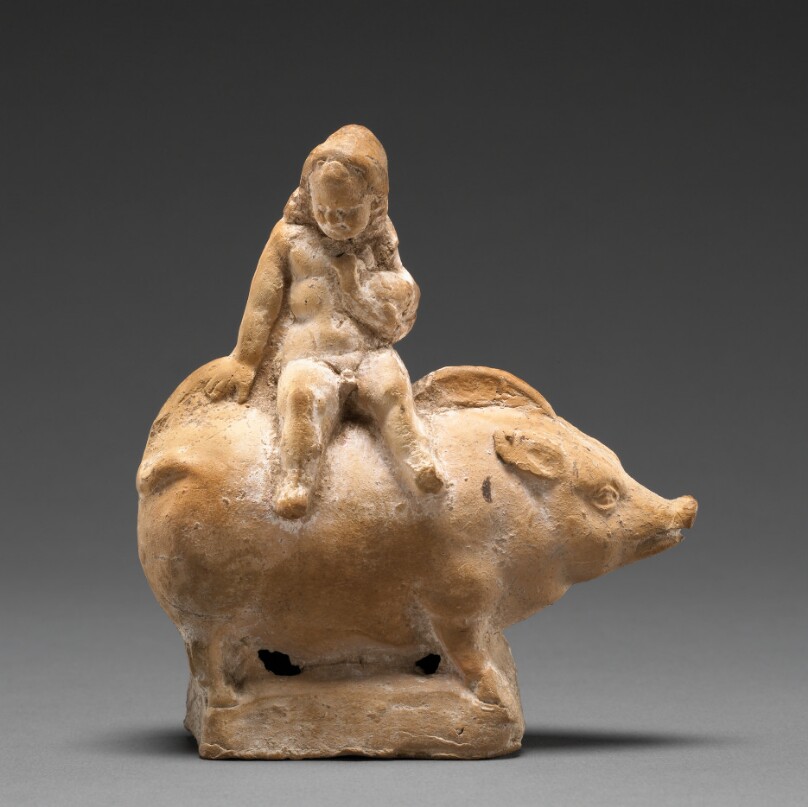
Figure of a Child Seated atop a Pig
Creator
UnknownAll works by this person →More on Getty ULAN- Date
- 2nd–1st century B.C.
- Medium
- Terracotta with polychromy
- Culture
- East Greek (Rhodian?)
- Department
- Sculpture
- Institution
- Getty Museum
- Object ID
- c1c2ffee-3b49-454b-9194-29ba8e224b6a
From the Getty Museum record
A boy sits atop a rotund pig. The pig's large stomach hangs low and touches the ground. The animal's small legs seem barely able to support its weight. The boy's long hair is pulled into a central braid, a common hairstyle for both boys and girls in ancient Greece. One of the child's hands touches his chin; the other rests on the pig's back. This figure was formed by pressing wet clay into a two-part mold to form a small sculpture in the round that can be seen from any side. After the figure was fired in a kiln, it was removed from the mold and painted in bright colors. Traces of pink and white pigment are still visible on the figurine. Inside the pig, small pieces of dried clay produce a rattling sound when shaken. Children in ancient Greece would have been amused by a rattle like this one. In antiquity, however, when disease often claimed the lives of infants and young children, the sound produced by rattles was also intended to ward off evil. Rattles in the shape of pigs probably had further significance, since pigs were sacrificed to various gods in return for protection of children and those caring for them. Terracotta figurines such as this have been found in children's graves and sanctuaries, where they were deposited as gifts to the gods.
The authoritative record is held by Getty Museum. LinkedCulture surfaces this object and its connections; it does not alter institutional metadata.
Get printable QR codesHide QR codes
Open QR codes for this object page and the museum record. They stay collapsed until needed.
Related across collections
Semantically similar works from Getty Museum and other institutions.