Getty Museum
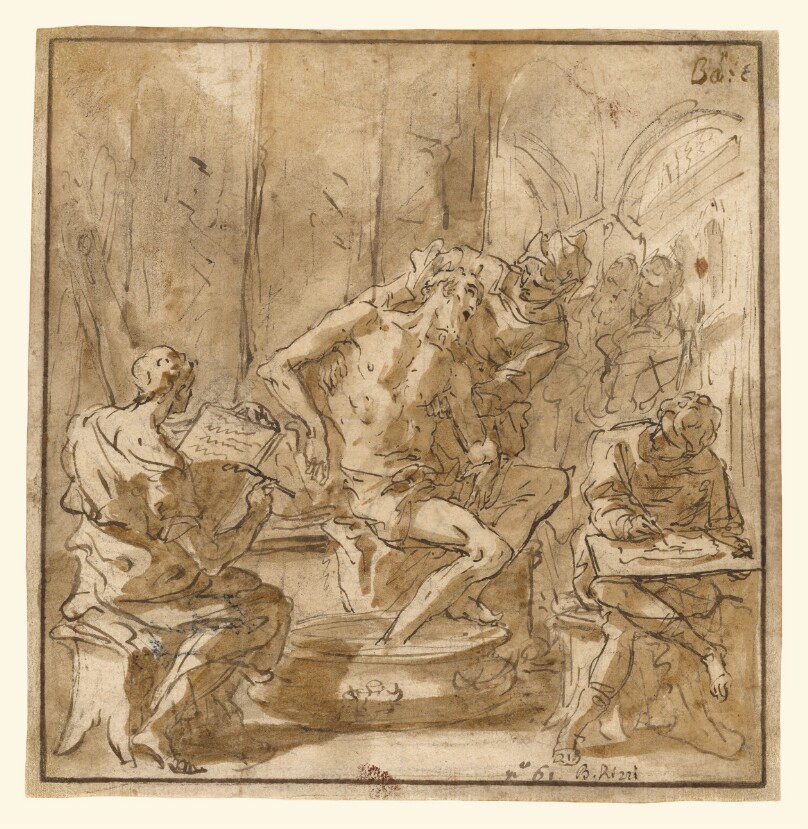
The Death of Seneca (recto); Study of a Man (verso)
Creator
Sebastiano RicciItalian Artist · 1659–1734
All works by this person →One of the principal figures in the revival of Venetian painting in the 1700s, Sebastiano Ricci's dramatic and sumptuous work appealed to ecclesiastical and royal patrons across Europe. Ricci's painting was indebted both to Paolo Veronese and other Italian painters of the 1500s and looked ahead to the next generation of Venetian artists including Giambattista Tiepolo and Antonio Guardi. Ricci bega
More on Getty ULAN- Date
- about 1705
- Medium
- Pen and brown ink, brown wash, and black chalk (recto); pen and brown ink (verso)
- Culture
- Italian
- Department
- Drawings
- Institution
- Getty Museum
- Object ID
- c2371f82-a8d1-4069-8139-21faecbe6871
From the Getty Museum record
Not long for this world, the Greek philosopher Seneca is helped into a bath by a female attendant. Having slit his wrists and consumed poison, Seneca struggles his way into the warm water intended to hasten his death. His limbs are limp and his mouth agape, but the philosopher is still able to complete his final thoughts, which two attentive scribes on either side of the scene dutifully record. In the right background, two other observers await Seneca's final breath. Charged with conspiracy, Seneca chose to commit suicide rather than face the humiliation of execution. This narrative of the Roman Empire was a popular subject in Italy in the 1700s and reflected the revival of interest in Stoicism. Stoic philosophers like Seneca argued for the control of the emotions; his suicide embodied this repression of feeling. Sebastiano Ricci's depiction of the pivotal moment in this episode likely served as a preparatory study for a painting. The small drawing displays Ricci's economical use of line and ability to compose a complex narrative in a clear and dramatic manner.
The authoritative record is held by Getty Museum. LinkedCulture surfaces this object and its connections; it does not alter institutional metadata.
Get printable QR codesHide QR codes
Open QR codes for this object page and the museum record. They stay collapsed until needed.
Related across collections
Semantically similar works from Getty Museum and other institutions.