Getty Museum
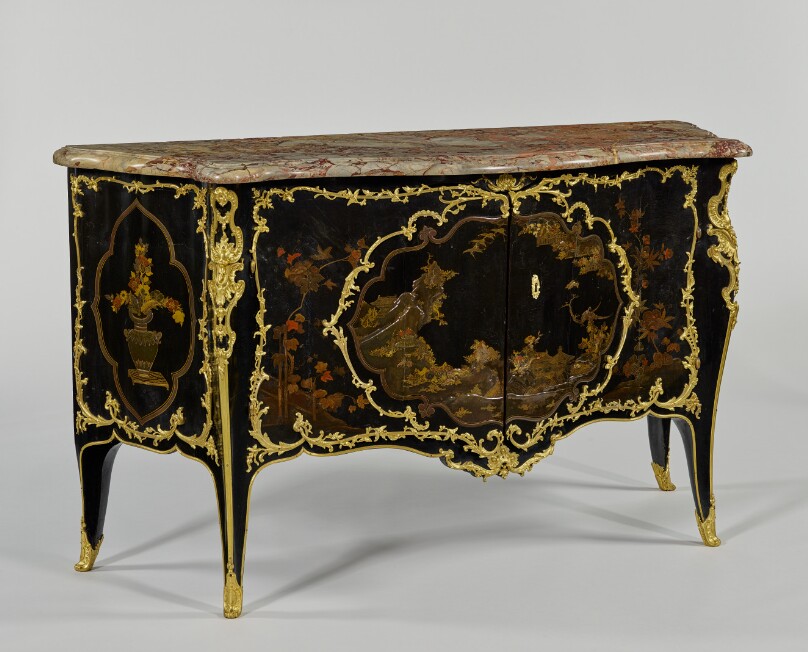
Commode
Creator
Bernard II van RisenburghFrench Artist · 1696–1766
All works by this person →The four mysterious initials of the stamp B.V.R.B. concealed a dynasty of *ébénistes* of Netherlandish origin whose identity was only uncovered in 1957. Although all used the same Christian name and surname, Bernard II van Risenburgh was the first to stamp his furniture using the monogram *BVRB* ; he is now regarded as the greatest *ébéniste* of the reign of Louis XV. BVRB specialized in furniture
More on Getty ULAN- Date
- about 1737
- Medium
- White oak, veneered with alder, set with panels of Japanese lacquer on a coniferous substrate, and painted with European lacquer; veneered with cherry and amaranth on interior of the doors; replacement gilt-bronze mounts; brass and iron hardware and lock; Sarrancolin marble top; original silk fabric lining, and silver thread galon trim
- Culture
- French
- Department
- Decorative Arts
- Institution
- Getty Museum
- Object ID
- c453fdea-d562-4410-acf3-b2add582fa9e
From the Getty Museum record
Lacquer from China and Japan had been imported into France since the 1600s because its decorative patterns and distinctive character immediately appealed to wealthy consumers. In the 1700s increasing quantities of cabinets, screens, trays, and other shapes reached Europe and were adapted for use in fashionable interiors. By the 1730s panels of Asian lacquer would be cut out of their original settings and applied to European furniture as a type of decorative veneer. On this commode, the front and sides are each set with a central panel of raised black Japanese lacquer. The remaining surfaces of the commode are painted with black European lacquer. The order for this commode was almost certainly made by the luxury goods dealer (*marchand mercier*) Thomas Joachim Hébert, for whom Bernard II van Risenburgh worked until 1750. Hébert would have supplied the lacquer to the cabinetmaker. In 1737 he is recorded as having delivered another commode by van Risenburgh, also decorated with black Japanese lacquer, to Louis XV’s wife, queen Maria Leszczynska. That delivery date helps scholars to date this similarly decorated commode.
The authoritative record is held by Getty Museum. LinkedCulture surfaces this object and its connections; it does not alter institutional metadata.
Get printable QR codesHide QR codes
Open QR codes for this object page and the museum record. They stay collapsed until needed.
Related across collections
Semantically similar works from Getty Museum and other institutions.