Getty Museum
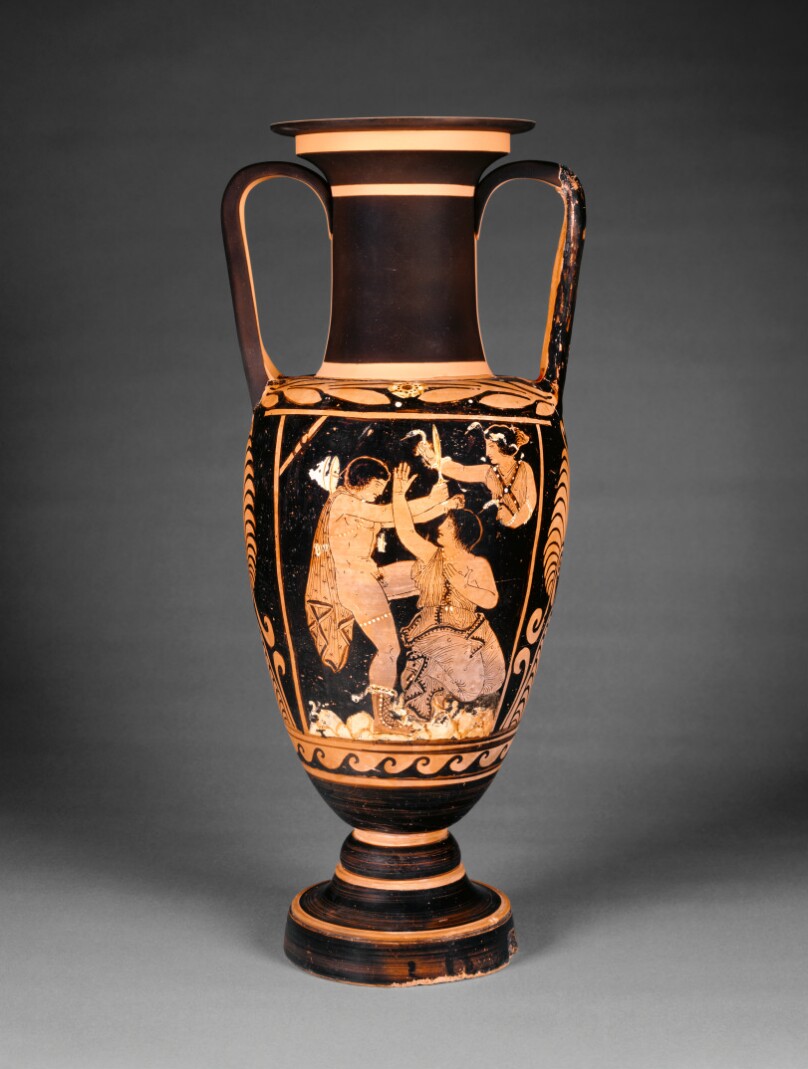
Paestan Red-Figure Neck Amphora
Creator
AsteasPainter
All works by this person →Asteas was the most important of the vase-painters working at Paestum in South Italy. The principal artist of a large workshop, he may have invented the free-standing half-palmettes, used to frame an image, that became characteristic of Paestan vase-painting. Asteas decorated hydriai and kraters, as well as some smaller vases, in the red-figure technique. Asteas was one of only two South Italian v
More on Getty ULAN- Date
- about 340 B.C.
- Medium
- Terracotta
- Culture
- Greek (South Italian, Paestan)
- Department
- Vessels
- Institution
- Getty Museum
- Object ID
- c86c9569-86e2-490c-9440-14c122ea1ea1
From the Getty Museum record
Large amphora with reconstructed neck and proper right handle. On A, Orestes is about to slay Clytemnestra. The scene is framed within reserved bands, with a third bar at the top left (with a fillet draped over the crossbar) forming a triangle. Orestes attacks from the left. He is nude save for his chlamys, pilos and high laced boots. He also wears a decorated band (amulet?) on his right thigh. In his right hand he grasps a sword, and with his left, grasps Clytemnestra's hair. Fallen to her knees, she wears a peplos and a necklace, and looks to Orestes with a gesture of entreaty, holding her left hand to her exposed breast. At the upper right, a bust of a Fury watches the action, with snakes in her hair and arms. The attack takes place on rocky ground. On B: two youths wearing himatia facing one another. The chest of the youth on the left is partally exposed, his counterpart fully swathed. Ornament: on the shoulders, laurel leaves; under the handles, large palmettes; under the picture field, running wave pattern.
The authoritative record is held by Getty Museum. LinkedCulture surfaces this object and its connections; it does not alter institutional metadata.
Get printable QR codesHide QR codes
Open QR codes for this object page and the museum record. They stay collapsed until needed.
Related across collections
Semantically similar works from Getty Museum and other institutions.