Getty Museum
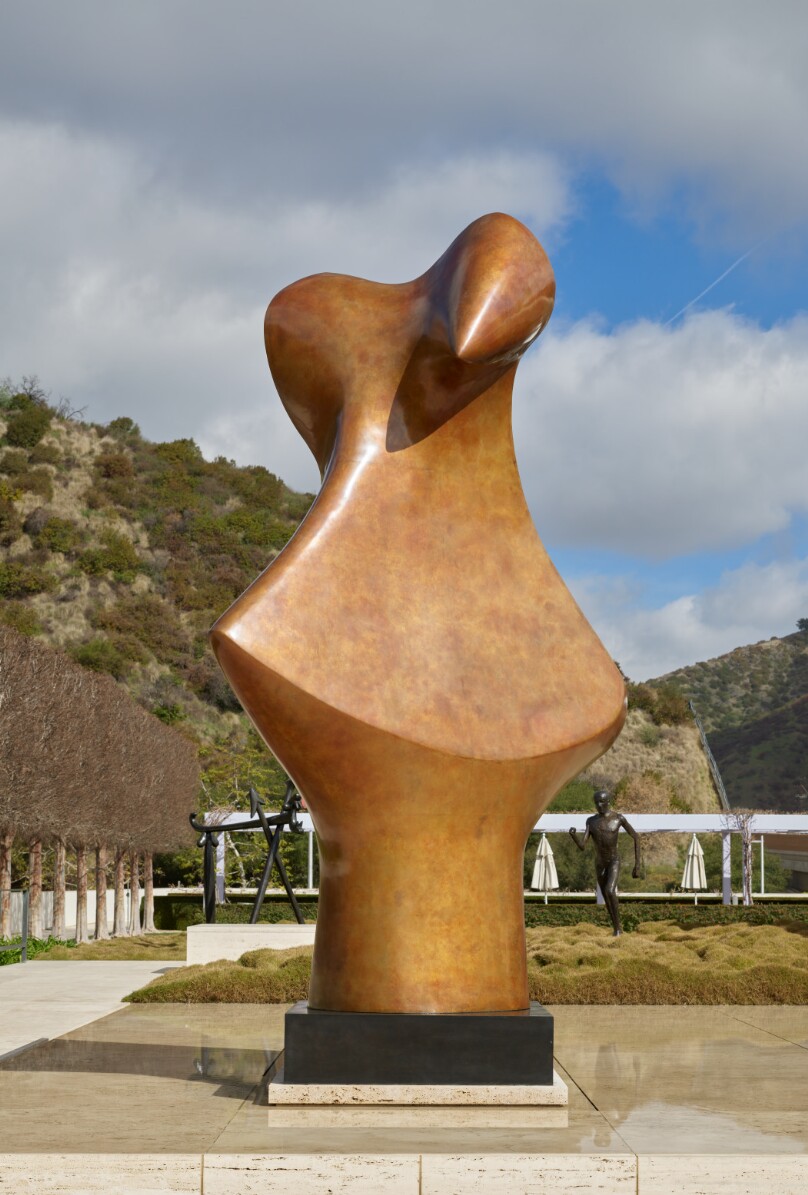
Bronze Form
Creator
Henry MooreBritish Photographer · 1898–1986
All works by this person →> Sculpture is an art of the open air. Daylight, sunlight, is necessary to it, and for me its best setting and compliment is nature. I would rather have a piece of my sculpture put in a landscape, almost any landscape, than in or on the most beautiful building I know. > > --Henry Moore Henry Moore's sculptures are archetypal forms suggesting elemental or indefinable truths about being and nature.
More on Getty ULAN- Date
- 1985
- Medium
- Bronze
- Culture
- British
- Department
- Sculpture
- Institution
- Getty Museum
- Object ID
- c9a2134b-db60-4e6e-9a68-9dcf1ace5a74
From the Getty Museum record
This immense bronze sculpture is more than fourteen feet high. Its title does not reveal a specific subject and the form can be seen as abstract--its golden, undulating surfaces glimmering in sunlight. But the sculpture's vertical orientation also evokes an upright human figure. The dramatic, curvilinear contours suggest that the sculptor had a female form in mind. The sculptor Henry Moore always insisted that his work relate to recognizable forms, "Purely abstract sculpture seems to me to be an activity that would be better fulfilled in another art such as architecture. . . . I have never been tempted to remain a purely abstract sculptor." This sculpture had its origins in a group of drawings created by the artist almost fifty years earlier. In the mid-1930s, Moore made a series of sketches based on carved wood figures from the South Pacific. Around 1940, he began to transform this imagery into three-dimensions, creating a series of helmet-encased heads. *Bronze Form* is directly related to this theme and was completed only a year before the artist's death.
The authoritative record is held by Getty Museum. LinkedCulture surfaces this object and its connections; it does not alter institutional metadata.
Get printable QR codesHide QR codes
Open QR codes for this object page and the museum record. They stay collapsed until needed.
Related across collections
Semantically similar works from Getty Museum and other institutions.