Getty Museum
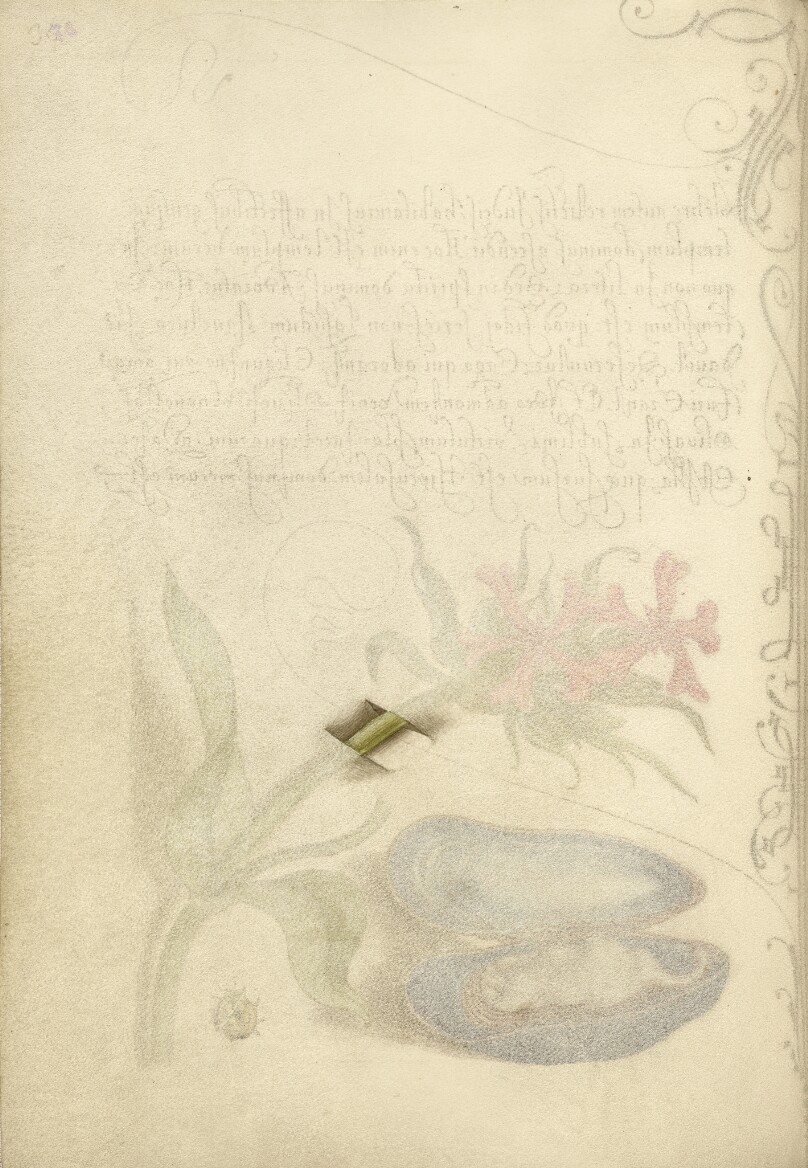
Trompe l'Oeil Stem of a Maltese Cross
Creator
Joris HoefnagelFlemish Illuminator · 1542–1600
All works by this person →Self-taught artist Joris Hoefnagel was a pivotal figure in the history of art from the Netherlands, both as the last important Flemish manuscript illuminator and one of the first artists to work in the new genre of still life. A true Renaissance man, Hoefnagel wrote Latin poetry, mastered several languages, played a variety of musical instruments, and sold drawings, in addition to making topograph
More on Getty ULAN- Date
- 1561–1562; illumination added 1591–1596
- Medium
- Watercolors, gold and silver paint, and ink
- Culture
- Flemish and Hungarian
- Department
- Manuscripts
- Institution
- Getty Museum
- Object ID
- cfcce630-8339-47a0-bb0c-75ddb4a83c4f
From the Getty Museum record
On turning the page, the viewer sees the paint and ink of the preceding page through the parchment, creating a subdued image of the script, flower, ladybird, and mussel in reverse. But in the middle of this page, the stem from the flower, called a Maltese cross, which illusionistically pierced the other side of the page, here appears to rest above a narrow strip of the parchment. The shadow of this strip of parchment and the flower stem are the only elements that are painted on this side of the page. Through this defiant gesture, Joris Hoefnagel, the brilliantly inventive illuminator, continued his response to the work of master calligrapher Georg Bocskay from the previous page, dramatizing the ability of artists to create visual illusions. Although sixteenth-century manuscripts frequently included fruit and flower borders and employed *trompe-l'oeil* devices, never before had the conceit of the pierced page been carried so far.
The authoritative record is held by Getty Museum. LinkedCulture surfaces this object and its connections; it does not alter institutional metadata.
Get printable QR codesHide QR codes
Open QR codes for this object page and the museum record. They stay collapsed until needed.
Related across collections
Semantically similar works from Getty Museum and other institutions.