Getty Museum
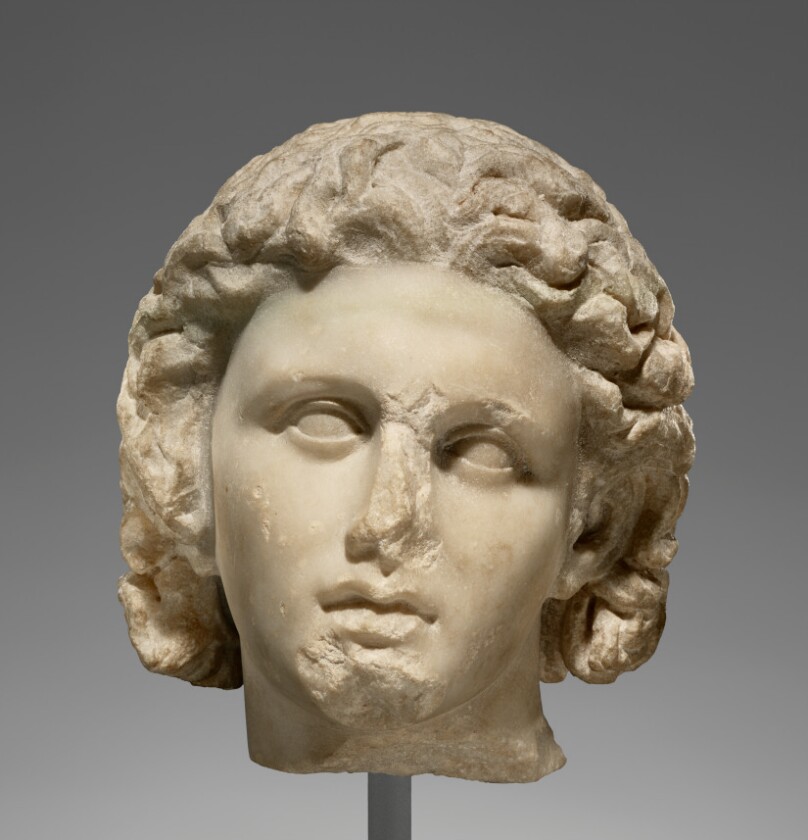
Portrait of Alexander the Great
Creator
UnknownAll works by this person →More on Getty ULAN- Date
- about 320 B.C.
- Medium
- Parian marble
- Culture
- Greek
- Department
- Sculpture
- Institution
- Getty Museum
- Object ID
- d2baccc4-bf48-4726-acd0-aec700d766a9
From the Getty Museum record
Identified by his mass of leonine hair, his young idealized face, and his deep-set, upturned eyes, Alexander the Great was the first Greek ruler to understand and exploit the propagandistic powers of portraiture. Ancient literary sources say that he let only one sculptor carve his portrait: Lysippos (active ca. 370-300 B.C.), who created the standard Alexander portrait type. This life-size head, said to have been found in Megara, was part of a multi-figured group, which probably served as a funerary monument for a courtier who wanted to associate himself with the ruler. The Getty Museum has over thirty fragments of this group, which might have depicted a sacrificial scene. The participants include Alexander, his companion Hephaistion, a goddess, Herakles, a flute player, and several other figures, as well as animals and birds. The head was re-carved in antiquity. The left ear was added, the right sideburn shortened, and the lower eyelids recut.
The authoritative record is held by Getty Museum. LinkedCulture surfaces this object and its connections; it does not alter institutional metadata.
Get printable QR codesHide QR codes
Open QR codes for this object page and the museum record. They stay collapsed until needed.
Related across collections
Semantically similar works from Getty Museum and other institutions.