Getty Museum
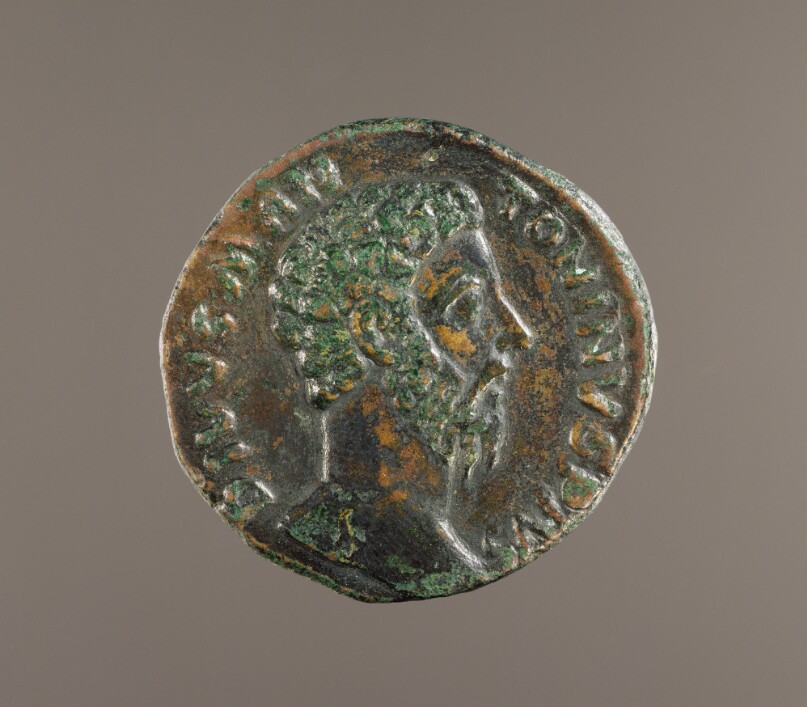
Coin of Marcus Aurelius
Creator
UnknownAll works by this person →More on Getty ULAN- Date
- about A.D. 180
- Medium
- Bronze
- Culture
- Roman
- Department
- Coins
- Institution
- Getty Museum
- Object ID
- d6214348-2324-4cdb-a56c-7936ec624961
From the Getty Museum record
This sestertius shows the Roman emperor Marcus Aurelius, who died in A.D. 180 after a reign of nineteen years. After death, a Roman emperor could be deified by decree of the Senate, and this was the case with Marcus Aurelius. He was declared a god, and the event was commemorated on coins issued by his son and successor, Commodus. On this coin, the emperor's portrait is surrounded by the Latin inscription DIVVS M ANTONINUS PIVS--meaning "the god, Marcus Antoninus Pius"--a version of his name that incorporates the name of his father, the emperor Antoninus Pius. On the reverse of the coin is a depiction of Marcus Aurelius's elaborate, four-story funeral pyre. It is decorated with statues on the second and third levels and a statue of the deceased emperor in a four-horse chariot on the top. The word CONSECRATIO, meaning "deified," is written around the pyre, and the letters SC are the abbreviation for "senatus consulto," which stands for "by decree of the Senate."
The authoritative record is held by Getty Museum. LinkedCulture surfaces this object and its connections; it does not alter institutional metadata.
Get printable QR codesHide QR codes
Open QR codes for this object page and the museum record. They stay collapsed until needed.
Related across collections
Semantically similar works from Getty Museum and other institutions.