Getty Museum
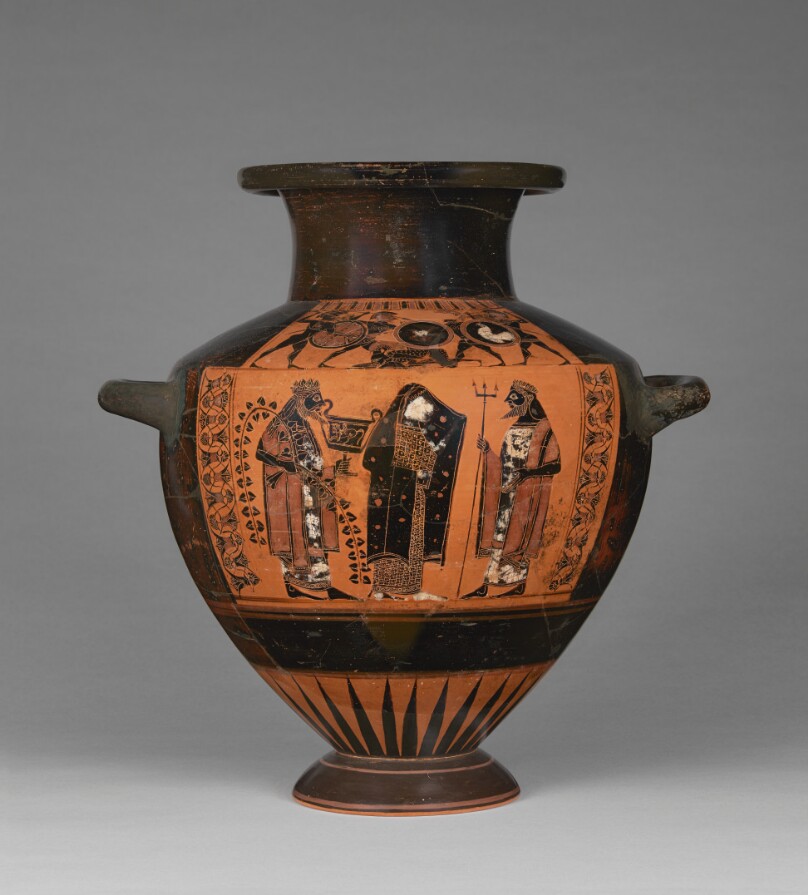
Black-Figure Hydria
Creator
LydosArtist
All works by this person →Lydos worked as a potter and vase-painter in Athens in the period from about 565 to 535 B.C., heading a large workshop that decorated pottery in the black-figure technique. Only two of his signed vases survive, but scholars have attributed more than 130 to him. These vases include a wide range of shapes produced over a long career and spanning a stylistic transition in Athenian vase-painting. His
More on Getty ULAN- Date
- about 550 B.C.
- Medium
- Terracotta
- Culture
- Greek (Attic)
- Department
- Vessels
- Institution
- Getty Museum
- Object ID
- d6384f57-9e90-4b97-9e22-4ef30df7dd08
From the Getty Museum record
Many mythical figures are recognizable in Greek art by their distinctive attributes. On this vessel, the sea-god Poseidon is immediately identifiable by his three-pointed trident, while the figure with the high-handled drinking cup (kantharos) and branches of ivy must be Dionysos. Naming the figure who stands between them is less straightforward. The added white for her exposed skin indicates that she is a woman, but she bears no other marker to secure her identity. She could be Ariadne, whom Dionysos found deserted on the island of Naxos, in which case Poseidon’s presence may allude to the maritime setting. On the shoulder, two pairs of warriors risk their lives as they clash over a fallen body. The scene conveys human mortality in its starkest terms, contrasting sharply with the peaceful representation of immortal gods.
The authoritative record is held by Getty Museum. LinkedCulture surfaces this object and its connections; it does not alter institutional metadata.
Get printable QR codesHide QR codes
Open QR codes for this object page and the museum record. They stay collapsed until needed.
Related across collections
Semantically similar works from Getty Museum and other institutions.