Getty Museum
Sculpture Fragment
Creator
UnknownAll works by this person →More on Getty ULAN- Date
- 530–520 B.C.
- Medium
- Marble
- Culture
- Greek (Attic)
- Department
- Sculpture
- Institution
- Getty Museum
- Object ID
- daa44dfd-9d75-4c20-b148-e63095d39da2
From the Getty Museum record
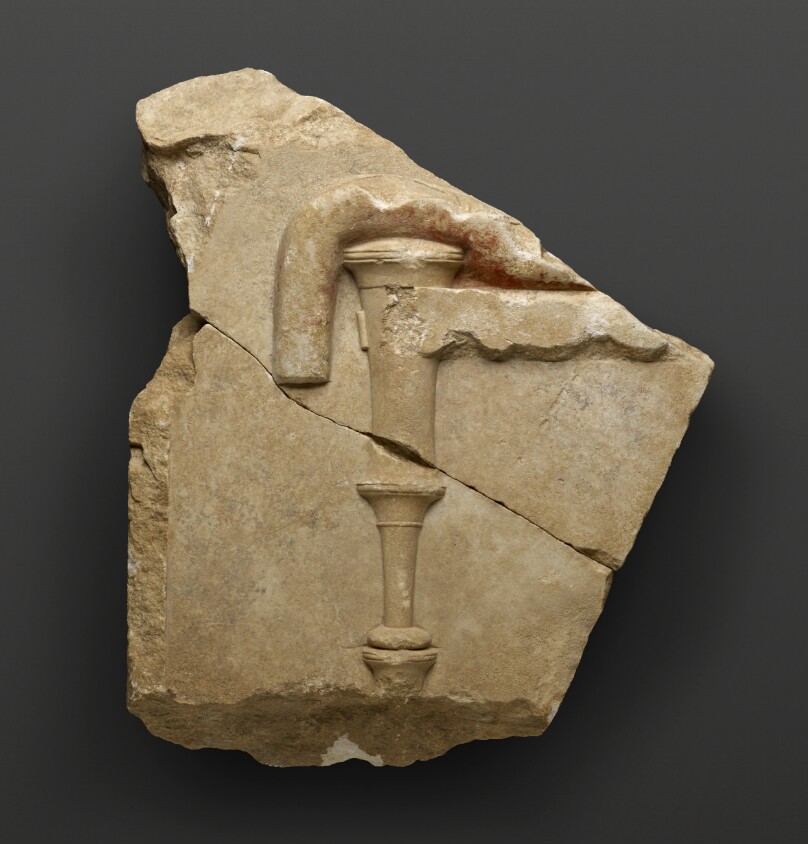
This fragment (consisting of two joined pieces) belongs to a group of thirty nine other non joining pieces of a large relief monument that depicted a male figure wearing a long tunic, leaning on a wineskin and reclining on a kline (couch) padded with a thick cushion and pillow (see [81.AA.193](http://www.getty.edu/art/collection/objects/9853/unknown-maker-fragment-of-a-relief-greek-525-500-bc/); [81.AA.194.2-27](https://www.getty.edu/art/collection/search/?pg=1&view=grid&query=YTozOntzOjg6Il9udW1iZXJzIjtzOjk6IjgxLkFBLjE5NCI7czo0MToiKGlkZW50aWZpZXIucHJpbWFyeXxpZGVudGlmaWVyLmFsdGVybmF0ZSkiO3M6OToiODEuQUEuMTk0IjtzOjQ6InNvcnQiO3M6MTE6InNvcnQubnVtYmVyIjt9); [82.AA.123.1-4](http://www.getty.edu/art/collection/search/?view=grid&query=YTozOntzOjg6Il9udW1iZXJzIjtzOjk6IjgyLkFBLjEyMyI7czo0MToiKGlkZW50aWZpZXIucHJpbWFyeXxpZGVudGlmaWVyLmFsdGVybmF0ZSkiO3M6OToiODIuQUEuMTIzIjtzOjQ6InNvcnQiO3M6NjoiLXNjb3JlIjt9); [85.AA.419.1-5](http://www.getty.edu/art/collection/search/?view=grid&query=YTozOntzOjg6Il9udW1iZXJzIjtzOjk6Ijg1LkFBLjQxOSI7czo0MToiKGlkZW50aWZpZXIucHJpbWFyeXxpZGVudGlmaWVyLmFsdGVybmF0ZSkiO3M6OToiODUuQUEuNDE5IjtzOjQ6InNvcnQiO3M6NjoiLXNjb3JlIjt9); [86.AA.545.1-3](http://www.getty.edu/art/collection/search/?view=grid&query=YTozOntzOjg6Il9udW1iZXJzIjtzOjk6Ijg2LkFBLjU0NSI7czo0MToiKGlkZW50aWZpZXIucHJpbWFyeXxpZGVudGlmaWVyLmFsdGVybmF0ZSkiO3M6OToiODYuQUEuNTQ1IjtzOjQ6InNvcnQiO3M6NjoiLXNjb3JlIjt9)) This particular fragment depicts the upper part of the couch leg and a cushion that hangs over the end. The leg is crisply carved with moldings and post and tenon joins indicated. The carving of the relief fragments is of high quality with a refined degree of finish on the frontal surfaces; the back surface is finished with the fine pointed chisel and both sides are carefully finished with a claw chisel. The late sixth-century B.C. date of the relief is based on the quality of the sculpting and the style of the drapery. Images of men reclining on klinai are usually participants in a symposium or banquet. To dine and drink in a reclining posture was a sign of high status, and such occasions were redolent of privilege, pleasure, and luxury. Banqueting scenes appear painted on vessels used at actual symposia, and carved on stone reliefs that adorned architectural, religious and funerary monuments.
The authoritative record is held by Getty Museum. LinkedCulture surfaces this object and its connections; it does not alter institutional metadata.
Get printable QR codesHide QR codes
Open QR codes for this object page and the museum record. They stay collapsed until needed.
Related across collections
Semantically similar works from Getty Museum and other institutions.