Getty Museum
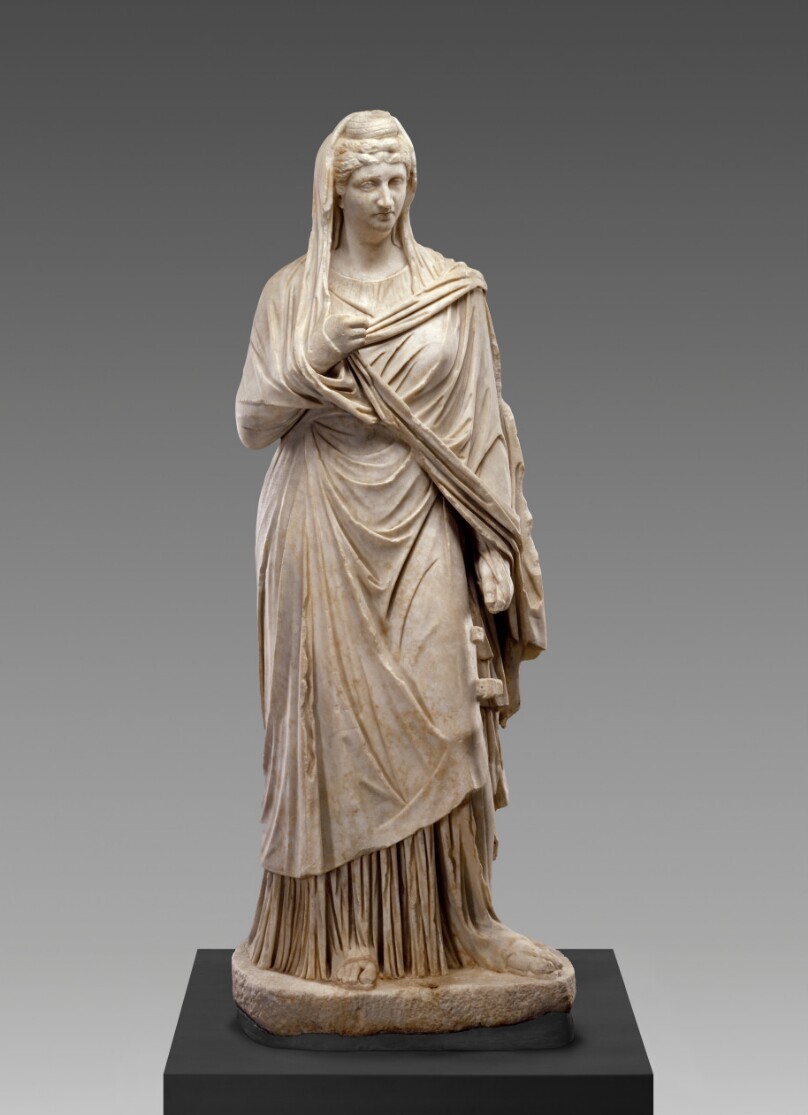
Portrait of Faustina the Elder
Creator
UnknownAll works by this person →More on Getty ULAN- Date
- A.D. 140–160
- Medium
- Marble
- Culture
- Roman
- Department
- Sculpture
- Institution
- Getty Museum
- Object ID
- dbdd3beb-841a-4e6b-8f7e-98eda73396c5
From the Getty Museum record
Annia Galeria Faustina, known as Faustina the Elder, was the wife of Antoninus Pius, who ruled the Roman empire from A.D. 137 to 161. She probably married Antoninus Pius about A.D. 110 and they had four children. The marriage appears to have been quite loving compared to others in the Imperial family. Although she died twenty years before him, Antoninus Pius did not remarry. On her death in A.D. 141, Antoninus Pius declared Faustina divine and built a temple in her honor in the Roman Forum. Portraits of Faustina can be identified by her distinctive hairstyle and facial features. This slightly over life-size statue combines a conventional portrait head for the empress with a standardized body type, referred to as a "Large Herculaneum Woman" by scholars. The size of this statue indicates that it occupied a public space, perhaps a city square or a temple dedicated to the divine Faustina. Although they are now missing, Faustina may have held attributes of poppies and ears of wheat in her lowered left hand. That being the case, this statue would have portrayed the empress in the guise of Ceres, the goddess of fertility.
The authoritative record is held by Getty Museum. LinkedCulture surfaces this object and its connections; it does not alter institutional metadata.
Get printable QR codesHide QR codes
Open QR codes for this object page and the museum record. They stay collapsed until needed.
Related across collections
Semantically similar works from Getty Museum and other institutions.