Getty Museum
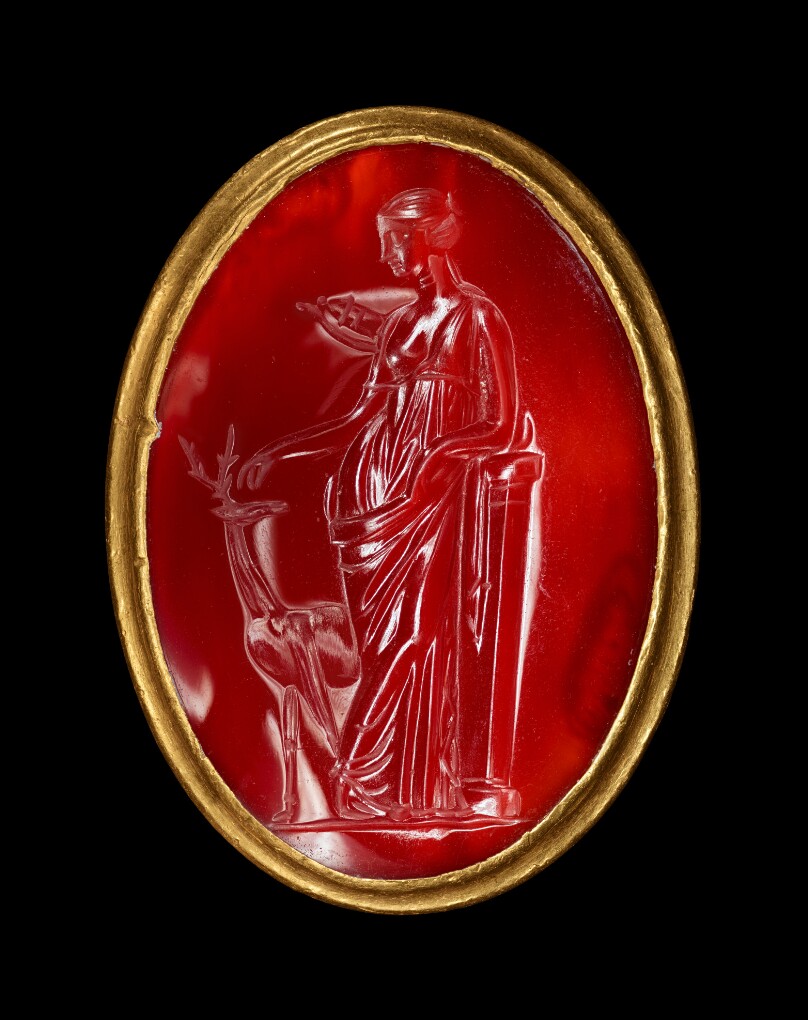
Ring inset with intaglio representing Artemis
Creator
UnknownAll works by this person →More on Getty ULAN- Date
- 225–175 B.C.
- Medium
- Ring: gold; gem: cornelian
- Culture
- Greek
- Department
- Jewelry
- Institution
- Getty Museum
- Object ID
- dcef063a-9db9-40bc-9a0c-b41847f40180
From the Getty Museum record
This massive gold signet ring was designed to be worn across the fingers and used as a seal. Composed of an oval cabochon carnelian inset into a bezel hammered from sheet gold and surrounded by four repoussé gold bands, it is an extraordinary example of a well-known type of Hellenistic ring favored in Ptolemaic Egypt. The image of the goddess of hunting, Artemis to the Greeks and Diana to the Romans, is engraved into the surface of the stone in order to produce a relief impression. Here she is shown leaning on a pillar, bow and quiver over her shoulder, reaching toward the head of a stag. The portrait-like quality of the goddess’s face has been noted, and her features (the large Ptolemaic eye and the pointed nose) have been attributed to Queen Arsinoe II (ca. 316 – ca. 270 BC).
The authoritative record is held by Getty Museum. LinkedCulture surfaces this object and its connections; it does not alter institutional metadata.
Get printable QR codesHide QR codes
Open QR codes for this object page and the museum record. They stay collapsed until needed.
Related across collections
Semantically similar works from Getty Museum and other institutions.