Getty Museum
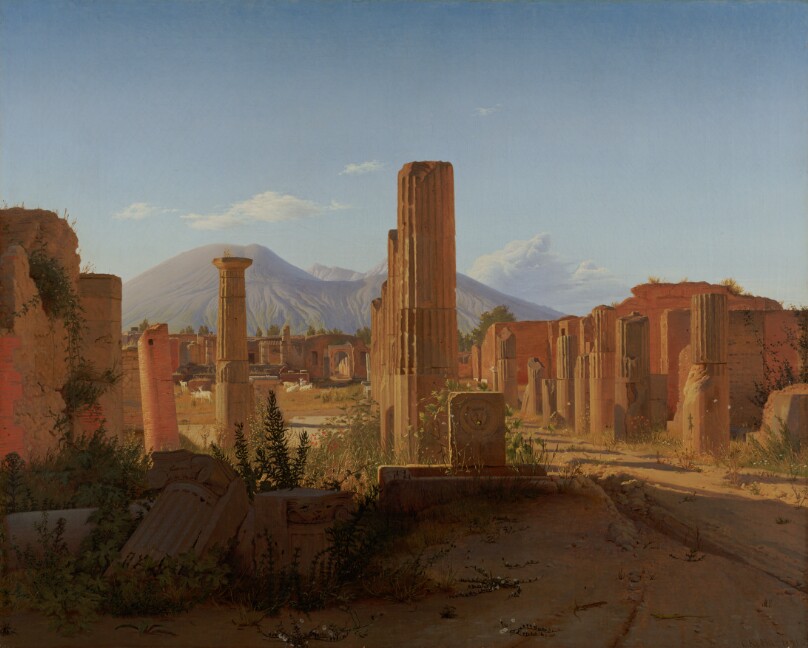
The Forum, Pompeii, with Vesuvius in the Distance
Creator
Christen Schjellerup KøbkeDanish Artist · 1810–1848
All works by this person →Christen Schjellerup Købke, the son of a baker, entered art school in Copenhagen at age eleven and studied there for ten years. He continued studying both with a teacher and from nature, first making sketches outdoors and later reworking them into oil paintings in his studio. Købke combined an interest in light and atmosphere with an appreciation for Denmark's medieval monuments to create solemn a
More on Getty ULAN- Date
- 1841
- Medium
- Oil on canvas
- Culture
- Danish
- Department
- Paintings
- Institution
- Getty Museum
- Object ID
- df580bfa-be4f-431e-a715-b2a9b176656c
From the Getty Museum record
Under a brilliant, clear blue sky, a sense of stillness and abandonment prevails over the ruins of the ancient city of Pompeii, which was buried and reduced to ruins in A.D. 79 by the eruption of Mount Vesuvius—the volcano seen looming in the background. Danish artist Christen Schjellerup Købke was one of the many visitors attracted to Pompeii, which had become a popular destination for artists, scholars, and tourists since its first major excavation in 1748. Unlike other representations of Mount Vesuvius, Købke did not visualize a volcanic explosion or its destructive qualities. Instead, his scene of contemporary Pompeii is serene and quiet, with lizards sunbathing on the ruins and nature slowly reclaiming civilization. The goats grazing among the arches, the repetition of columns, and the gentle overgrowth of weeds and flowers create a tranquil, bucolic mood. Købke omitted any human presence though he likely would have been surrounded by other sightseers. As part of his artistic education, Købke traveled to Italy from 1838 to 1840. Supported by a stipend from the Royal Danish Academy of Art, he visited Rome, Naples, Portici, Sorrento, Capri, and Pompeii. On location, he made on-the-spot sketches that would inform the highly finished paintings he eventually executed back at his studio in Denmark. The principal elements of the Forum derive from a detailed pencil drawing and oil study he made in Pompeii in 1840. He took the liberty of embellishing the foreground with vegetation and fallen columns from a separate drawing made elsewhere.
The authoritative record is held by Getty Museum. LinkedCulture surfaces this object and its connections; it does not alter institutional metadata.
Get printable QR codesHide QR codes
Open QR codes for this object page and the museum record. They stay collapsed until needed.
Related across collections
Semantically similar works from Getty Museum and other institutions.