Getty Museum
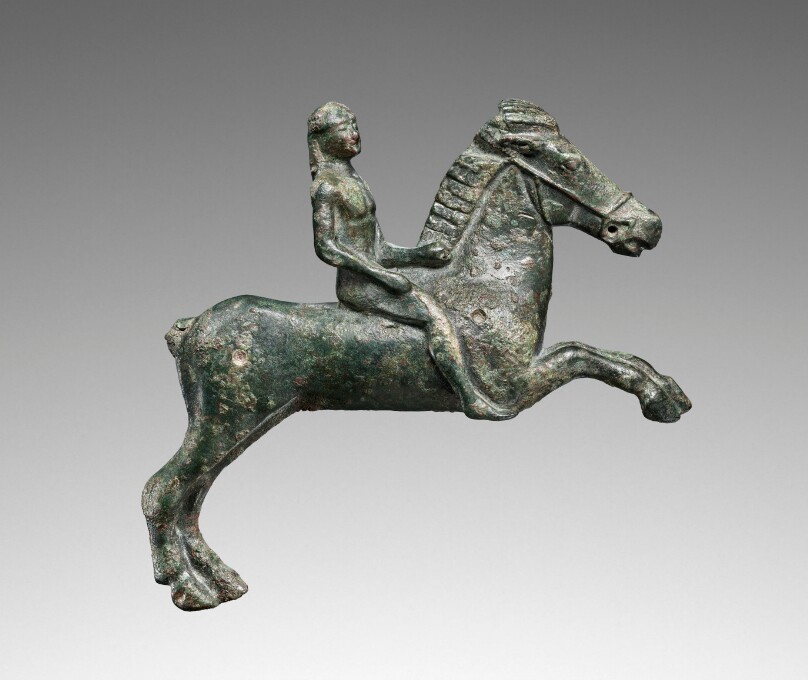
Appliqué in the Form of a Horse and Rider
Creator
UnknownAll works by this person →More on Getty ULAN- Date
- 525–500 B.C.
- Medium
- Bronze
- Culture
- Greek (Lakonian)
- Department
- Vessels
- Institution
- Getty Museum
- Object ID
- e214ba19-b1ee-4d87-95bc-ebe25b735e8e
From the Getty Museum record
A young boy rides bareback astride a galloping horse on this Greek bronze appliqué. He leans back slightly with the motion of the horse. The ears of the spirited animal are flattened, and the mane and forelock are blown back to suggest its speed. The rider’s right hand, loosely closed, rests on his right thigh. Separately added reins, now lost, originally ran from the hole at the bit ring of the bridle to the his left hand. The figure does not turn to face the viewer, but sits in a comfortable three-quarter posture. The open, slightly curved back of the appliqué indicates that it was once riveted to the surface of a large bronze vessel, possibly the neck of a krater. The holes on the horse's flank and shoulder once held attachment pins. Metalworkers in the 500s B.C. often ornamented large vessels with cast figures and relief scenes. This appliqué may be associated with a workshop in Laconia in southern Greece, where brozeworkers produced enormous bronze kraters, some over five feet high. The bodies of these vessels were relatively plain, but they had elaborately cast handles, and scenes formed from relief appliqués decorated the necks. Other surviving rider appliqués suggest that this theme may have been popular. Few of these ornate bronze kraters survive because the inherent value of the metal led to their being melted down.
The authoritative record is held by Getty Museum. LinkedCulture surfaces this object and its connections; it does not alter institutional metadata.
Get printable QR codesHide QR codes
Open QR codes for this object page and the museum record. They stay collapsed until needed.
Related across collections
Semantically similar works from Getty Museum and other institutions.