Getty Museum
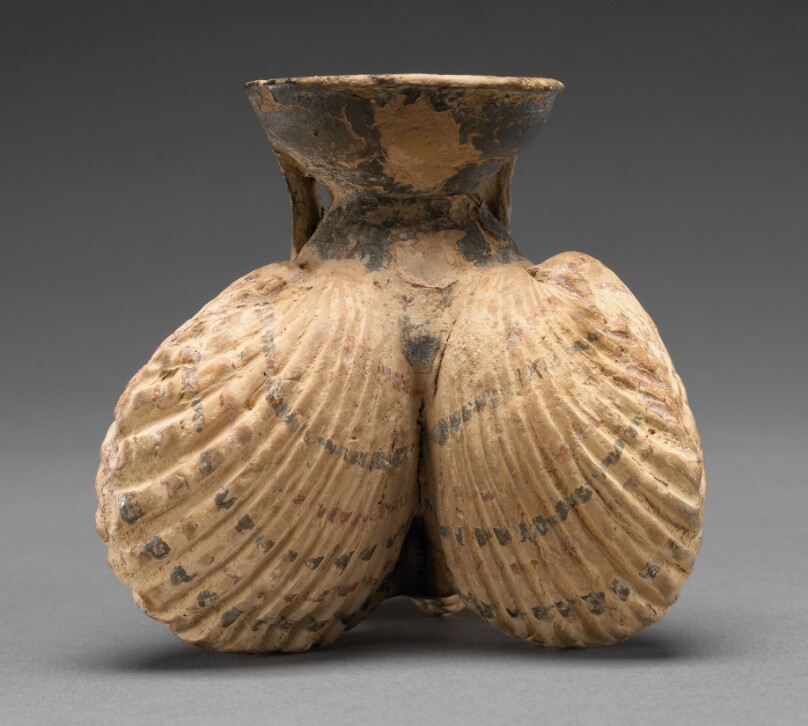
Cockleshell Aryballos
Creator
UnknownAll works by this person →More on Getty ULAN- Date
- 525–475 B.C.
- Medium
- Terracotta
- Culture
- Greek (Boeotian?)
- Department
- Vessels
- Institution
- Getty Museum
- Object ID
- e69aff0e-5fb3-4122-971c-09b9abaf7820
From the Getty Museum record
Three terracotta shells form the body of this Greek aryballos. The shells imitate the form of the edible cockle *(Cardium edule).* The unknown potter carefully reproduced the radial ridging of the shells and the thin stripes of color across the white surface. On this vessel, the shells were formed in molds, and then joined at their tops onto a short neck and wheel-made mouth before firing. Originally, three small handles connected the bodies of the shells with the broad, spreading mouth of the vessel, but one is now missing. An aryballos was a vessel designed to hold small quantities of perfumed oil. Greek potters often gave this type of vase a representational, almost sculptural form. The idea for creating a shell-shaped terracotta vessel may derive from containers made from real shells. Archaeologists have found shells outfitted with hinges and clasps in order to serve as containers for small items.
The authoritative record is held by Getty Museum. LinkedCulture surfaces this object and its connections; it does not alter institutional metadata.
Get printable QR codesHide QR codes
Open QR codes for this object page and the museum record. They stay collapsed until needed.
Related across collections
Semantically similar works from Getty Museum and other institutions.