Getty Museum
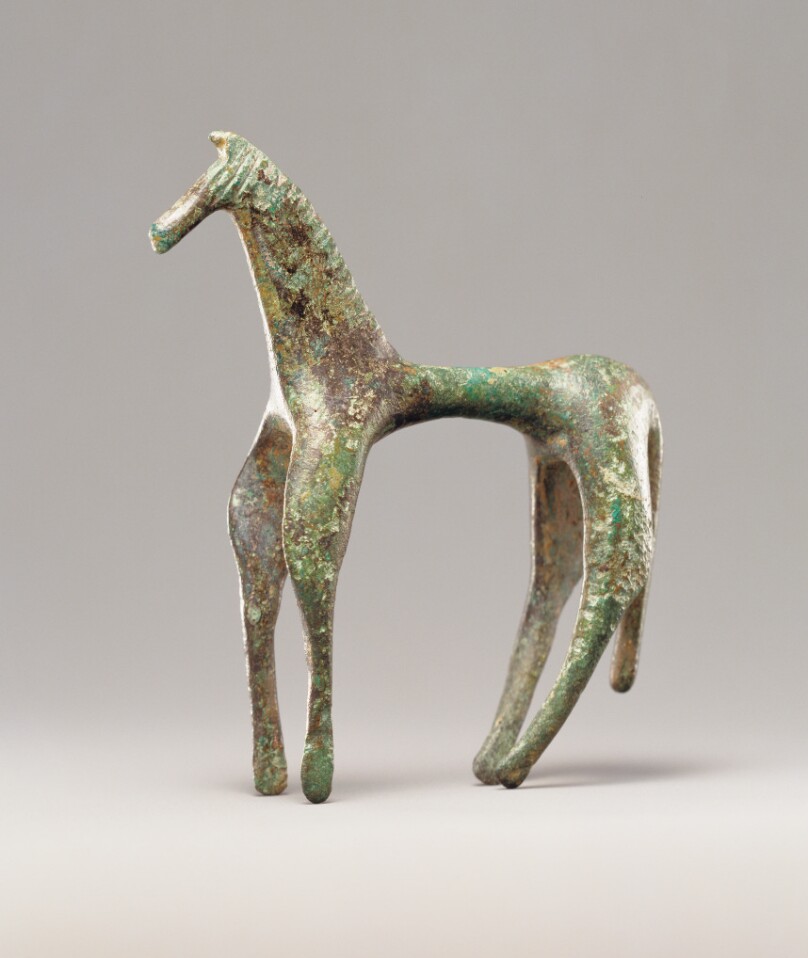
Statuette of a Horse
Creator
UnknownAll works by this person →More on Getty ULAN- Date
- 750–700 B.C.
- Medium
- Bronze
- Culture
- Greek
- Department
- Sculpture
- Institution
- Getty Museum
- Object ID
- e7342664-e69d-4385-9b97-23d1e8f52cec
From the Getty Museum record
The angular style of this horse is typical of small bronzes made in Greece in the 700s B.C. Short incised lines along the back of the neck indicate the mane, and lines on the head may represent a halter. Without a base, the horse rests on its four spatula-like hooves. Stylistic traits such as the rectangular shoulders and slender, curved legs suggest that it was made in Lokris in central Greece. The 700s B.C. saw the rise of the great Greek sanctuaries such as Olympia. In these new sanctuaries, bronze statuettes were a common dedication to the gods. Horses were by far the most prevalent subject for these dedications and are found in every sanctuary of this period. Because they were expensive to maintain, requiring extensive land and upkeep, horses became symbols of wealth and power in ancient Greece.
The authoritative record is held by Getty Museum. LinkedCulture surfaces this object and its connections; it does not alter institutional metadata.
Get printable QR codesHide QR codes
Open QR codes for this object page and the museum record. They stay collapsed until needed.
Related across collections
Semantically similar works from Getty Museum and other institutions.