Getty Museum
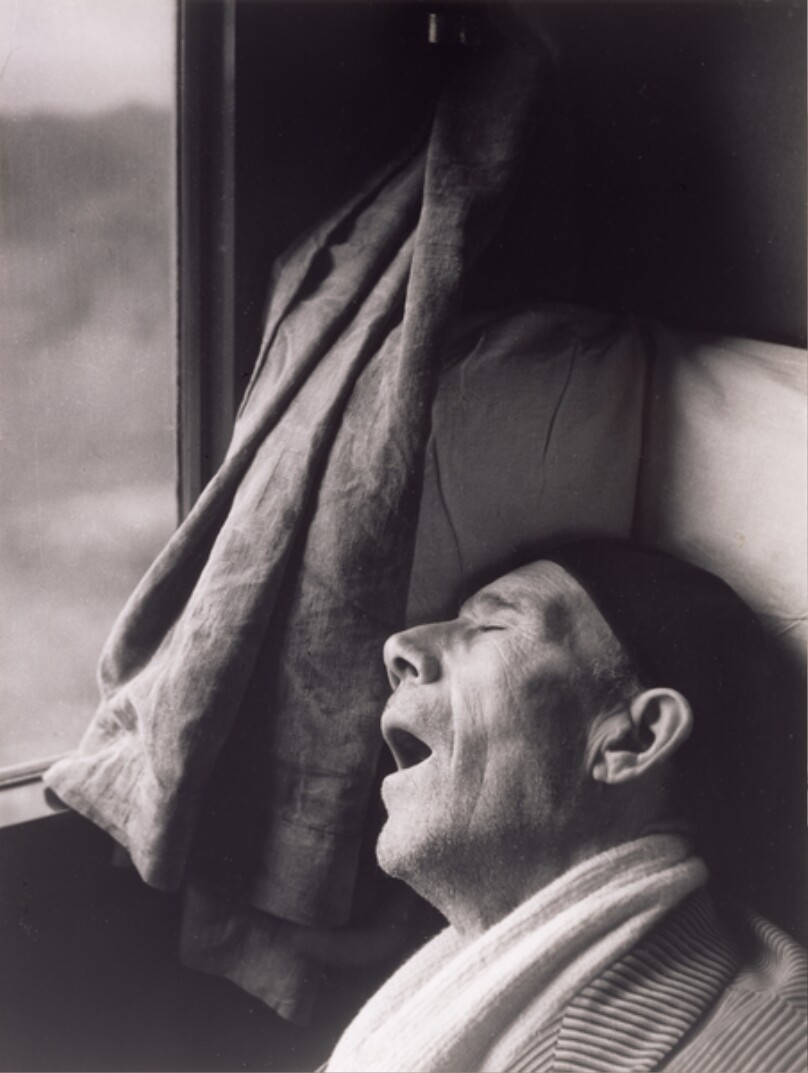
On the Train, Rome to Naples
Creator
BrassaïPhotographer · 1899–1984
All works by this person →After moving to Paris in 1924, Gyula Halász renamed himself Brassaï, after his hometown of Brasso, Hungary. In Paris he worked as a journalist and painter until around 1929, when he took up photography on the advice of fellow Hungarian André Kertész. A natural storyteller, Brassaï revealed his unscientific yet practical method of making exposures of Paris at night: *To gauge my shutter time, I wou
More on Getty ULAN- Date
- 1955
- Medium
- Gelatin silver print
- Culture
- Hungarian
- Department
- Photographs
- Institution
- Getty Museum
- Object ID
- eb7464a2-56ca-42f8-996c-31376debe49e
From the Getty Museum record
Speaking in an interview on Paris Radio, Brassaï remarked: "When I do a picture of someone, I like to render the immobility of the face--of the person thrown back on his own inner solitude--I hunt for what is permanent." This image of a man sleeping on the train bound for Naples reveals Brassaï's enduring interest in human behavior. He studied his subjects carefully, often repeatedly, before making an exposure. Brassaï constructed his images element by element--the man's head turned just toward the light, the curtain billowing as if blown by the rush of the train--with the result that the people in his photographs appear to fit their environment unmistakably.
The authoritative record is held by Getty Museum. LinkedCulture surfaces this object and its connections; it does not alter institutional metadata.
Get printable QR codesHide QR codes
Open QR codes for this object page and the museum record. They stay collapsed until needed.
Related across collections
Semantically similar works from Getty Museum and other institutions.