Getty Museum
Getty Apocalypse (Ms. Ludwig III 1 (83.MC.72))
- Date
- about 1255–1260
- Medium
- Tempera colors, gold leaf, colored washes, and ink
- Culture
- English
- Department
- Manuscripts
- Institution
- Getty Museum
- Object ID
- f1d98557-f370-4a00-96fd-9ea36fb1111b
From the Getty Museum record
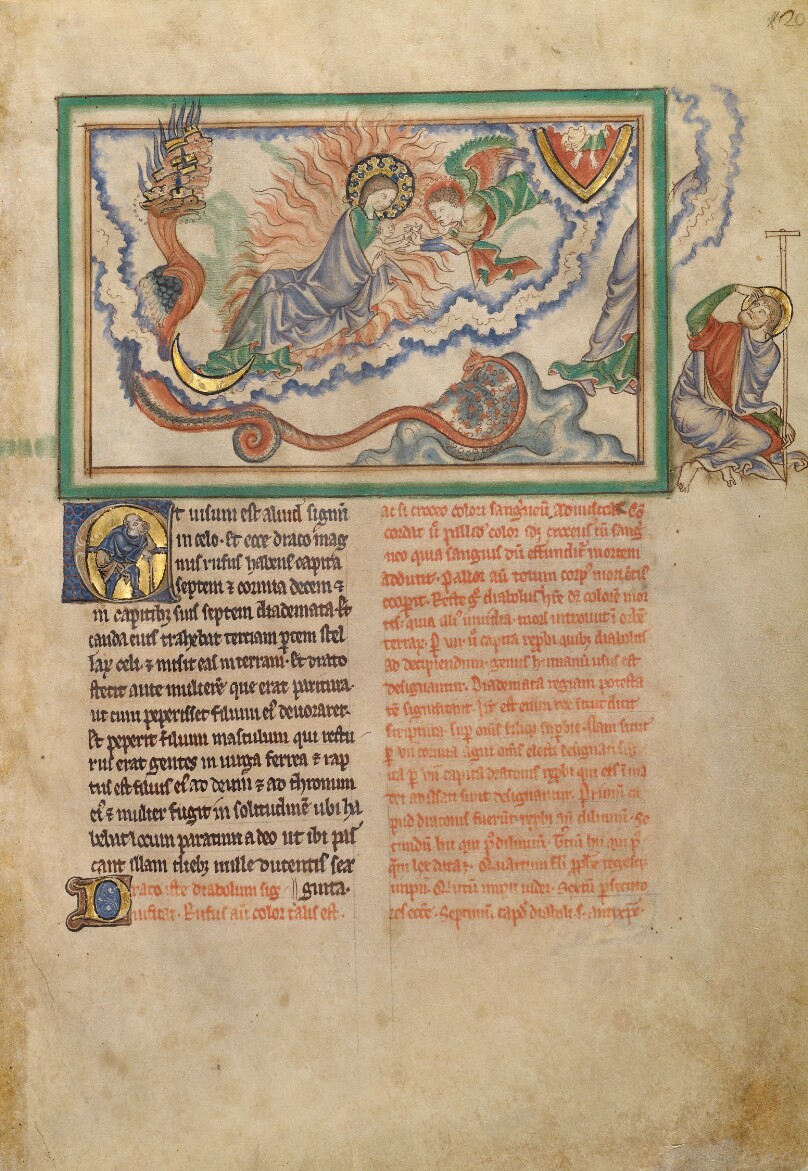
Saint John the Divine's vision of the events leading to the Second Coming of Christ at the end of time, commonly known as the Apocalypse, inspired the creation of many illuminated manuscripts in England in the 1200s. Western Europeans particularly popularized the text at this time because of recent cataclysmic events, including the Tartars' invasion of Russia in the 1230s and the fall of Jerusalem to the Moslems in 1244. These events raised fears that the end of time was at hand. Every page of the *Dyson Perrins Apocalypse*, named after a previous owner of the manuscript, contains a brief passage from the Apocalypse written in black ink, a portion of a popular commentary written by a monk named Berengaudus in red ink, and a half-page miniature. The miniatures, executed in a sophisticated tinted drawing technique, faithfully follow Saint John's exceptionally vivid descriptions of his visions and do not particularly reflect Berengaudus's commentary. The illuminator incorporated Saint John experiencing his vision into the majority of scenes, lending authority and a sense of immediacy to the images. As a result, the reader vicariously witnesses the horrific and awesome events unfolding in the Apocalypse along with the saint.
The authoritative record is held by Getty Museum. LinkedCulture surfaces this object and its connections; it does not alter institutional metadata.
Get printable QR codesHide QR codes
Open QR codes for this object page and the museum record. They stay collapsed until needed.
Related across collections
Semantically similar works from Getty Museum and other institutions.