Getty Museum
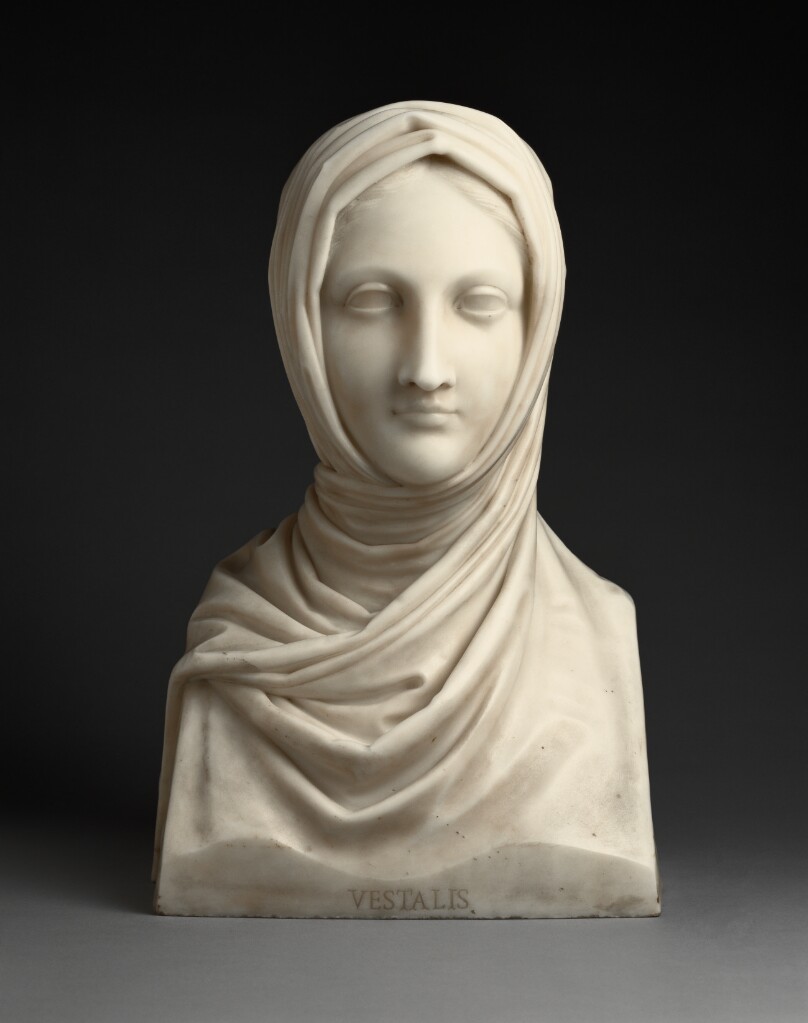
Herm of a Vestal Virgin
Creator
Antonio CanovaItalian Artist · 1757–1822
All works by this person →Called "the supreme minister of beauty" and "a unique and truly divine man" by contemporaries, Antonio Canova was considered the greatest sculptor of his time. Despite his lasting reputation as a champion of Neoclassicism, Canova's earliest works displayed a late Baroque or Rococo sensibility that was appealing to his first patrons, nobility from his native Venice. During his first and second visi
More on Getty ULAN- Date
- 1821–1822
- Medium
- Marble
- Culture
- Italian
- Department
- Sculpture
- Institution
- Getty Museum
- Object ID
- f28c382c-4744-4bd3-b9ff-f26c8692d3af
From the Getty Museum record
Vestal Virgins, consecrated to Vesta, Roman goddess of the hearth, served in temples as guardians of an eternal, sacred flame and were expected to emulate the goddess's purity and chastity. In his representation of one of these women, sculptor Antonio Canova suggested her innocence through the austerity and sparseness of the Neoclassical style, drawing on the contemporary idea that classical forms carry with them the expression of a strict morality. The bust is made of simple geometric shapes: a square for the bust and oval for the face. The tightly wound headcovering pulls in her hair and, with the cloak, draws attention to the purity of the shapes. Her firm shoulders and uninhibited, unmoving stare further suggest her resolve, innocence, and moral authority. Despite her physical beauty and the softness of the folds of the cloak, the statue does not invite touching. It is a cool, intellectual work of simple forms and restrained emotion. With the discovery of the so-called House of the Vestals in Pompeii, Vestal Virgins became a popular subject in the 1700s and 1800s. This figure wears a historically accurate cloak, which suggests that Canova researched the subject.
The authoritative record is held by Getty Museum. LinkedCulture surfaces this object and its connections; it does not alter institutional metadata.
Get printable QR codesHide QR codes
Open QR codes for this object page and the museum record. They stay collapsed until needed.
Related across collections
Semantically similar works from Getty Museum and other institutions.