Getty Museum
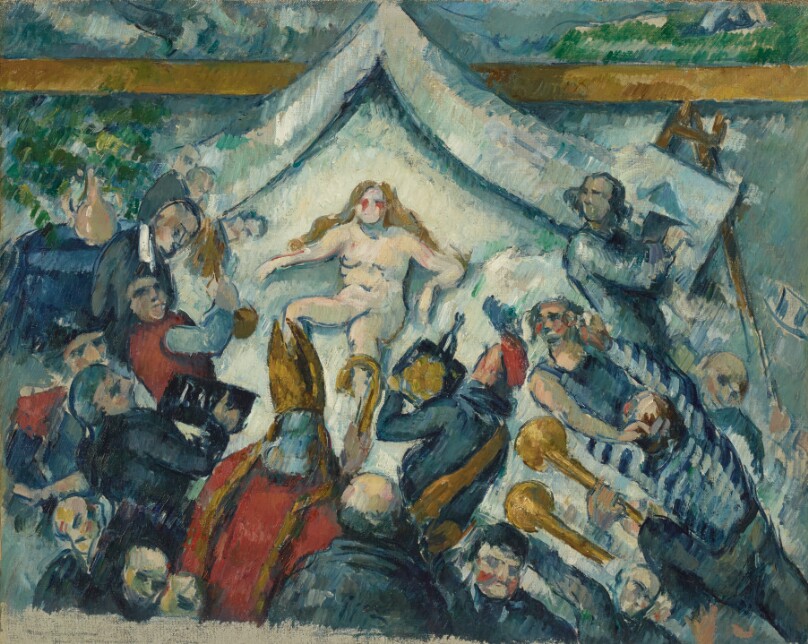
The Eternal Feminine (L'Éternel Féminin)
Creator
Paul CézanneFrench Artist · 1839–1906
All works by this person →When Paul Cézanne moved to Paris from Aix-en-Provence in 1862, his art was strongly influenced by Eugène Delacroix and Gustave Courbet. He used thick slabs of paint to give his early works a sculptural presence and intensity. He soon met the Impressionists and exhibited with them three times to scarring reviews, after which he stopped exhibiting for thirteen years. In 1872 Camille Pissarro introdu
More on Getty ULAN- Date
- about 1877
- Medium
- Oil on canvas
- Culture
- French
- Department
- Paintings
- Institution
- Getty Museum
- Object ID
- f37d3b17-1527-4605-93d7-df4379f3e8b2
From the Getty Museum record
The nude played a central role in Paul Cézanne's art throughout his career, but, paradoxically for an artist who usually drew from life, he seldom used nude models in his working process: he was said to be ill-at-ease with naked sitters. "I paint still lifes," he once told Renoir, "Women models frighten me." Cezanne contented instead with studying earlier artists and using the drawings after nude models that he had made in art school in Paris. The meaning of this enigmatic painting is unclear, and it has been known by several titles. This woman is confronted by devotees from different arts and occupations, among them a mitered bishop, whose admiration seems intrusive, even aggressive. A painter sometimes identified as Eugène Delacroix stands at his easel painting the scene. The bald figure at the painting's bottom may be Cézanne himself. Whether she encourages their adoration, passively accepts it, or is trapped by her cult is unclear. Like many of Cézanne's nudes, the woman's face is nearly blank, except for her red eye sockets. Around 1877 Cézanne began to use the parallel diagonal strokes seen here to impose order and to unify his picture's surface.
The authoritative record is held by Getty Museum. LinkedCulture surfaces this object and its connections; it does not alter institutional metadata.
Get printable QR codesHide QR codes
Open QR codes for this object page and the museum record. They stay collapsed until needed.
Related across collections
Semantically similar works from Getty Museum and other institutions.