Getty Museum
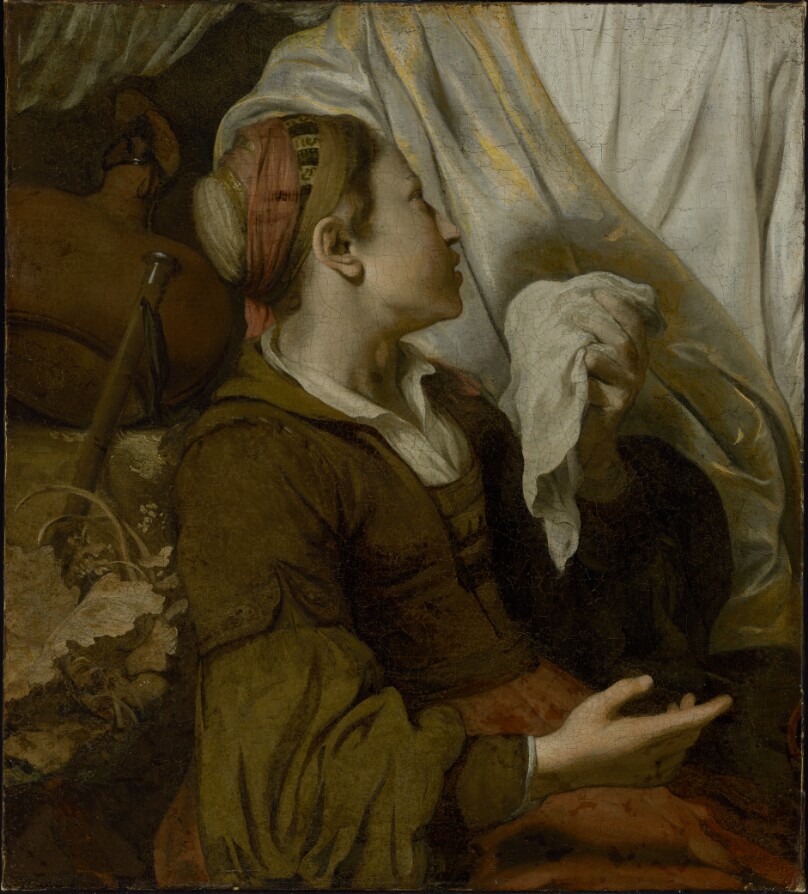
Hagar Weeping
Creator
Gerbrand van den EeckhoutDutch Artist · 1621–1674
All works by this person →According to Dutch biographer Arnold Houbraken, Gerbrand van den Eeckhout was both pupil and "great friend" of Rembrandt van Rijn. The son of a goldsmith, Van den Eeckhout probably studied with Rembrandt in the latter half of the 1630s. The compositional principles of Rembrandt's teacher Pieter Lastman, known for his theatrical realism and illusionism, also strongly affected him. Rembrandt may hav
More on Getty ULAN- Date
- early 1640s
- Medium
- Oil on canvas
- Culture
- Dutch
- Department
- Paintings
- Institution
- Getty Museum
- Object ID
- f4126000-e825-4638-ba6f-8b5362520f0b
From the Getty Museum record
With her face bathed in soft light, the weeping Hagar turns away from the viewer and looks up sharply. At his wife Sarah's request, Abraham reluctantly cast out the Egyptian slave-maid Hagar and her son, Ishmael, who she had conceived with him. After running out of water in the Beersheba desert, Hagar left her dying son crying under a bush, then moved a short distance away to weep in anguish. Gerbrand van den Eeckhout represented Hagar with her vision of the angel who told her that God had heard the boy's cries and promised "I will make a great nation of him." Looking up, Hagar saw a well nearby, and they were saved, and became the ancestors of the Arab peoples. Hagar and the angel's torso were cut from a larger painting some time before the Getty Museum received this painting.
The authoritative record is held by Getty Museum. LinkedCulture surfaces this object and its connections; it does not alter institutional metadata.
Get printable QR codesHide QR codes
Open QR codes for this object page and the museum record. They stay collapsed until needed.
Related across collections
Semantically similar works from Getty Museum and other institutions.