Getty Museum
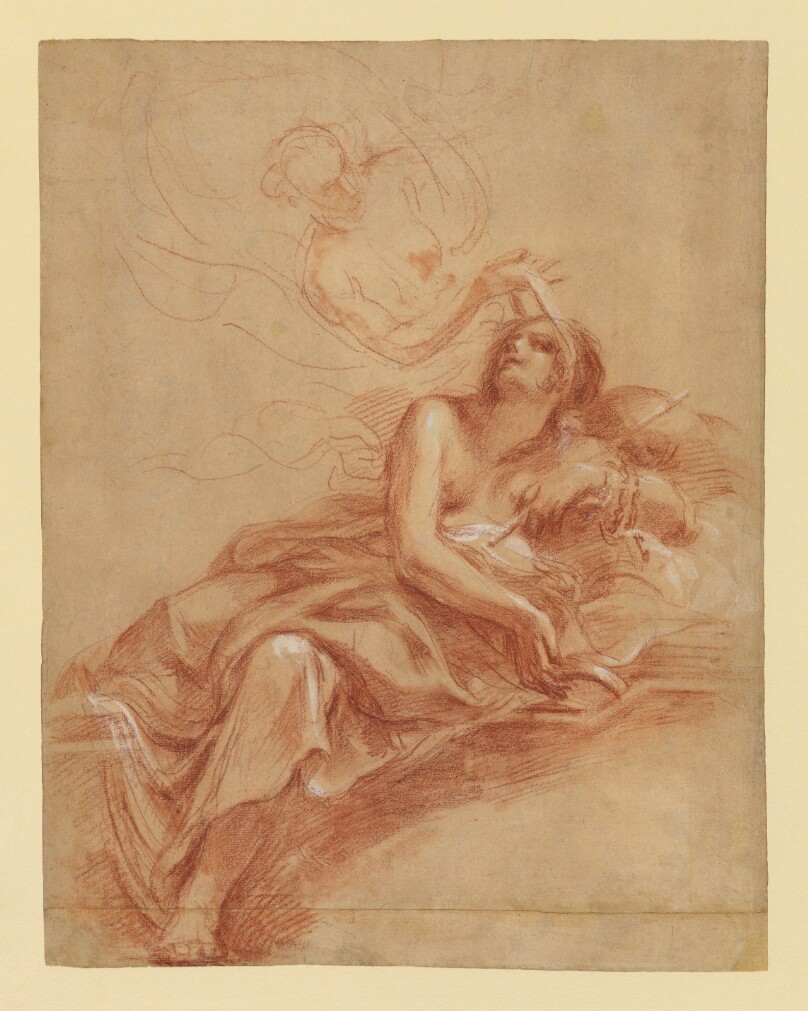
Truth Illuminating Human Blindness
Creator
Volterrano (Baldassare Franceschini)Italian Artist · 1611–1690
All works by this person →A sculptor's son, Il Volterrano first studied with a local artist. He attended a well-known Florentine school headed by a Mannerist painter and later assisted the master's follower. His earliest works, still in his native Volterra, display this Mannerist influence. In 1636 one of the Medici family commissioned Volterrano to create frescoes on the family history for their villa in Florence; he fini
More on Getty ULAN- Date
- about 1650
- Medium
- Red chalk, heightened with white gouache
- Culture
- Italian
- Department
- Drawings
- Institution
- Getty Museum
- Object ID
- f815121e-6bb4-4b4b-b893-a809fc2f17d9
From the Getty Museum record
In this figure study, a lightly sketched female personification of Truth removes a veil from the eyes of an allegorical figure. Holding symbols of earthly greed-a scepter and crown-the reclining figure represents intellectual and spiritual Blindness. Volterrano showed his great command of the red chalk technique with the figure of Blindness, shaped by soft, richly applied strokes. With sensitivity and economy, he added luminous highlights of white lead. To develop the boundaries of her body and define her relationship to other elements, Volterrano relied on more than contour. For instance, he used the paper, touches of lead white, and the chalk shading that defines the cushions to create the form of her left arm. Volterrano made this drawing for a fresco in a palazzo in Florence. In the fresco, Truth holds a book in her upraised left hand, and additional symbols of earthly greed, including two sacks of money, surround the jeweled figure of Blindness.
The authoritative record is held by Getty Museum. LinkedCulture surfaces this object and its connections; it does not alter institutional metadata.
Get printable QR codesHide QR codes
Open QR codes for this object page and the museum record. They stay collapsed until needed.
Related across collections
Semantically similar works from Getty Museum and other institutions.