Getty Museum
Fables; Exemplum de Tribus Latronibus; Defensio Curatorum Adversus Fratres Mendicantes, 1357; De Balsamo (Ch. 7 of De Mirabilibus); homilies on the Gospel of Luke; De septem sacramentis; and others
- Date
- about 1450–1475
- Medium
- Pen and black ink and colored washes
- Culture
- German
- Department
- Manuscripts
- Institution
- Getty Museum
- Object ID
- f8fd6961-6da3-4c39-94ad-e8e9367fa51b
From the Getty Museum record
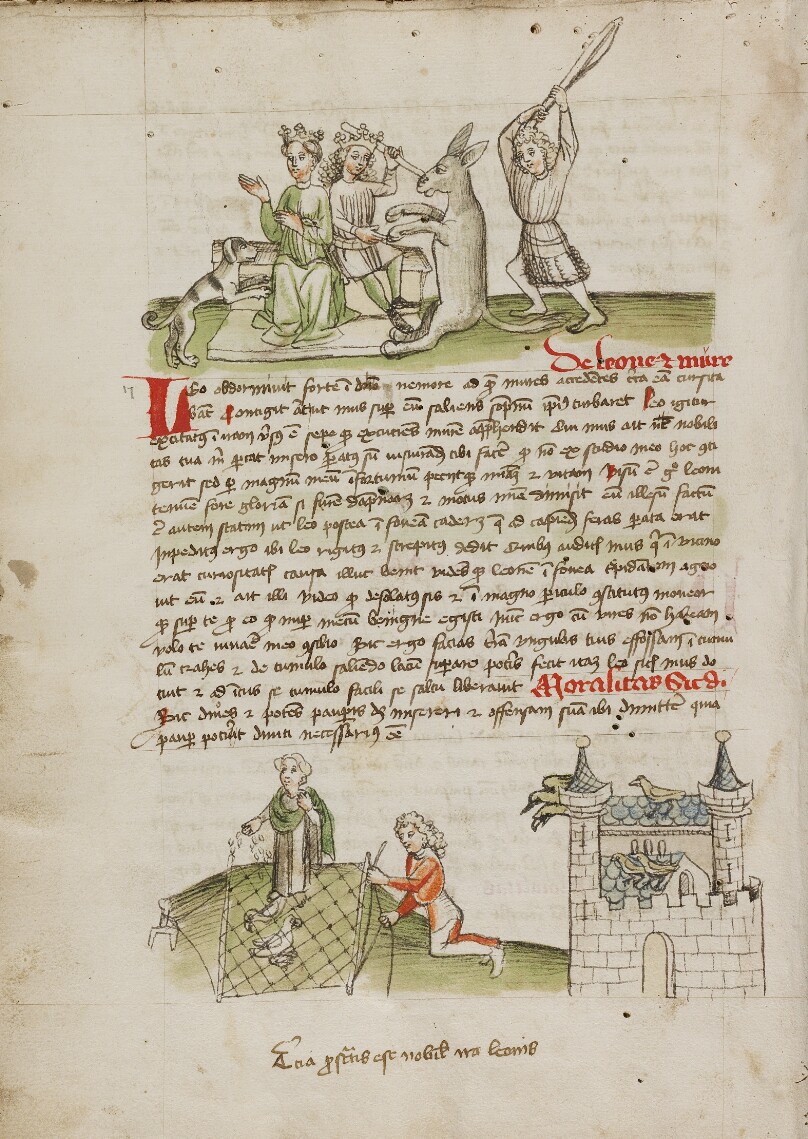
This collection of fables in Latin contains more than five distinct texts, the first and longest of which is accompanied by lively unframed pen-and-ink drawings with splashes of color. Incorporated are both ancient and medieval works. These include 152 fables by the ancient authors Aesop and Avian; a text known as the *Example of the Three Thieves*; another known as *On the Seven Sacraments*; an excerpt from *On the Wonders of the World*; an edict from Pope Clement V; a section of sermons on the Christian Gospel of Luke; and even three texts on excommunication, punishment, and defending the priesthood against mendicant orders. The only portion of the manuscript accompanied by images is the group of fables. Yet, many of the inventive drawings are actually out of sync with the stories they illustrate. Such mistakes reveal how tricky the process of illustration could be, especially for artists who may not have been well versed in Latin. The images, making use of a limited color palette of blue, green, red, brown, and gray, depict both people and animals doing a range of activities: speaking, fighting, hunting, painting, boating, praying, and much more. Some of the human figures are personifications of celestial bodies or winds, while most of the animals serve as allegories for various human follies. From a king speaking to a flock of doves to lions riding on the backs of bears, the images add both humor and liveliness to the animal-centered stories. These texts seem to have been assembled at a later point rather than being planned to go together from the beginning. The grouping of fables alongside religious, doctrinal, and homiletical works probably communicates that this volume was used as a resource for a preacher or cleric, who could consult the manuscript for entertaining parables or Church rulings to share with his congregation.
The authoritative record is held by Getty Museum. LinkedCulture surfaces this object and its connections; it does not alter institutional metadata.
Get printable QR codesHide QR codes
Open QR codes for this object page and the museum record. They stay collapsed until needed.
Related across collections
Semantically similar works from Getty Museum and other institutions.