Getty Museum
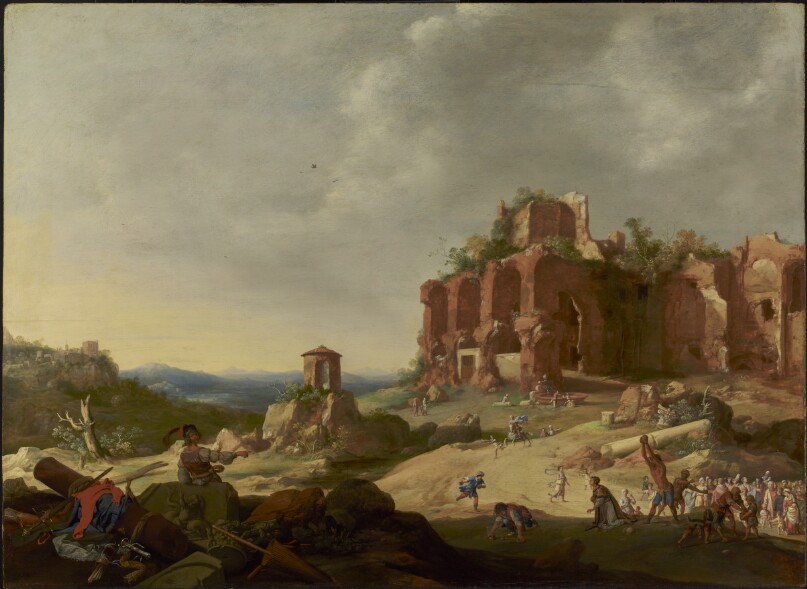
The Stoning of Saint Stephen
Creator
Bartholomeus BreenberghDutch Artist · 1598–1657
All works by this person →Bartholomeus Breenbergh was probably first apprenticed in Amsterdam, but it was his years in Italy that were decisive. At about age twenty, Breenbergh went to Rome, where he lived with Flemish landscapist Paul Brill and was influenced by the intimate, deeply poetic landscapes of German expatriate Adam Elsheimer. Breenbergh belonged to the first generation of Dutch Italianates, artists who traveled
More on Getty ULAN- Date
- 1632
- Medium
- Oil on panel
- Culture
- Dutch
- Department
- Paintings
- Institution
- Getty Museum
- Object ID
- fdeff786-bb46-4848-94a3-ed3aa3f4c828
From the Getty Museum record
Large Roman ruins loom in the background, against which excited figures engage in a brutal murder. In the shadowy right foreground, Saint Stephen kneels in prayer; behind him a shirtless man takes aim with a large rock. All around, people scurry to pick up rocks to hurl at the defenseless saint. A small boy helps out by bringing stones to the adults. Bartholomeus Breenberg depicted the martyrdom of the early Christian deacon Stephen, the first Christian martyr. In the left foreground, a man turns to face the viewer and points at the grisly scene before him. Scholars initially thought this was a self-portrait of the artist; they later identified this man as Paul who, before his conversion to Christianity, assisted at Stephen's stoning by guarding the clothes of the executioners. When Breenberg made this painting, landscape as a genre, and the Dutch Italianate landscape tradition that Breenberg helped develop, was gaining popularity but was not fully accepted as a justifiable subject by itself. Thus, the figures or narrative were often the excuse for painting a landscape.
The authoritative record is held by Getty Museum. LinkedCulture surfaces this object and its connections; it does not alter institutional metadata.
Get printable QR codesHide QR codes
Open QR codes for this object page and the museum record. They stay collapsed until needed.
Related across collections
Semantically similar works from Getty Museum and other institutions.