Getty Museum
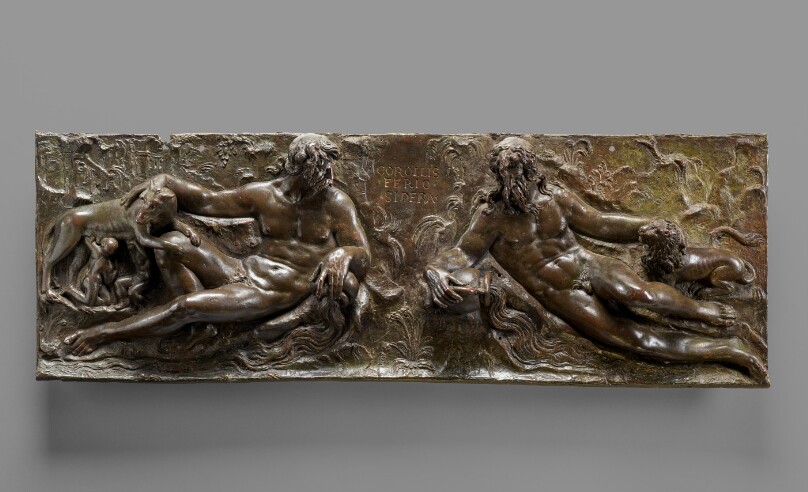
Allegory of The Tiber and Arno
Creator
Bartolomeo AmmannatiItalian Artist · 1511–1592
All works by this person →More on Getty ULAN- Date
- about 1564
- Medium
- Bronze
- Culture
- Italian
- Department
- Sculpture
- Institution
- Getty Museum
- Object ID
- fe4940cf-748d-4731-8dd6-ac6d2c684c06
From the Getty Museum record
Allegory of The Tiber and Arno depicts the two gods personifying the rivers of Rome and Florence, the principal cities where Michelangelo Buonarroti (1475–1564) worked. Both river gods are reclining symmetrically, each on an overturned urn pouring water that flows under their bodies. At left is Tiber, the river of Rome, identified with the She-Wolf nurturing Romulus and Remus, who led to the founding of the city, according to Roman mythology; some antique ruins are visible in the background. At right is Arno, the river of Florence, identified with the so-called Marzocco, the lion, protector of the city and representative of its power since the Middle Ages. In between, in the center of the relief, a panel enclosed by scrollwork and ferns bears the Latin inscription “COROLLIS FERIO SIDERA” (“I strike the heavens with my little crowns”), while a lily, heraldic symbol of Florence, is featured underneath. The original purpose and context of this relief and that with The Apotheosis of Michelangelo are still to be discovered. Ammannati, one of the great sculptors and architects of the Italian Renaissance, enjoyed a friendly relationship with Michelangelo and was among the artists involved in the preparation of the funeral ceremony held in Florence after the master’s death in 1564.
The authoritative record is held by Getty Museum. LinkedCulture surfaces this object and its connections; it does not alter institutional metadata.
Get printable QR codesHide QR codes
Open QR codes for this object page and the museum record. They stay collapsed until needed.
Related across collections
Semantically similar works from Getty Museum and other institutions.